
A Guide to Custom Window Coverings
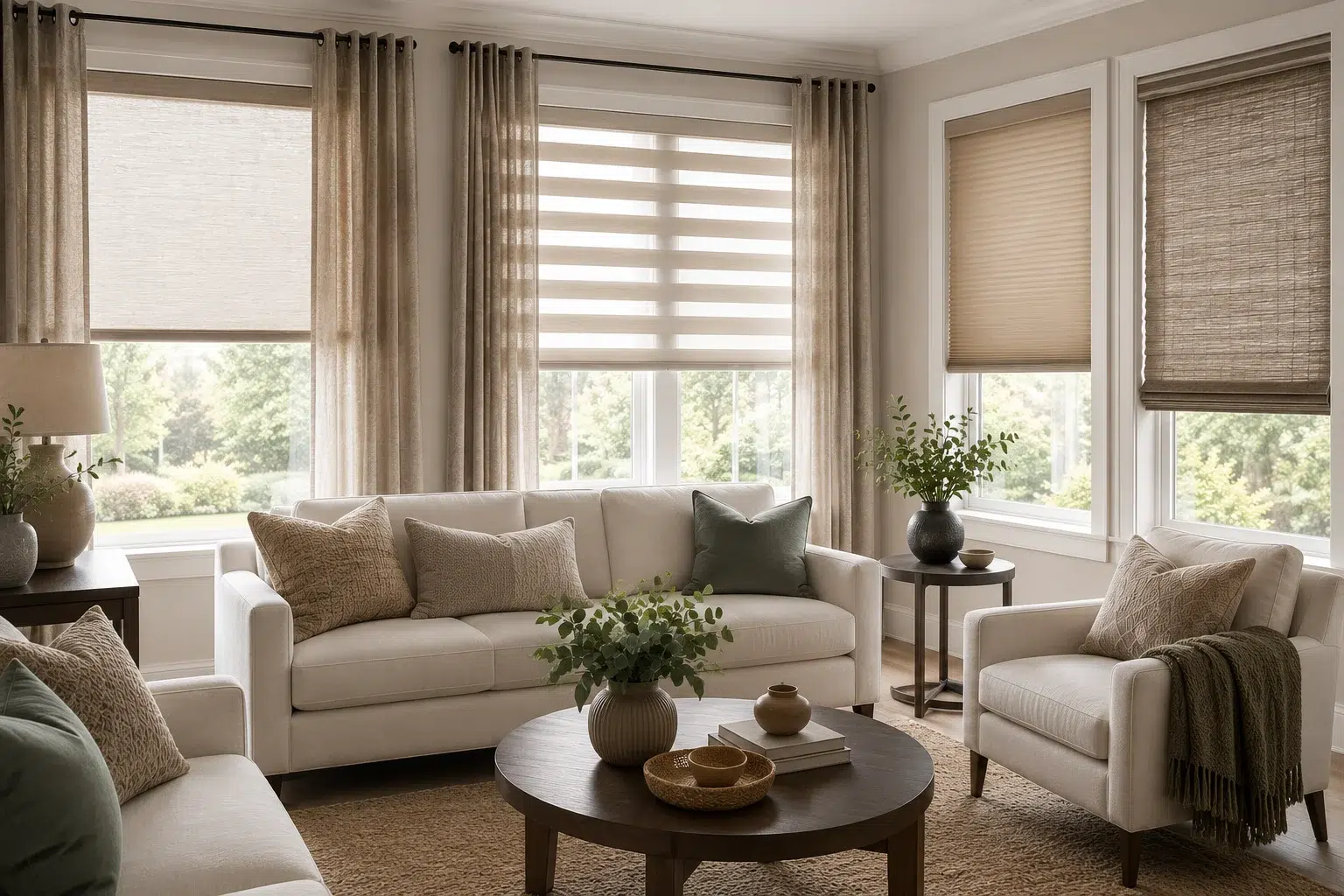

That west-facing living room that looks bright and beautiful at 4 p.m. can feel completely different by 6. The glare hits the TV, the sofa fabric takes on too much sun, and privacy disappears the moment the lights come on. A strong guide to custom window coverings starts there – with how a room actually lives, not just how a product looks in a sample book.
Among the custom options available, California shutters remain a Toronto favourite. Our guide to California shutters in Toronto walks through materials, cost, and style.
Custom window treatments work best when they solve multiple problems at once. They should support the design of the space, control light in a way that feels comfortable, fit the window precisely, and hold up to everyday use. For homeowners, condo residents, and business owners, that usually means looking beyond off-the-shelf options and choosing something made for the room, the window size, and the way the space is used.
Why a guide to custom window coverings matters
Window coverings are often treated like a finishing touch, but they affect more than appearance. The right choice can improve privacy, reduce glare, support better sleep, protect interiors from UV exposure, and help a room feel more polished and complete. The wrong choice can create the opposite effect – awkward gaps, poor coverage, difficult operation, and a result that feels temporary even when the rest of the room is well designed.
That is especially true in condos, newer urban homes, and commercial spaces where windows are large, ceilings are higher, and layouts are more open. A made-to-measure solution gives you better alignment, cleaner lines, and a more intentional finish. It also helps when you are dealing with practical constraints such as shallow window depth, wide expanses of glass, sliding doors, or building expectations around clean exterior appearance.
Start with the room, not the product
The best custom window covering decisions usually begin with a simple question: what does this room need most? In a bedroom, the answer may be darkness and privacy. In a kitchen, it may be easy maintenance and filtered daylight. In an office, glare control and a professional look may take priority. In a condo living area, you may want a balance of daytime light, evening privacy, and a streamlined profile that does not crowd the window.
This is where many people save time by getting expert guidance early. A product that looks great in one room can be frustrating in another. Roman shades, for example, bring softness and a more decorative feel, but they are not always the first choice where moisture, grease, or constant handling is a factor. Roller shades, on the other hand, are clean and minimal, which makes them ideal for modern interiors, but fabric selection matters if the room needs a softer, layered look.
When you choose based on the room first, the product selection gets clearer.
Popular options for modern homes and offices
Roller blinds remain one of the most versatile choices because they suit almost any interior style. They work well in bedrooms, living rooms, offices, and condos where a simple profile matters. Depending on the fabric, they can deliver blackout performance, light filtering, or solar protection. That flexibility is part of their appeal.
Zebra blinds are popular with clients who want adjustable light control without giving up a contemporary look. The alternating sheer and solid bands let you shift between filtered daylight and more privacy throughout the day. In many condos and urban homes, they strike a practical balance between softness and structure.
Roman shades are often chosen when the room needs more texture and a tailored design finish. They feel more furnished than a standard blind, which makes them a strong fit for dining rooms, bedrooms, and living spaces where style carries more weight. The trade-off is that fabric and fold style should be chosen carefully so the shade performs as well as it looks.
Sheer shades are useful when natural light is part of the design goal. They soften incoming light rather than blocking it harshly, which can make a room feel brighter and calmer. They are especially effective in spaces where full blackout is not necessary but glare and visibility still need to be managed.
Solar shades are often the right answer for rooms with strong daylight exposure, large windows, or a clear outdoor view worth preserving. They cut glare and reduce UV impact while maintaining a visual connection to the outside. In offices and living areas, that can be a significant advantage.
Motorized blinds and smart blinds are increasingly requested because convenience is no longer a luxury feature. In high windows, wide banks of glass, or homes with a connected lifestyle, motorization makes daily use easier and more consistent. It also adds a child-safe option by removing the need for cords.
The fit changes everything
Custom window coverings are not just about getting the width and height right. Proper fit affects how the shade hangs, how much light escapes at the edges, how smoothly the mechanism operates, and how finished the room looks from every angle.
Inside mount and outside mount decisions are a good example. An inside mount can look crisp and architectural, especially in condos and modern homes with clean trim details. But it depends on having enough window depth and a reasonably square opening. An outside mount can improve coverage, reduce side light gaps, and make a window appear larger, but the proportions need to be handled carefully so the result looks intentional.
This is one reason professional measuring matters. Windows are rarely as uniform as they appear, and small inconsistencies become obvious once the product is installed. Measuring for a custom order should account for mounting conditions, obstructions, hardware placement, and how the finished treatment will sit within the room.
Design and function should work together
A good guide to custom window coverings should make one thing clear: style and performance are not separate decisions. Fabric openness, opacity, color, and control type all influence how the room feels.
A darker solar fabric may reduce glare more effectively, but it will also change the tone of the daylight. A blackout roller shade can improve sleep in a bedroom, but if the room also serves as a daytime retreat, pairing that function with a softer design choice matters. In open-concept spaces, consistency across multiple windows often matters just as much as the performance of each individual covering.
Neutral tones remain a dependable choice because they integrate easily with flooring, wall color, and furnishings. Still, neutral does not have to mean flat. Texture, weave, and light diffusion can add depth without making the treatment dominate the room. In commercial settings, a restrained palette usually supports a cleaner, more professional finish, while in residential spaces, there is often more room to introduce softness or contrast.
What condo and commercial clients should consider
Condo living brings its own set of window covering priorities. Large glass areas, close neighboring buildings, and direct sun exposure often mean privacy and glare control need to work together. Space efficiency matters too. A bulky treatment can feel out of place in a compact room, while a slim, custom-fitted blind keeps the window area clean and usable.
Commercial spaces have a different set of pressures. Appearance still matters, but consistency, durability, and ease of operation usually move higher on the list. Boardrooms, reception areas, clinics, and private offices benefit from solutions that look professional, manage daylight well, and require minimal upkeep. In both cases, proper measuring and installation prevent the uneven finish that can make an otherwise high-end interior feel incomplete.
Why installation should be part of the plan
Even a well-chosen product can underperform if it is installed poorly. Misalignment, loose brackets, uneven hems, and incorrect mounting positions are all more common than most buyers expect. Window coverings are one of those finishing details that look simple from a distance but depend on precision up close.
That is why a full-service approach tends to create better results. When one team handles consultation, measuring, product selection, and installation, there is less room for guesswork. It also makes the buying process easier for clients who do not want to coordinate multiple steps or troubleshoot issues after delivery. Canadian Blinds Pros has built its service around that kind of experience because custom work should feel tailored from the first visit to the final install.
How to make the final decision with confidence
If you are comparing options, resist the urge to choose based on appearance alone. Ask how the room is used in the morning, afternoon, and evening. Think about privacy when interior lights are on. Consider whether you want filtered light, room darkening, or a view-preserving solution. And be honest about convenience – if a blind is hard to operate, it often stays in the wrong position all day.
The best custom window coverings do not call attention to the compromises behind them. They simply look right, function well, and make the room more comfortable to live or work in. When the fit is precise, the material suits the space, and the installation is clean, the result feels less like an accessory and more like part of the architecture.
If you are investing in custom treatments, the smartest move is to choose with the room in mind and let function lead the design. That is usually where the best-looking result comes from too.