
The Best Blinds for Condos, Room by Room
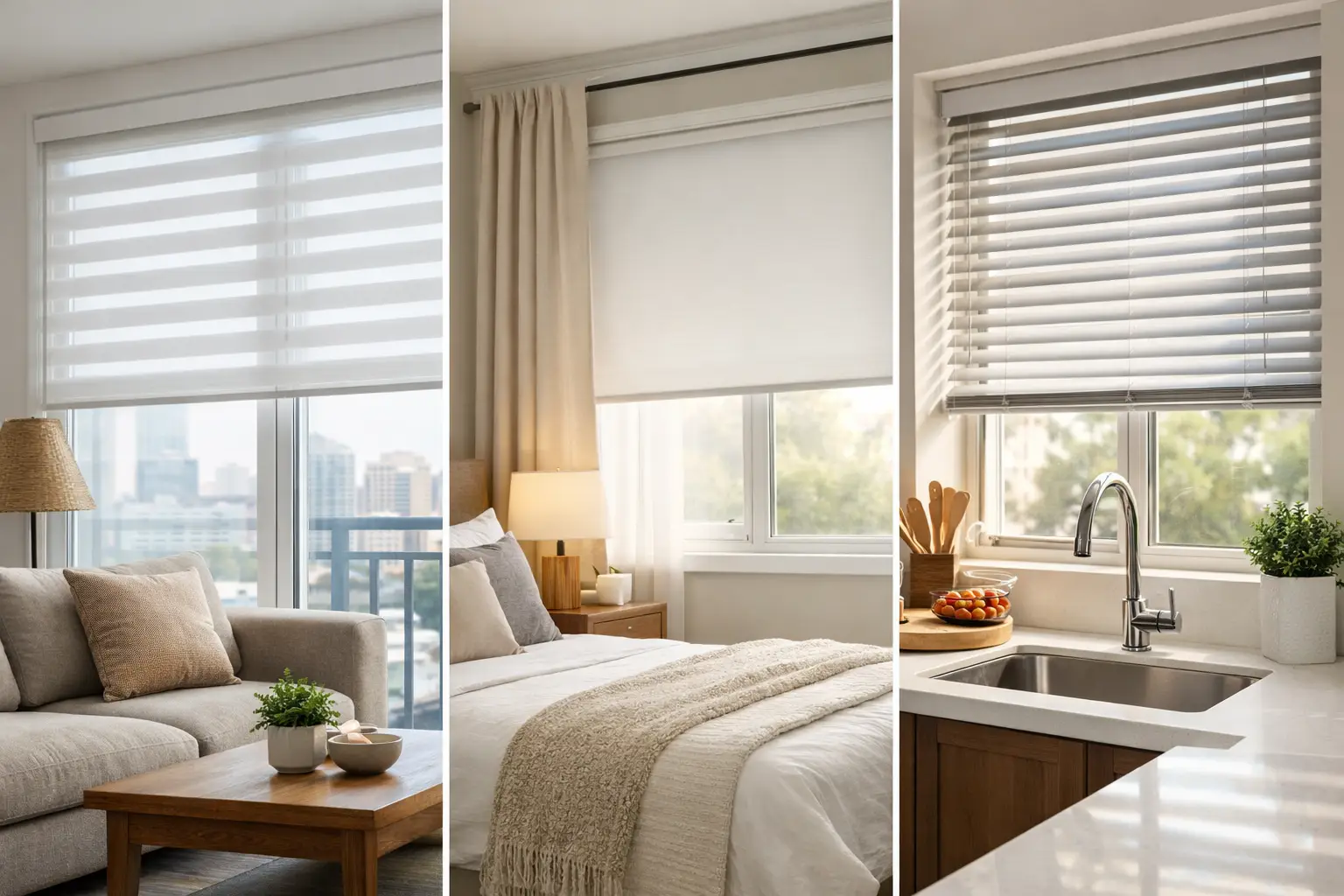

Floor-to-ceiling glass can make a condo feel bright, open, and beautifully connected to the city. It can also introduce afternoon glare, limited privacy, heat buildup, and early-morning light that finds its way around every edge. The best blinds for condos address those realities without making a compact space feel heavier or smaller. Slat styles like horizontal Venetian blinds add tilt control for glare and privacy in a tight footprint. Curtains and drapery suit condo glass too, as our Toronto curtains and drapery buyer’s guide explains.
Wide living-room glass and balcony doors often suit panel track blinds, which slide aside cleanly when you want the view.
Renters and owners who cannot drill into the frame can read our guide to no-drill blinds for condos and rentals for damage-free mounting that leaves no holes.
For rooms where warmth matters as much as light, our guide to cellular shades for Toronto homes and condos explains where honeycomb fabric fits best.
For most condo owners, the right choice is not simply about color or fabric. It is about how a window covering performs at different times of day, how neatly it fits within the window frame, and whether it works with the building’s layout, window hardware, and design standards. A made-to-measure solution brings those details together, creating a finished look that feels intentional rather than added on.
What Makes the Best Blinds for Condos Different?
Condo windows have their own set of demands. Many units have expansive glazing, narrow mullions, patio doors, or windows placed close to furniture. In a high-rise, sunlight may be much stronger than expected, particularly in west- and south-facing units. Nearby towers can also create direct sightlines into living areas and bedrooms.
For balcony sliders and wide condo glass, vertical blinds stack aside for quick privacy.
The best option depends on the room, the window direction, and what you need the covering to do. A sheer shade may be ideal for preserving a view in a living room, while a bedroom may call for a room-darkening roller shade with side coverage planned carefully. In smaller spaces, the mounting style matters just as much as the fabric. A clean, close-fitting installation helps maintain the open feel that makes condo living appealing.
Before choosing a style, consider four questions: How much privacy do you need during the day and at night? Do you want to soften glare while preserving your view? Is heat control a priority? And would motorized operation make daily use easier for tall or hard-to-reach windows?
Zebra Blinds for Flexible Privacy and Light Control
Zebra blinds are a popular choice for modern condos because they offer two looks in one streamlined shade. Alternating sheer and opaque bands move past one another, allowing you to filter daylight, increase privacy, or raise the shade fully when you want an open window.
They suit living rooms, home offices, and open-concept spaces where the goal is to manage bright light without closing the room off from the view. In a downtown condo, this flexibility is especially useful when neighboring buildings are close by. During the day, the sheer bands can soften direct sun. In the evening, the opaque bands can be aligned for greater privacy.
The trade-off is that zebra blinds are designed for adjustable light filtering, not complete darkness. They can work well in bedrooms, but residents who are sensitive to light may prefer a dedicated blackout solution. Choosing the right fabric opacity also matters. A professional consultation can help you compare samples against your actual window exposure rather than relying on how a fabric appears under showroom lighting.
Roller Shades for a Clean, Minimal Condo Look
Roller shades are among the most versatile window treatments for condos. Their simple profile works with contemporary interiors, and they can be customized in a wide range of fabrics, openness levels, and colors. When raised, they stack neatly at the top of the window, helping preserve clean sightlines and architectural details.
Light-filtering roller shades are a strong fit for main living areas. They reduce glare on television and computer screens while keeping the space bright. Room-darkening and blackout roller shades are better suited to bedrooms, nurseries, media rooms, or units exposed to streetlights and early sunrise.
For wide windows, a single custom shade may create a more unified look than several smaller coverings. However, separate shades can offer more precise control when one part of the room gets stronger sun than another. This is one of the details worth reviewing during measurement, along with the location of window cranks, handles, and balcony-door access.
Solar Shades for Glare, Heat, and View Management
Solar shades are designed for condos with strong sun exposure and a view worth keeping. The fabric filters UV rays and reduces glare while allowing you to see outward during daylight hours. They are often an excellent choice for a home office, kitchen, or living room with large windows.
Fabric openness is the key decision. A more open weave preserves a clearer view and admits more natural light. A tighter weave gives stronger glare reduction and more daytime privacy, but it can make the view appear softer. Darker fabrics often provide better outward visibility during the day, while lighter colors can visually brighten a room.
Solar shades should not be treated as a nighttime privacy solution on their own. Once interior lights are on, silhouettes can be visible from outside. In bedrooms or highly exposed living spaces, they are often paired with a secondary room-darkening shade or a carefully selected privacy-focused option.
Sheer and Roman Shades for Softer Interiors
Not every condo calls for a sharply minimalist treatment. Sheer shades bring a lighter, more decorative finish to living rooms and dining areas while gently diffusing daylight. They work particularly well where harsh sun is not the main concern, but the room benefits from a softer atmosphere.
Roman shades add texture and tailored character. They can be a refined choice for bedrooms, dining spaces, or condo offices where the window treatment is meant to contribute to the overall design. Because Roman shades stack when raised, the available space above the window should be considered in advance. In units with limited clearance or prominent bulkheads, a lower-profile roller or zebra option may be more practical.
Both styles can be selected in fabrics that complement upholstery, wall color, and flooring. This is where custom guidance matters. A warm neutral fabric may look elegant beside one exposure and appear too yellow beside another, especially in condos with abundant natural light.
Motorized Blinds Make High Windows Easier to Use
Motorized blinds are not just a luxury feature for showpiece condos. They solve a practical problem when windows are tall, behind furniture, or difficult to reach safely. With remote, wall-control, or smart-home operation, you can adjust several shades at once without walking from window to window.
They are especially useful for large living rooms with multiple panels of glass, primary bedrooms with blackout needs, and spaces where you want shades to lower during the hottest part of the day. Scheduling can help reduce afternoon glare and support a more comfortable interior without requiring constant manual adjustment.
For smart blinds, plan the power source early. Battery-powered systems offer a clean installation and are well suited to many condo applications. Hardwired options can be considered during renovations, particularly when the goal is a fully integrated control system. The best choice depends on access to power, window quantity, and how often the shades will be used.
Choosing by Room, Not Just by Style
A condo does not need one identical treatment in every room. Coordinating the overall color palette while selecting different functions for different spaces often produces a better result.
In the living room, solar shades, zebra blinds, or light-filtering roller shades can keep the space comfortable while protecting furnishings from harsh UV exposure. For bedrooms, room-darkening roller shades or blackout fabrics provide more dependable rest, especially in bright urban settings. A home office benefits from glare control that still allows natural light, making solar shades or zebra blinds especially practical. For balcony doors, the coverage must be planned around how the door opens and how often it is used.
If your unit has an open-concept layout, consistency is valuable. Matching fabric families or coordinating neutral tones can make separate areas feel connected, even when each room uses a different shade style.
Why Professional Measurement Matters in Condos
Condo windows are rarely as straightforward as they appear. Frames may be shallow, ceilings may have bulkheads, and window handles can interfere with the operation of an improperly sized shade. Even a small measuring error can create light gaps, uneven alignment, or a treatment that looks out of place against large expanses of glass.
Professional measurement also helps identify installation considerations before an order is placed. This may include the mounting surface, access requirements, building rules for service elevators, and the best way to position shades for both function and appearance. For residents who want a finished result without coordinating multiple vendors, Canadian Blinds Pros provides in-home consultation, custom measurement, and installation as part of the process.
A well-chosen window treatment should make your condo easier to live in from the first bright morning to the last evening view. Start with how each room feels at its most challenging hour, then choose the fabric, opacity, and controls that make that moment more comfortable.