Blog
Guide to Solar Window Shades for Toronto Homes
Posted on  Written by Canadian Blinds Pros
Large windows can make a condo, living room, or office feel open and elevated, but they can also bring glare, fading, and uncomfortable afternoon heat. This guide to solar window shades explains how these tailored window treatments manage sunlight without asking you to give up the view that made you love the space.
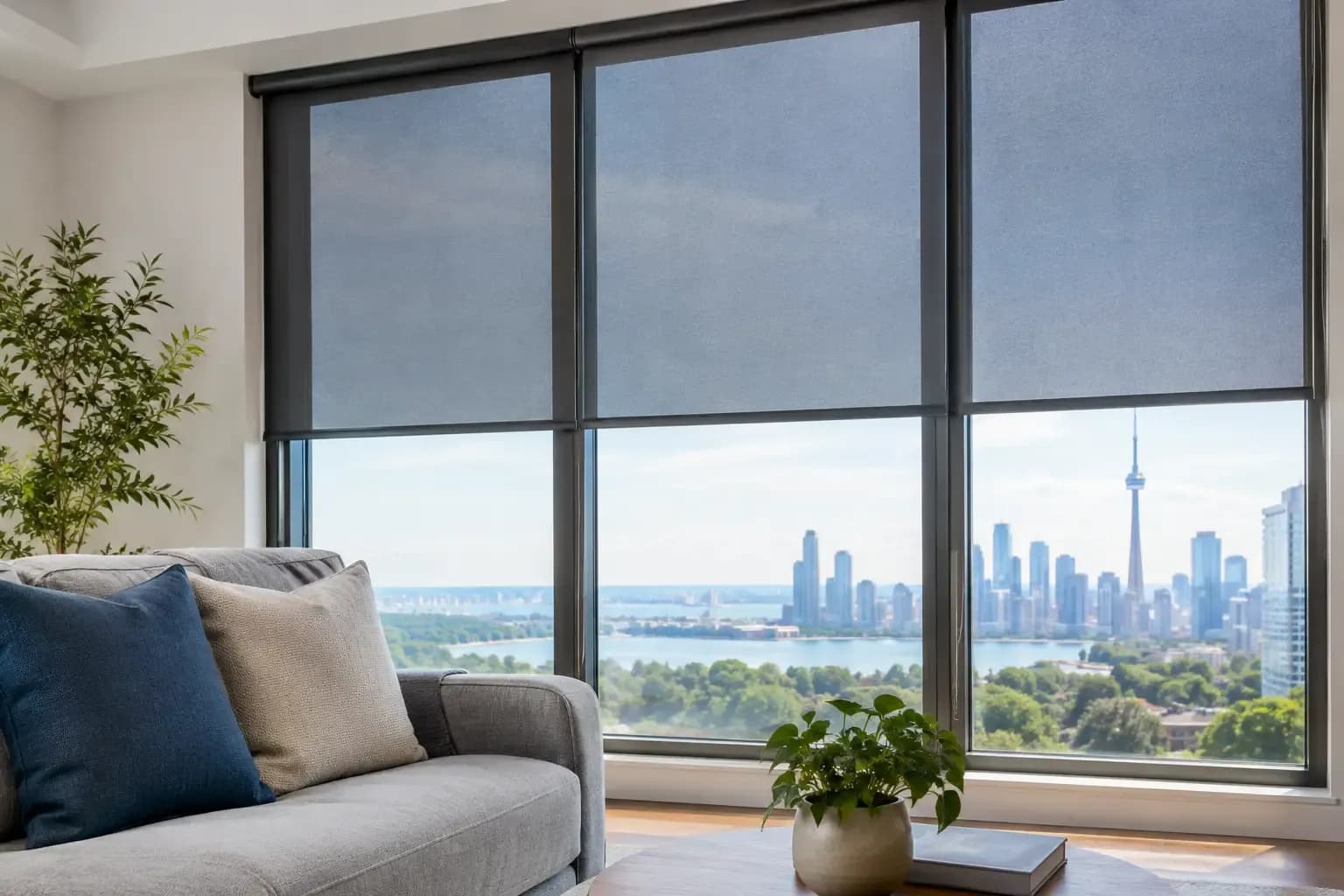
Solar shades are a refined choice for rooms that need daytime light control, UV protection, and a clean, contemporary finish. They use a specialized screen-like fabric that filters incoming sunlight while preserving varying degrees of visibility to the outdoors. The right fabric, color, and custom fit can make a bright room more comfortable without making it feel closed in.
What Solar Window Shades Actually Do
Solar shades are designed to reduce glare and filter ultraviolet rays before they reach your furnishings, flooring, artwork, and screens. They are especially useful on large, sun-facing windows where direct light can make a room difficult to use during certain hours of the day.
Unlike opaque shades, solar fabrics are woven with small openings. Those openings allow you to see outward while diffusing the sun coming in. The result is softer natural light, reduced eye strain, and a more controlled atmosphere for working, relaxing, or entertaining.
Their performance depends on the fabric’s openness factor, the direction of the window, the shade color, and how the shade is mounted. A custom consultation matters because a fabric that looks perfect in a showroom can perform very differently on a west-facing high-rise window than it does in a shaded bedroom.
Choosing Openness in a Guide to Solar Window Shades
The openness factor is one of the most important decisions when selecting solar shades. It refers to the percentage of open space in the fabric weave. Lower percentages have a tighter weave, while higher percentages have a more open weave.
A 1% to 3% openness level provides stronger glare reduction and more daytime privacy. It is often a smart option for home offices, media rooms, or windows with intense sun exposure. You will still receive filtered daylight, but the outward view will be more subdued.
A 5% openness level is a popular middle ground. It offers useful UV and glare control while maintaining a clearer connection to the outdoors. For many living rooms and condo spaces, it delivers the balanced look people want: bright, comfortable, and visually open.
A 7% to 10% openness level prioritizes the view and a lighter feel. It can work beautifully where direct sun is moderate and preserving sightlines is the main goal. The trade-off is less glare protection and less daytime privacy, particularly at street level or in closely spaced buildings.
There is no universal best percentage. A room with floor-to-ceiling glass, a nearby neighboring tower, and a laptop workstation has different needs than a dining area overlooking a private backyard.
Understand Privacy Before You Order
Solar shades offer daytime privacy, not complete privacy around the clock. During the day, when it is brighter outside than inside, the fabric helps limit visibility into your home or office. At night, that effect reverses when interior lights are on. People outside may be able to see silhouettes or activity, depending on the openness level and lighting conditions.
For bedrooms, bathrooms, and other spaces where nighttime privacy is essential, consider pairing solar shades with a second treatment. A room-darkening roller shade, a drapery layer, or another privacy-focused option can add coverage when needed while allowing the solar shade to handle daylight hours.
This layered approach is also practical for living rooms in urban settings. You can enjoy filtered daylight and the city view during the day, then create a more private, settled feel after dark.
Select a Color for Light Control and Design
Solar shade color affects both appearance and performance. Darker fabrics generally provide a sharper view to the outside because they reduce reflected light. They can be an excellent fit for contemporary interiors, offices, and rooms where screens are used frequently.
Lighter fabrics create a softer, airier look and can blend easily into pale walls or minimal interiors. They reflect more light and may help a room feel brighter, but the view through the shade may appear less crisp. For many condo owners, the decision comes down to whether the priority is a strong exterior view or a lighter visual presence at the window.
Color should also work with the rest of the room. A custom shade does not have to become a focal point. Neutral tones can quietly frame the architecture, while charcoal, bronze, or textured fabrics can add depth to a space with clean lines and restrained finishes.
Where Solar Shades Work Best
Solar shades are particularly effective in rooms where daylight is welcome but direct sun is not. In a home office, they reduce glare on monitors and help make video calls more comfortable without turning the room dark. In living rooms, they protect furnishings and make afternoon light easier to enjoy.
They are also a polished choice for dining areas, kitchens with large windows, and commercial spaces that need a professional, uncluttered appearance. In offices, solar shades can improve screen visibility and occupant comfort while maintaining an open connection to the exterior.
For bedrooms, solar shades can be useful as the daytime layer, especially in spaces with a view. If you need darkness for sleep, however, they should be combined with a room-darkening solution. Solar fabric alone is not intended to create blackout conditions.
Why Custom Measurement Changes the Result
Solar shades have a clean, architectural look when they are measured and installed precisely. A poorly sized shade can leave distracting light gaps, sit unevenly, or interfere with window hardware. This is especially relevant in condos, where window depths, frames, and building details vary more than they first appear.
A professional in-home consultation helps determine whether an inside mount or outside mount will deliver the best coverage and finish. Inside mounting can look streamlined when the window recess is deep and square enough. Outside mounting can provide better coverage when recess depth is limited or when minimizing side gaps is a priority.
Custom measurement also accounts for obstructions such as handles, trim, mullions, and nearby doors. For wide windows, the right configuration helps keep the treatment balanced and easy to operate rather than forcing a one-size-fits-all solution onto an unusual opening.
Manual, Motorized, or Smart Control
Manual solar shades remain a reliable, simple choice for accessible windows. They work well in smaller rooms or spaces where the shades are adjusted only occasionally. A properly installed manual system offers clean operation without adding technology you may not need.
Motorized solar shades are worth considering for tall windows, hard-to-reach glass, or rooms with multiple shades that should move together. With a remote, wall control, or smart-home integration, you can lower shades during peak sunlight and raise them when you want more natural light.
Automation is not only about convenience. Scheduling shades to respond to recurring sun exposure can help protect interiors and reduce glare before it becomes disruptive. For busy households and commercial environments, that consistency can be more valuable than adjusting each window by hand.
Questions to Ask During Your Consultation
Before choosing a fabric, think about how each room is used at different times of day. Ask whether the shade provides the daytime privacy you expect, how it will perform after dark, and whether its openness level is appropriate for your window orientation. Review fabric samples at the actual window whenever possible, since daylight can change how a color and weave appear.
It is also wise to ask about control placement, mounting style, cleaning requirements, and child-safe operating options. These details are easier to resolve before installation than after the shades are in place.
Canadian Blinds Pros approaches solar shades as part of the room, not as a standalone product. Professional measurement, design guidance, and installation help ensure the finished treatment supports the way you live or work in the space.
The best solar shade is the one that lets your room keep its natural light, view, and sense of openness while taking the edge off the sun. Start with how the space feels at its brightest hour, and let that answer guide the fabric, fit, and control system you choose.