
What’s the Difference Between Motorized Blinds and Fully Smart Blinds?


What’s the Difference Between Motorized Blinds and Fully Smart Blinds?
Smart window coverings give Toronto homeowners better control over light, comfort, and privacy throughout the day. Many people compare motorized blinds with fully smart blinds because both look similar and move with a quick command.
The difference shows up in how they respond to your routine. Motorized blinds offer simple powered lifting, while smart blinds add connected features that adjust themselves through schedules, sensors, and app control.
By understanding how each system works, you can choose the option that fits the way you live, whether you want straightforward push-button convenience or a home that manages lighting on its own.
Related Article: What Are Smart Blinds and How Do They Actually Work?
What Are Motorized Blinds?
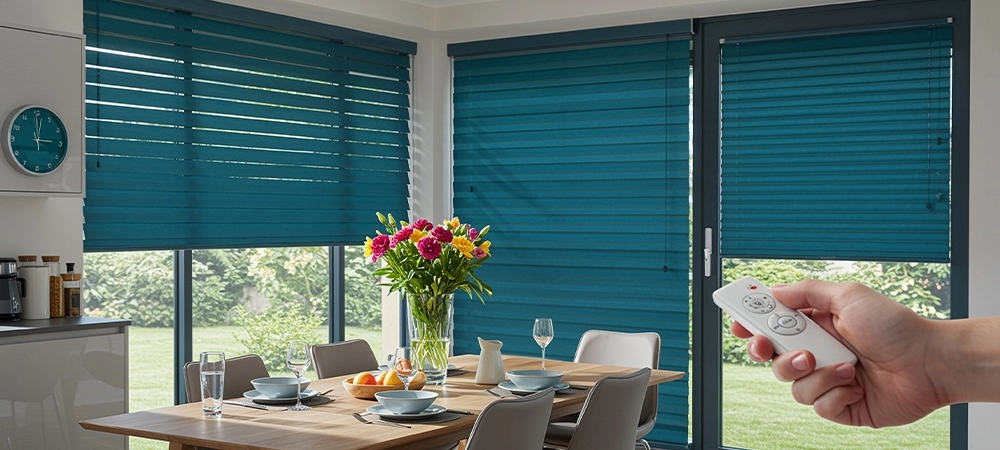
Motorized blinds use a built-in electric motor so you can raise or lower them using a handheld remote or a wall switch. They simplify operation but do not connect to your home network.
Motorized systems are ideal for:
- Large windows or hard-to-reach areas
- One-touch control without cords
- Basic convenience without full automation
How Motorized Blinds Work
A small tubular motor sits inside the headrail. When you press the remote, the motor turns and lifts the fabric smoothly. Since they run on battery or plug-in power, the mechanism stays reliable throughout the year.
You get consistent motion, strong torque for heavier fabrics, and quieter performance compared to older corded motors that used friction-based gears.

What Are Fully Smart Blinds?
Smart blinds take everything motorized blinds offer and add automation, app control, and smart-home integration. They connect through Wi-Fi or a dedicated hub so you can run them through your phone or voice commands.
Smart blinds are ideal for:
- Homeowners who want schedules or automation
- Voice control through smart speakers
- Energy savings through sun-sensing options
- Remote access when travelling
How Smart Blinds Work
Smart blinds use the same motor technology but pair it with a digital controller. This allows the blinds to communicate with your home network so you can create routines, connect to sensors, and receive live updates.
The system learns your light patterns and helps manage glare, privacy, and heat gain more efficiently.
Related Articles: What’s the Difference Between Automatic Window Shades and Motorized Blinds?
Key Differences: Motorized vs. Smart Blinds
Here’s a clear breakdown to help you choose the right one.
1. Control Options
- Motorized: Remote or wall switch
- Smart: App control, voice commands, automation, and schedules
2. Automation
- Motorized: Manual activation every time
- Smart: Set to move at sunrise, sunset, or based on room temperature
3. Integration
- Motorized: Operates as a standalone system
- Smart: Connects with Google Home, Alexa, Apple HomeKit, and home-security systems
4. Sensors and Routines
- Motorized: No sensors
- Smart: Optional sunlight, temperature, or occupancy sensors for hands-free adjustment
5. Cost Level
- Motorized: Lower cost because features are simpler
- Smart: Higher cost due to hubs, sensors, and connectivity features
Related Article: How to Integrate Motorized Blinds with Home Automation Systems
Benefits of Motorized Blinds
Motorized blinds simplify daily operation and remove the need for cords. They’re an easy upgrade for anyone who wants powered lifting without involving apps or internet connections.
You get:
- Quick installation
- Smooth, consistent motion
- Lower upfront cost
- Simple controls for all ages
- Longer battery life due to reduced processing needs
They suit homeowners who want convenience without building a connected home system.
Benefits of Fully Smart Blinds
Smart blinds spread convenience across your entire home. Automated routines reduce energy use, improve sleep, and help maintain comfortable lighting throughout the day.
You get:
- Smart-home integration across rooms
- Hands-free operation with schedules
- Remote control when travelling
- Energy-saving features that manage heat and glare
- Better privacy at night through automatic closing
This option builds long-term comfort because the system works in the background with no manual effort.
Related Article: Innovative Blinds Technology: Exploring Smart Home Integrated Blinds
Which One Should You Choose?
If you prefer simple wireless control and an affordable upgrade, motorized blinds are the better fit. If you want hands-free automation, energy efficiency, and deeper control across your home, smart blinds provide the best experience.
For Toronto homes, many clients start with motorized blinds in primary rooms, then upgrade to smart systems when they renovate or expand their tech setup.

Why Toronto Homeowners Upgrade to Smart Blinds
Smart blinds help reduce heat gain in summer and let in passive warmth in winter. Since the weather can shift quickly, automation ensures your blinds respond before rooms feel uncomfortable.
They also pair well with security systems; for example, blinds can close automatically when you leave home for added privacy.
Upgrade Your Home Lighting with Blinds Toronto
Better control starts with choosing the right system for your home. Whether you prefer simple motorized blinds or a full smart setup, the right guidance helps you get more comfort and value from your window coverings.
Blinds Toronto offers free in-home consultations so you can compare options, test controls, and see which operating style fits your routine. Book your visit today and start building a more efficient and comfortable space.
Frequently Asked Questions
Are smart blinds noisy?
No. Modern motors use efficient, low-friction coils that reduce vibration inside the headrail. Older motors made noise because they used exposed gears that produced more friction. Current systems stay quiet enough for bedrooms and media rooms.
Can I convert my motorized blinds into fully smart blinds?
Sometimes. Certain brands accept smart hubs or upgraded motors, while others need a full replacement. During consultation, we can check compatibility.
Do smart blinds work during a Wi-Fi outage?
Yes. You can still use the remote or manual wall switch. Smart features will resume once the network reconnects.
Which lasts longer: motorized or smart blinds?
Both use similar motor systems, so lifespan is comparable. Smart blinds may require occasional firmware updates to keep features current.
Are batteries or plug-in power better for smart blinds?
Battery packs keep wiring simple. Plug-in power suits large windows, heavy fabrics, or high-frequency use.
Do smart blinds improve energy savings?
Yes. You can set schedules that block heat during peak sun hours or raise the blinds to bring in natural light, reducing HVAC use.
Is installation different for motorized and smart blinds?
The physical installation is similar. Smart blinds require an extra step for network setup and pairing.