
Blog
Best Blinds for Large Windows
Posted on  Written by Canadian Blinds Pros
Best Blinds for Large Windows
Large windows flood your home with natural light, frame panoramic views and instantly broaden interior spaces. Yet without the right window treatment, that generous daylight can produce harsh glare, compromise privacy and drive up your energy bills.
When spans stretch beyond standard widths, factors like weight capacity, ease of operation and installation method become critical. From vertical and roller systems to insulating honeycomb and soft Roman folds, the choice can feel overwhelming.
This guide breaks down top blind styles, precise measuring techniques, motorized versus manual controls and upkeep tips. With these insights, you’ll be ready to select, install and care for blinds that harmonize function and style in your space.
Related Article: Best Window Coverings for Sliding Doors
Factors to Consider When Choosing Blinds for Large Windows
Before you pick a blind type, weigh these key factors.
- Size and Weight Capacity Large blinds must glide smoothly. Check that headrails, tracks and fabrics can bear the extra weight without sagging.
- Light Control and Privacy Decide how much light you want to filter versus block. Some designs offer sheer panels, while others provide near-total blackout.
- Ease of Operation Manual cords can strain with wide spans. Consider cordless or motorized systems for smooth, safe adjustment.
- Energy Efficiency Insulating blinds reduce heat gain in summer and heat loss in winter. Look for cellular or honeycomb styles with built-in air pockets.
- Style & Décor Your blinds should complement wall and floor colours, window trim and furniture finishes. Pick from textures like linen, wood, PVC or aluminium.
- Installation Complexity Some blinds, especially motorized or panel tracks, require professional fitting. Consider the extra cost if you’re not handy.
Top Blind Options for Large Windows
Here are five styles that perform well on wide spans.
1. Vertical Blinds
Vertical blinds feature long slats that pivot on a track.
- AdvantagesExcellent for sliding doors and floor-to-ceiling windows
- Simple light direction control — tilt slats to fine-tune glare
- Wide range of fabrics and PVC for water-resistant areas
- Slats can sway in a breeze or draw attention if noisy
- Gaps may appear at the lock-point on very wide tracks
2. Roller Blinds
Roller blinds roll fabric neatly into a slim cassette.
- AdvantagesClean lines ideal for modern or minimalist rooms
- Available in blackout, sunscreen and light-filter fabrics
- Cassette keeps fabric dust-free when raised
- Large single panels can be heavy; choose industrial-grade rollers
- Fewer options for adjusting partial light—raise or lower only
Related Article: How to Choose Roller Blinds for Kitchen Window?
3. Panel Track Blinds
Panel blinds use wide fabric panels that slide on a track.
- AdvantagesCover extra-wide windows in sections for easy access
- Mix and match panels for pattern or texture accents
- Panels stack neatly to one or both sides
- Tracks need precise measurement and professional install
- Panel seams may interrupt the view if misaligned
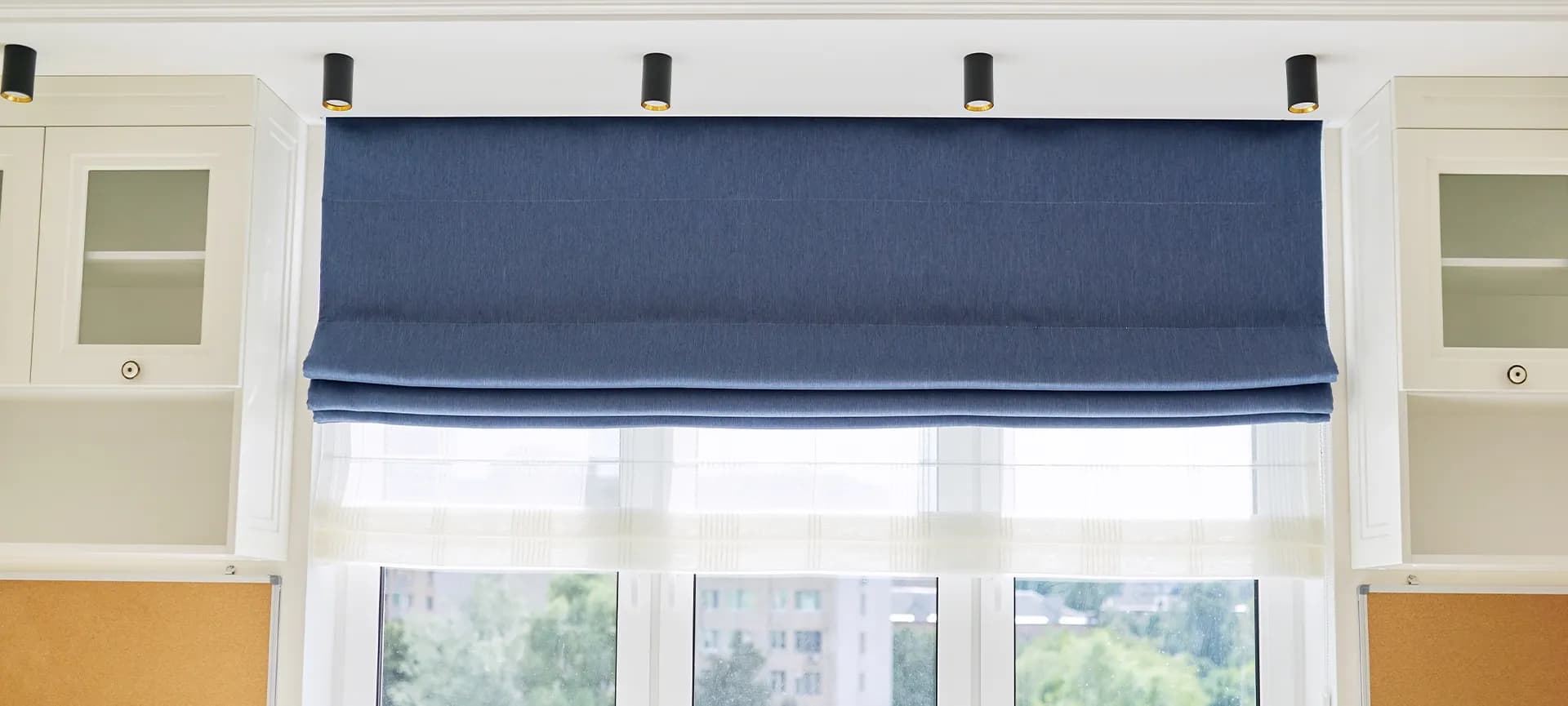
4. Roman Blinds
Roman blinds fold into soft pleats when raised.
- AdvantagesBring warmth and texture: linen and cotton options
- Layer over sheers or drapes for flexible styling
- Cushioning folds add insulation
- Pleats can pull unevenly on wide spans: reinforced tapes help
- Manual cords may tangle; cordless lift systems are safer
5. Cellular (Honeycomb) Blinds
Honeycomb blinds trap air in cells for insulation.
- AdvantagesSuperior thermal performance; cuts heating and cooling costs
- Available in single, double or triple-cell designs
- Light-filter and blackout fabrics for custom control
- Can be pricey up front, but savings recur monthly
- Very wide units may require centre support for stability
Related Article: How to Integrate Motorized Blinds with Home Automation Systems
Manual vs Motorized Blinds: Which Is Right for You?
Large blinds can strain cords and wear tracks over time. Motorized blinds solve most issues:
- MotorizedEffortless one-touch control via remote or smartphone
- Ideal for hard-to-reach windows and high ceilings
- Programmable schedules to optimize light and privacy
- Lower upfront cost and simpler maintenance
- Good for smaller spans or if you raise/lower infrequently
- Cords must meet safety standards; cordless lifts add cost
If you plan daily adjustments or have children and pets, motorized drives provide safety, ease and precision.
Installation and Care Tips
Even the best blinds need proper fitting and upkeep to perform their best.
- Accurate Measuring Always measure inside and outside the frame at three points (top, middle, bottom) to ensure a snug fit.
- Professional Fitting For motorized, panel track or very wide blinds, hire a certified blinds installer. They’ll balance tracks and align panels.
- Regular Cleaning Dust weekly with a soft brush or low-power vacuum attachment. Fabric blinds may need gentle spot treatment with mild soap.
- Check Mechanisms Inspect cords, tilters and tracks every few months. Lubricate metal parts lightly to minimize friction.
- Seasonal Adjustments In winter, close the blinds at night to trap heat. In summer, lower during peak sun to reduce glare and UV damage.
6. Zebra (Day-and-Night) Blinds
Zebra blinds, also called day-and-night blinds, feature alternating sheer and solid fabric stripes. By sliding the panels to align or offset the stripes, you get precise control over light filtering and privacy with a clean, modern look.
- AdvantagesFine-tuned light adjustment between full view and total privacy
- A sleek, minimalist aesthetic that fits contemporary décor
- Smooth cordless or motorized operation for large spans
- Easy layering with drapes or valances for extra style
- Pattern alignment must be exact; misalignment can break the visual flow
- Less insulating air space than honeycomb blinds
- Heavy, wide panels may require reinforced rollers or professional installation
Measuring & Motorization Notes
For very wide windows, consider splitting the blind into two panels on a shared headrail or using dual roller systems. Motorized drives keep the stripes perfectly aligned and make operating large spans effortless.
Related Article: 5 Reasons to Buy Zebra Blinds in 2025
Styling Ideas for Large Windows
Blinds do more than manage light. Use them to enhance your décor:
- Layering Pair roller or cellular blinds with sheer curtains for a soft, tiered effect.
- Contrast Colours Dark blinds against light walls highlight architectural lines.
- Texture Play Combine wood or bamboo slats with fabric panels for an organic look.
- Integrated Valances Hide mechanisms and add a finishing touch with matching fabric valances.
Elevate Your Space with the Perfect Blinds
Choosing the best blinds for large windows means balancing function, style and budget. Vertical, roller, panel track, Roman and cellular options all have unique strengths. For effortless operation and precise light control, consider a motorized system.
With accurate measuring, professional fitting and regular care, your blinds will look sharp and perform reliably for years.
Ready to transform your space? Contact Blinds Toronto today for a free consultation, and let our experts help you find, measure and install the perfect blinds for your large windows.