
Blackout Blinds for Nurseries That Really Work
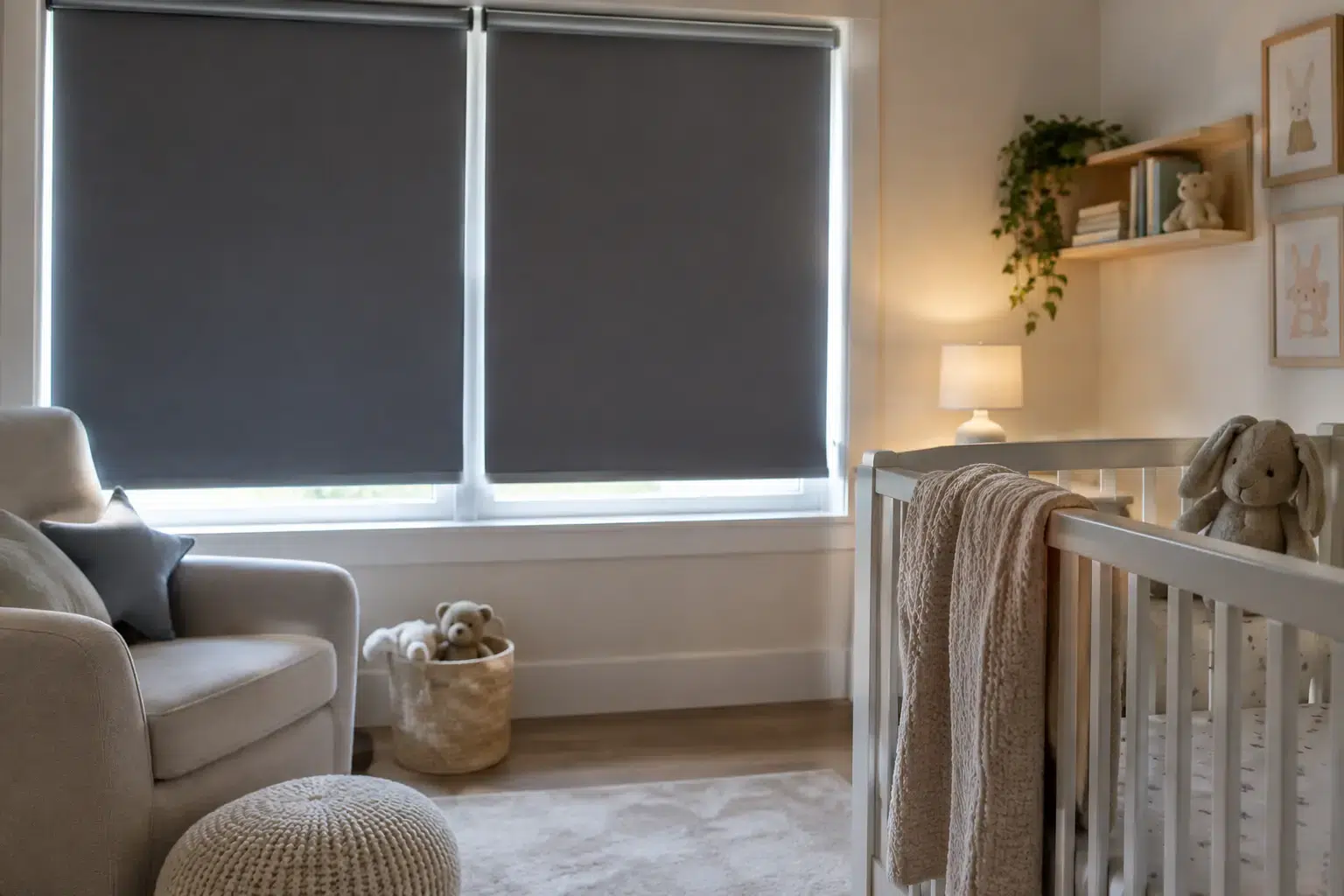

A nursery can look perfectly calm at 10 a.m. and become unexpectedly bright by 1 p.m. when the sun shifts across the room. For parents trying to protect a nap schedule, blackout blinds for nurseries are not simply a finishing touch. They are a practical way to create more consistent sleep conditions while preserving the soft, welcoming look the room deserves.
The right solution depends on more than choosing the darkest fabric. Window size, direction of light, how the blind is mounted, the room’s temperature, and child-safety details all affect the finished result. A made-to-measure window covering accounts for these details from the start, which is particularly valuable in Toronto homes and condos with large windows, deep sills, or compact nursery layouts.
Why nurseries need more than dimming
A darkened room can help signal that it is time to sleep, especially during daytime naps and long summer evenings. But parents often find that a standard light-filtering shade changes the mood of a room without doing enough to block direct sunlight. Bright light can still enter through the fabric itself, at the sides, or above the headrail.
Blackout fabrics are designed to reduce incoming light more substantially. They are a strong choice for nurseries facing east, south, or west, where direct sun can be intense at different points of the day. They can also support privacy after dark, which matters in closely spaced houses, townhomes, and high-rise buildings.
Still, “blackout” does not always mean a completely pitch-black room. Light may enter around the perimeter of the window, particularly with an inside-mounted shade. That is not necessarily a flaw. It is a reminder that the fabric and the installation approach must work together. Parents who want the darkest possible result should discuss side gaps, top gaps, and the window frame during an in-home consultation rather than selecting fabric alone.
The best blackout blinds for nurseries start with the window
A nursery window is rarely a standard retail size. Even windows that appear similar can have different depths, trim profiles, handles, or obstructions that influence how a shade should be fitted. Measuring carefully is what separates a window covering that looks good from one that performs reliably every day.
Inside mount or outside mount?
An inside mount sits within the window frame. It offers a clean, tailored appearance and keeps the surrounding trim visible. This can be an excellent choice when the frame has sufficient depth and the goal is a minimal, modern look. The trade-off is that small light gaps are normal at the sides.
An outside mount is installed above and beyond the frame. Because it overlaps more of the window opening, it can reduce side light more effectively. It is often the stronger option for shallow frames, uneven openings, or parents who need better daytime darkening. It can also make a smaller window appear larger when the shade is mounted higher and wider with thoughtful proportions.
There is no single correct answer. An outside mount may provide stronger light control, while an inside mount may better suit architectural trim or a specific design plan. A professional measurement helps identify the option that balances performance with the room’s overall look.
Look for true blackout material
Blackout performance comes from the material, not merely from a dark color. A pale oatmeal, warm white, blush, or soft gray fabric can still have a blackout backing. This gives parents more freedom to build a light, airy nursery without sacrificing nap-time light control.
Ask to see fabric samples in the actual room whenever possible. Hold them against the window during the time of day when sunlight is strongest. A sample also helps you assess texture, undertones, and how the material works with paint, flooring, and furniture. Nursery design tends to evolve quickly, so a timeless neutral shade is often a more flexible choice than a highly themed pattern.
Roller shades offer a clean, practical solution
For many nurseries, blackout roller shades are a natural fit. Their profile is streamlined, easy to coordinate with contemporary interiors, and well suited to narrow windows or rooms where every inch matters. When raised, they stack neatly at the top of the window and leave the view open. When lowered, they provide consistent coverage with minimal visual distraction.
A cassette or valance can further refine the look by concealing the top roll of fabric. Depending on the product and mounting method, it may also help limit light entering above the shade. This detail is especially useful for nursery windows that receive direct afternoon or evening sun.
Roman shades can be another attractive blackout option for parents who prefer a more decorative, layered look. Their fabric folds add softness and visual dimension, which can suit traditional homes or more styled nursery designs. The key is specifying a blackout lining and choosing an operating system designed with child safety in mind.
Child safety belongs in the specification
A nursery should never require parents to compromise between light control and safety. Cordless operation is generally the clearest choice for a child’s room because it eliminates accessible hanging cords. Motorized shades are also a convenient option, allowing parents to adjust the window covering by remote, wall control, or smart-home settings without reaching across a crib or changing table.
Motorization can be particularly helpful for tall windows, furniture-restricted layouts, and rooms with multiple shades. A programmed morning opening can gently bring daylight into the room, while an evening setting can lower shades as part of the bedtime routine. For parents carrying a sleeping baby, the ability to make adjustments without pulling a chain or cord is a small convenience that often becomes meaningful.
Crib placement should also be considered before installation. Keep cribs, chairs, and climbable furniture away from windows and window-covering controls. Professional installation gives homeowners added confidence that brackets are secured correctly and that the finished setup is appropriate for the room.
Do not overlook temperature and glare
Sunlight affects more than sleep. A nursery with substantial afternoon exposure may become uncomfortably warm, even when the thermostat is set appropriately for the rest of the home. Blackout shades can reduce solar heat and glare, contributing to a more comfortable environment near the window.
The degree of improvement depends on the window itself, its orientation, the fabric selected, and the fit of the shade. A window covering is not a replacement for proper heating and cooling, but it can be a useful layer of comfort control. It can also help protect painted walls, rugs, and furnishings from harsh direct sun over time.
For condo nurseries, this is often a high-priority consideration. Floor-to-ceiling windows bring in beautiful natural light, but they can make it difficult to manage heat and brightness during the day. Custom shades can be planned around glazing, mullions, and building requirements while maintaining a polished appearance from both inside the unit and, where applicable, the exterior.
Choosing a color that works beyond the baby stage
The most successful nursery window treatments usually avoid feeling temporary. A soft neutral blackout shade can move easily from nursery to toddler room, guest room, or home office as family needs change. White, ivory, taupe, pale gray, and muted blue-gray are popular because they complement a wide range of decor without competing with artwork, bedding, or wallpaper.
Consider the effect of the shade when it is down for much of the day. A very dark fabric may improve the room’s sleep-ready mood, but it can feel visually heavy in a small space. A lighter blackout fabric with a properly designed backing often delivers the better balance: calm when closed, bright and fresh when open.
Details matter here. Hardware color, cassette style, fabric texture, and mounting height can make a basic shade feel intentionally designed. These choices are easier to make when you can compare samples and discuss the room as a whole rather than choosing from a screen.
When custom installation makes the difference
Ready-made blackout shades can be tempting for a quick solution, but they often leave wider gaps, require compromises on width or length, and may not sit properly on irregular windows. Those small shortcomings are more noticeable in a nursery, where consistent darkness and safe operation matter every day.
A custom approach allows the shade to be sized to the opening, mounted for the desired level of light control, and selected in a fabric that complements the room. With Canadian Blinds Pros, the process includes in-home consultation, precise measurement, and professional installation, so parents are not left interpreting bracket instructions during an already busy season.
A nursery should feel peaceful at every hour, not only when the sun is in the right place. Choosing a well-fitted blackout shade gives the room a quieter rhythm and gives parents one less variable to manage when sleep finally arrives.