
Inside Mount vs Outside Blinds Compared
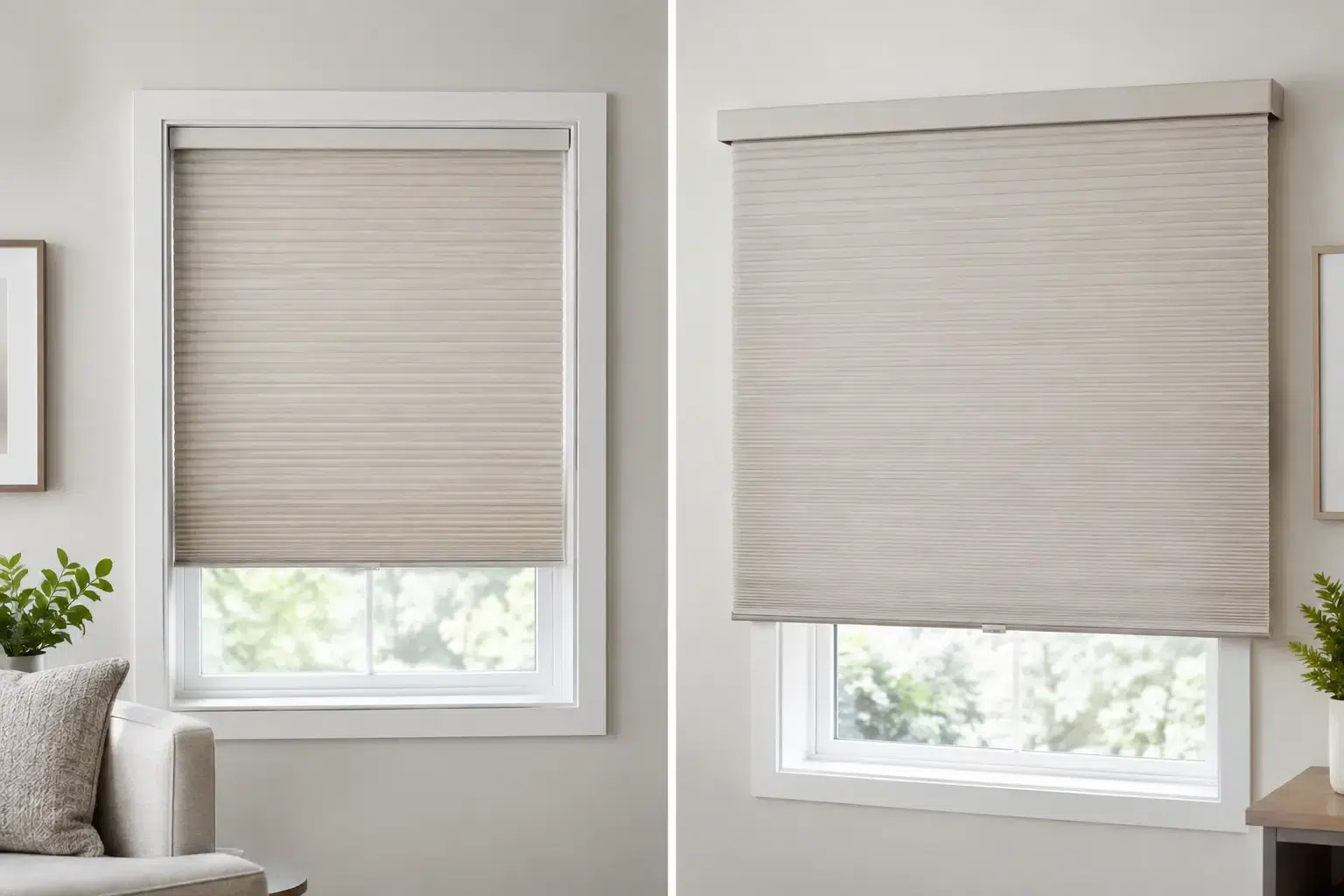

A window covering can look perfectly chosen in a showroom and still feel wrong once it is installed. Often, the difference comes down to where it sits. When comparing inside mount vs outside blinds, the right choice affects more than appearance: it changes privacy, light gaps, room-darkening performance, clearance around handles, and how large the window appears.
For a clean, tailored finish, there is no universal winner. Inside mounting can make a well-proportioned window feel crisp and architectural. Outside mounting can solve shallow frames, improve coverage, and make an undersized window look more substantial. The best result starts with the window itself, then considers how you use the room.
Inside Mount vs Outside Blinds: The Core Difference
An inside-mounted blind or shade is installed within the window frame or recess. The treatment fits between the sides of the opening, leaving the trim visible. This approach is popular in contemporary homes and condos because it creates a neat, built-in look without adding visual weight around the window.
An outside-mounted blind or shade is installed on the wall, trim, or ceiling above and beyond the window opening. It overlaps the frame rather than fitting within it. That added coverage makes it a practical choice where the window recess is too shallow, uneven, or interrupted by hardware.
Both options can be custom made for roller shades, zebra blinds, Roman shades, solar shades, and motorized window coverings. The mounting decision should be made before production, since measurements and finished dimensions are different for each application.
Choose an Inside Mount for a Streamlined Look
Inside mounting is often the first choice when a window has enough usable depth and a square, unobstructed opening. It lets the frame and trim remain visible, which works especially well with attractive casings, large glass areas, and minimalist interiors.
In a living room or kitchen, an inside-mounted solar shade can preserve an open view while reducing glare and UV exposure. In a modern condo, an inside-mounted zebra blind keeps the window area visually clean and allows the alternating fabric bands to become the focal point rather than the mounting hardware.
This option is also helpful when furniture sits close to the window. Because the treatment stays within the recess, it does not project as far into the room. It can be a smart solution for compact bedrooms, desk areas, and narrow spaces where every inch matters.
What inside mounting needs
The frame must have enough depth to hold the bracket and allow the product to operate freely. The required depth varies by product, especially when choosing a cassette, fascia, or motorized system. A shallow recess may technically accept a bracket, but the shade could extend beyond the frame or sit too close to the glass for a polished result.
The opening should also be measured at several points. Older homes can have frames that are slightly out of square, while condo windows may include handles, sensors, or protruding trim that interfere with the shade. A made-to-measure treatment accounts for these details, but it cannot create space that is not there.
Inside mounts do have one visible trade-off: small light gaps remain along the sides. For everyday light filtering, this is rarely a concern. For bedrooms, nurseries, media rooms, or any space where room darkening matters, those gaps may influence whether an outside mount is the stronger choice.
Choose an Outside Mount for Better Coverage
Outside mounting offers flexibility that inside mounting cannot. Because the treatment extends beyond the window opening, it can cover more glass and reduce side light leakage. It is often the preferred approach for blackout-oriented spaces, large windows with shallow frames, and windows with uneven recesses.
A blackout roller shade, for example, generally performs better when mounted outside the frame with sufficient overlap on each side and above the window. The added material coverage helps block the halo of light that can appear around an inside-mounted shade. Complete darkness can still depend on the product and installation details, but outside mounting gives the installer more control over coverage.
Outside mounting can also improve the proportions of a room. A narrow window may look wider when the shade extends past its edges. Mounting above the frame can make the window appear taller, particularly when the shade is raised fully and stacked above the glass line. This is a useful design technique in condos and offices where windows may be wide but short.
When outside mounting is the practical answer
An outside mount is usually the better fit when the window frame is shallow, the opening is not square, or a handle prevents an inside-mounted shade from clearing the glass. It is also useful for windows with minimal trim, since the wall area around the opening provides a more flexible installation surface.
Ceiling mounting is another form of outside mounting. It can create a dramatic, intentional finish over large window walls or sliding doors, particularly when a wall-mounted bracket would be too close to the frame. In commercial spaces, ceiling-mounted solar shades can also provide broad, consistent glare control across banks of windows.
The main consideration is space above and beside the opening. The wall or ceiling must offer secure anchoring and enough clearance for the product. A professional measurement appointment identifies these conditions early, including where fasteners can be placed and whether a fascia or cassette will complement the room.
Privacy, Light Control, and Energy Comfort
Mounting style influences performance, but fabric and opacity matter just as much. A light-filtering shade softens harsh daylight, while a room-darkening fabric provides more privacy and stronger light reduction. Solar shades preserve outward visibility during the day while managing glare and UV exposure, making them a strong choice for bright living rooms and offices.
For privacy, outside mounting has an advantage because it covers more of the opening. This can be valuable for street-facing rooms or bedrooms where people want fewer visible gaps at the edges. Still, an inside-mounted privacy shade can work beautifully when the frame is deep, the fit is precise, and the room does not require blackout-level coverage.
Energy comfort is similarly nuanced. A properly fitted shade helps reduce solar heat gain in sunny rooms and adds another layer between the glass and interior space. Outside-mounted treatments may cover more of the window perimeter, while inside-mounted cellular-style options are often selected for their insulating structure. The best choice depends on sun exposure, glass quality, and whether cooling, glare, or privacy is your biggest concern.
Think About Handles, Tilt Windows, and Daily Use
A beautiful installation must still be easy to live with. Before selecting a mount, consider how the window opens and what sits in front of it. Casement windows, tilt-and-turn windows, and windows with prominent crank handles need enough clearance for the shade to lift and lower without rubbing or catching.
Inside mounts are ideal when the shade can stay clear of all hardware. If a handle projects into the opening, an outside mount may be necessary. In some cases, a projection bracket can move the treatment farther from the wall to clear trim or hardware, but that should be planned rather than treated as an afterthought.
Motorization adds another layer of convenience, especially for tall windows, hard-to-reach areas, and homes with multiple shades. The mounting style still matters because a motorized shade needs secure support, clean wire-free placement, and adequate room for its headrail or cassette. A professional installer can recommend the placement that keeps the system discreet while maintaining reliable operation.
How to Make the Right Choice for Each Room
Use inside mounting when you want a restrained, integrated look and have a deep, unobstructed frame. It is particularly effective for living rooms, kitchens, offices, and condo spaces where clean lines and an open feel matter.
Choose outside mounting when coverage and flexibility are the priority. Bedrooms needing stronger darkness, windows with shallow frames, street-facing rooms, and awkward openings often benefit from the extra overlap. It is also a design-forward option when you want to visually enlarge the window or mount the treatment high for a taller appearance.
Do not assume every window in the home needs the same approach. A bedroom may need an outside-mounted blackout shade, while the adjacent living room may look best with an inside-mounted solar shade. Matching the mount to the room’s function creates a more intentional result than choosing one method for convenience alone.
Why Professional Measurement Matters
Inside and outside measurements are not interchangeable. An inside mount requires precise measurements of the actual opening, while an outside mount requires decisions about overlap, mounting height, and side coverage. A small measuring error can create uneven gaps, obstruct window operation, or leave a shade looking undersized.
Canadian Blinds Pros helps homeowners, condo residents, and commercial clients make these decisions during an in-home consultation. Product selection, measurements, design guidance, and installation work together, so the finished treatment suits both the window and the way the room is used.
Before choosing a color or fabric, look closely at the frame, the wall space around it, and the light you want to live with every day. The right mount is the one that makes the window covering feel like it was always meant to be there.