
A Guide to UV Blocking Shades for Toronto Homes
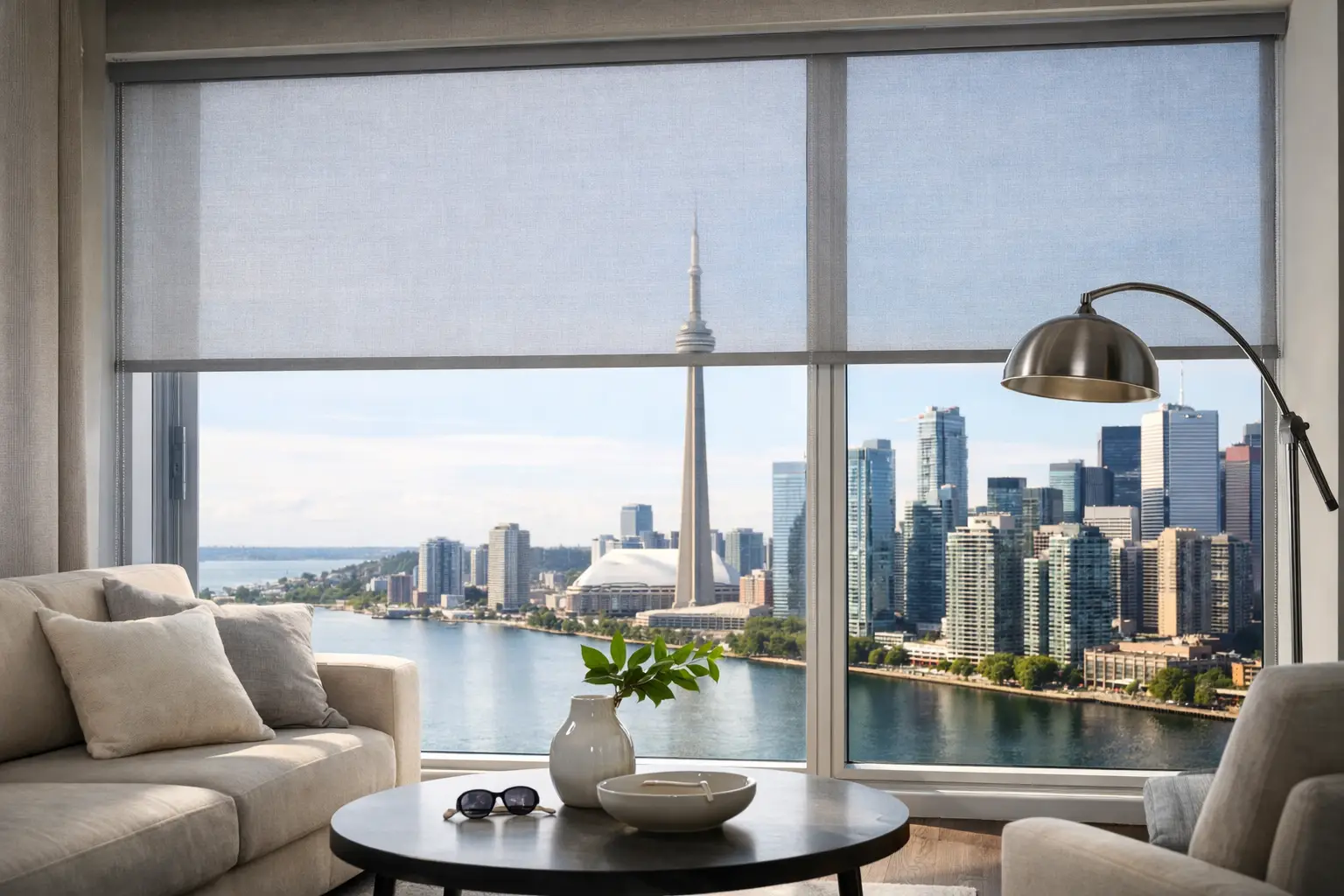

Sunlight can make a condo living room feel larger, warmer, and more inviting – until it begins fading a favorite rug, creating glare on a screen, or heating the room by midafternoon. This guide to UV blocking shades explains how to protect your interiors without giving up the natural light that makes a space feel like home.
UV-blocking shades are not one single product. Their performance depends on fabric, color, weave, fit, and how the shade is installed around the window. The right choice should suit both the direction your windows face and the way you use the room.
What UV Blocking Shades Actually Do
Ultraviolet rays are a major cause of fading in flooring, upholstery, artwork, wood finishes, and merchandise displays. Visible light and solar heat also contribute, which is why a room can experience fading even when the sun does not feel especially harsh.
Quality shades reduce the amount of solar radiation entering through the glass. Solar shades are often the leading choice when preserving a view matters, while room-darkening roller shades offer more coverage for bedrooms, media rooms, and spaces with strong direct exposure. Sheer shades can soften daylight beautifully, although they are usually selected more for filtered light and privacy than maximum UV control.
No window covering stops every source of fading. Reflected light, indoor lighting, heat, and the age of a material all play a role. Still, a custom-fitted shade can substantially reduce daily exposure where it matters most: large windows, patio doors, corner units, and rooms with direct afternoon sun.
A Guide to UV Blocking Shades by Fabric Openness
For solar fabrics, openness factor is one of the most useful details to understand. It refers to the percentage of open space in the weave. A lower openness factor has a tighter weave, providing more shade, more daytime privacy, and stronger glare reduction. A higher openness factor lets in more light and offers a clearer outward view.
A 1% or 3% openness fabric is often a strong option for sun-facing rooms where protection and screen visibility are priorities. It gives a more sheltered feel while still allowing daylight to enter. A 5% openness fabric is a popular middle ground for living rooms and kitchens, especially when maintaining a view is important. Fabrics with 10% openness can look airy and modern, but they provide less privacy and less solar control.
The number alone does not tell the entire story. Darker solar fabrics can provide a sharper view outward because they reduce reflected interior light. Lighter fabrics may brighten the room and better complement a soft, neutral design palette, but can create more visible reflection on the glass. In a high-rise condo, the right balance often comes down to your view, neighboring buildings, and the time of day you use the room.
Match the Shade to the Room, Not Just the Window
A single style throughout a home can create a polished look, but every room does not need the same level of UV protection. Thinking about the function of the space leads to better long-term results.
Living rooms and open-concept spaces
Large living-area windows often receive the most consistent daylight. Solar shades are a practical choice when you want to protect furniture and flooring while preserving the view. They also reduce glare on televisions and laptops without making the room feel closed off.
For a more decorative finish, solar shades can be paired with custom drapery, but the shade should handle the day-to-day solar control. This lets the room remain comfortable even when decorative panels are left open.
Bedrooms
Bedrooms usually need a different approach. UV protection matters, particularly for windows facing east or west, but sleep quality and privacy may matter more. Room-darkening or blackout roller shades provide more complete light control than an open-weave solar fabric.
If the goal is to darken the room as much as possible, installation details matter. Light can enter through side gaps, above the shade, and below the sill. An inside-mounted shade has a clean, built-in appearance, while an outside mount can provide broader coverage when the window frame or trim allows it.
Home offices
A bright office can quickly become difficult to work in when sunlight reflects off monitors. Solar shades reduce glare while maintaining a connection to the outdoors, making them especially useful for workspaces with expansive glazing. Motorized controls add convenience when windows are behind desks, workstations, or conference tables.
For office settings, a moderate openness fabric is often the most comfortable choice. It tempers direct sun without turning the room into a dark work zone. The exact fabric should be selected after considering screen placement and the orientation of the windows.
Kitchens and dining areas
In kitchens, choose fabrics that are easy to maintain and suited to the window location. A shade near a sink or cooking surface may need more frequent cleaning than one in a formal dining area. Roller shades with durable performance fabrics offer a streamlined look and practical light control without adding visual weight.
Color, Fit, and Installation Change Performance
A shade can have excellent fabric specifications and still underperform if it is poorly sized or installed. Gaps around the edges allow direct sunlight to reach the room, particularly when the sun sits at a low angle. This is why precise measuring is not simply a cosmetic detail.
Inside mounts work well when window frames are deep and square, creating a tailored appearance that many condo owners prefer. Outside mounts can cover more of the opening and are often useful for shallow frames, unusual trim, or windows where light leakage needs to be minimized. The best mounting method depends on the window construction and the desired level of coverage.
Color also affects the experience in the room. Dark solar fabrics can enhance the view and reduce glare, while lighter tones may feel more open and better suit a bright interior. Neither is automatically better. A west-facing room with a dramatic skyline view may benefit from a darker, tighter weave, while a north-facing living area may only need a lighter filtering shade for occasional exposure.
When Motorization Is Worth Considering
UV protection only works when the shades are lowered during the brightest parts of the day. If adjusting several large shades feels inconvenient, they may remain open when they should be doing their job.
Motorized and smart shades make consistent light management easier. You can operate hard-to-reach windows with a remote, schedule shades to lower before afternoon sun reaches the room, or group several coverings together. This is particularly useful in condo units with floor-to-ceiling glass, as well as offices where glare shifts across the space throughout the day.
Motorization is an investment, so it is best prioritized for large, high-use, or inaccessible windows. Standard chain or cordless controls may be perfectly suitable for smaller windows that are easy to reach. For homes with children or pets, cordless designs also offer a cleaner appearance and eliminate dangling control cords.
Questions to Ask Before Ordering Custom Shades
Before choosing a fabric, consider when the sunlight enters, what needs protection, and how much of the view you want to retain. It is also useful to look at samples directly against your glass. The same fabric can appear very different depending on window direction, exterior surroundings, wall color, and interior lighting.
Ask how the selected material performs for UV reduction and glare control, rather than relying only on a general label such as “sun-filtering.” Discuss the desired privacy level during both daytime and nighttime conditions. A solar fabric can provide daytime privacy when exterior light is stronger, but it may not provide the same privacy after dark when interior lights are on.
Professional measurement and installation help ensure the finished shade operates properly, sits evenly, and provides the intended coverage. Canadian Blinds Pros helps homeowners, condo residents, and commercial clients select custom solutions based on the actual window, not a generic online measurement chart.
The best UV-blocking shade is one you will use comfortably every day. Choose a fabric that respects your view, a control option that fits your routine, and a custom fit that lets your rooms stay bright without asking your furnishings to absorb the cost of all that sunlight.