
Motorized Blinds vs Curtains for Modern Homes
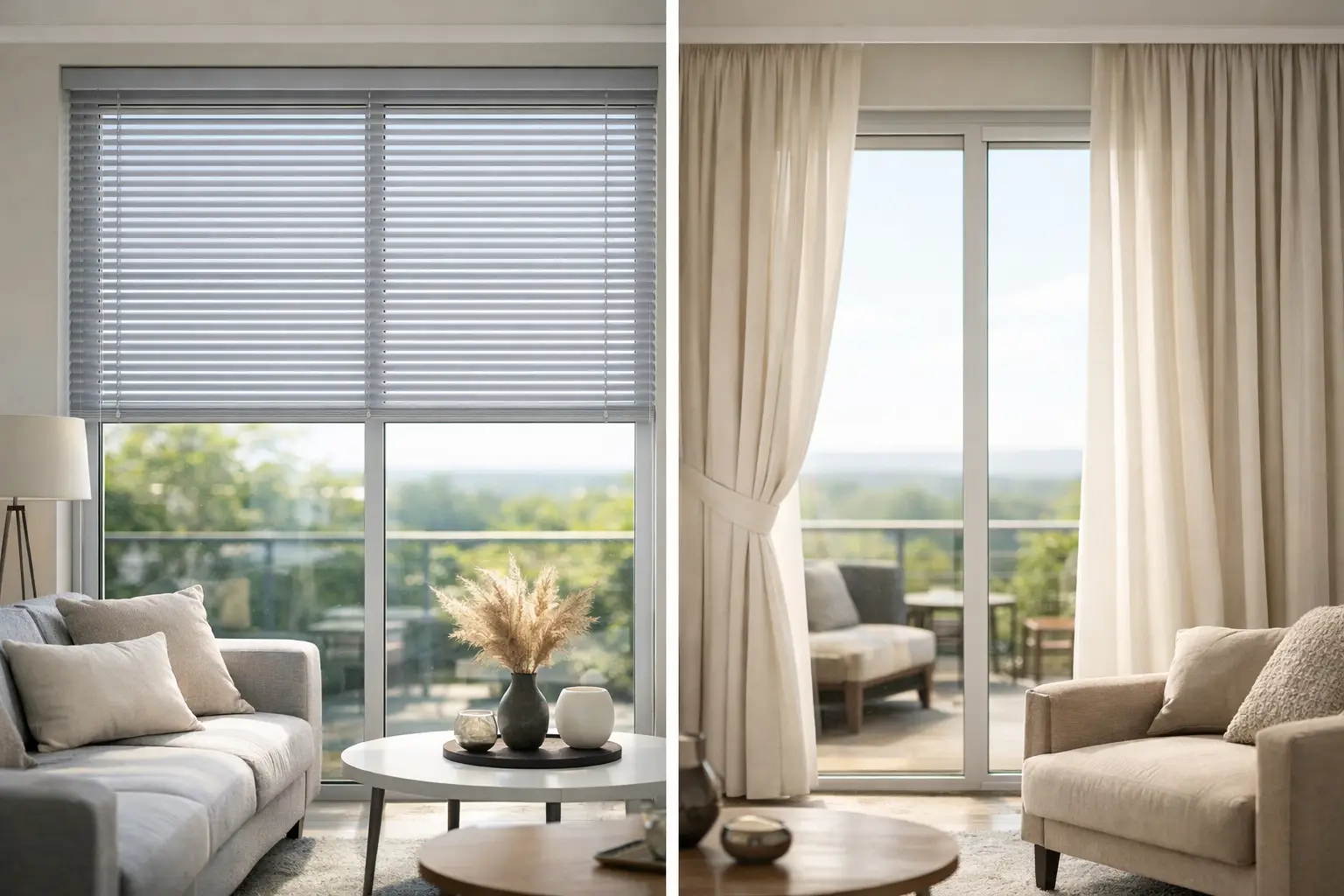

A sunny condo living room can look completely different at 8 a.m. than it does at 8 p.m. The right window treatment has to handle both. When comparing motorized blinds vs curtains, the best choice is less about following a trend and more about how you use the room, how much control you want over light and privacy, and the look you want to carry through your home. For a full walkthrough of fabric, opacity, pleats, and hanging, see our guide to custom curtains and drapery in Toronto.
Curtains bring softness, texture, and a traditional sense of warmth. Motorized blinds offer a tailored profile and controlled performance at the touch of a button. Both can be beautiful. The difference is in the daily experience.
Motorized Blinds vs Curtains: The Everyday Difference
Motorized blinds are made to move with your routine. With a remote, wall control, or smart-home connection, you can raise, lower, or adjust them without crossing the room. This is especially useful for tall windows, hard-to-reach glass, and wide window walls common in newer homes and high-rise condos.
Curtains are operated by hand unless they are installed on a motorized track. They can be simple and satisfying to use, but opening and closing several panels every day may feel less convenient in a busy household. For a homeowner who wants the living room to feel open in the morning and private after dark, automated control can make a noticeable difference.
The visual effect is different, too. Custom roller shades, zebra blinds, and other motorized options sit close to the window and create a clean, architectural finish. Curtains frame the glass and add volume. They are often the better fit when a room needs softness, pattern, or a more layered design.
Light Control and Privacy
Light management is where motorized blinds often have the advantage. A custom-fit blind can be selected for filtered daylight, room darkening, glare reduction, or near-blackout performance. With zebra blinds, for example, alternating sheer and opaque bands allow you to shift from diffused light to privacy while keeping the treatment streamlined.
Motorization makes those adjustments easier to use consistently. Instead of leaving shades in one position all day, you can lower them during intense afternoon sun, protect furnishings from UV exposure, or close them as evening arrives. Scheduled settings are particularly practical in bedrooms, media rooms, offices, and street-facing spaces.
Curtains can provide excellent privacy, particularly with lined or blackout fabrics. Their light control depends on the fabric, lining, fullness, and fit around the window. Even well-made curtain panels may allow light to enter at the sides or above the rod, while a carefully measured blind can create a more contained window covering solution.
That does not mean curtains are always the weaker choice. Sheer curtains can soften harsh daylight beautifully, and blackout drapery is a strong option for bedrooms where a cocoon-like atmosphere matters as much as darkness. The decision comes down to whether you want precise adjustment throughout the day or a fabric-forward treatment with a more fixed effect.
Style: Tailored Minimalism or Soft Layering
For contemporary interiors, motorized blinds offer a polished, low-profile appearance. They work well with clean-lined furniture, modern kitchens, open-concept living areas, and condo spaces where every visual element needs to earn its place. Neutral fabrics can blend into the room, while textured or patterned materials can make the window treatment part of the design.
Curtains bring a different kind of design value. Linen-look fabrics, tailored pleats, and carefully chosen colors can make a room feel more finished and inviting. They are particularly effective in formal living rooms, primary bedrooms, and spaces with high ceilings, where fabric can add scale and balance.
Many homes do not need to choose one or the other. A practical layered approach pairs a discreet motorized shade with decorative curtain panels. The shade handles privacy, glare, and day-to-day light control, while the curtains provide softness and visual depth. This option requires more planning, but the result can feel intentional rather than overly dressed.
Convenience for Condos, Families, and Workspaces
Motorized blinds are designed for the moments when manual operation becomes inconvenient. Think of a floor-to-ceiling window behind a sofa, a bank of windows in an open living area, or a bedroom where the morning sun arrives before you are ready. A single control can adjust multiple blinds together, helping the room feel consistent without extra effort.
For families, cordless motorized operation also supports a cleaner, safer window area. There are no hanging pull cords to manage, which is valuable in children’s rooms and high-traffic spaces. For property managers and business owners, motorization can help standardize the look and operation of window coverings across offices, meeting rooms, suites, or rental units.
Curtains have their own convenience: they are familiar, easy to understand, and can be a straightforward choice for a single standard window. But wide curtains can become heavy, and tall or awkwardly placed windows may require a step stool or effort to operate properly. If you are already renovating, furnishing a new condo, or updating several windows at once, it is worth considering how often each treatment will actually be used.
Cost and Long-Term Value
Curtains may appear less expensive at first, especially when purchasing ready-made panels. The full cost can rise once you add custom fabric, lining, hardware, professional measurement, and installation. A custom curtain treatment is a design investment, not simply fabric on a rod.
Motorized blinds typically have a higher starting cost because they combine made-to-measure fabrication with a motor and control system. The price also varies by window size, fabric selection, power source, and smart-home features. However, the added value is not only technology. It is the ability to use the covering easily, maintain a clean look, and manage light across difficult windows.
For either option, fit matters. A poorly measured treatment can leave privacy gaps, interfere with window handles, look uneven, or create a frustrating daily routine. Professional measurement and installation help ensure the product performs as intended, particularly in condos with concrete walls, large glazing, or building-specific installation requirements.
Energy Efficiency and Window Performance
Both curtains and blinds can improve comfort by reducing direct sun and adding a layer between the glass and the room. Solar shades can help control glare and UV exposure while preserving an outward view during the day. Room-darkening and blackout options can reduce heat gain in bright rooms and make bedrooms more comfortable.
Curtains can add insulation when they are properly lined and closed, especially over older or draft-prone windows. Their effectiveness depends on coverage and fit. If panels are primarily decorative and stay open most of the time, they will not contribute much to temperature control.
Motorized blinds can encourage better habits because they are easier to adjust at the right time. Lowering shades before a west-facing room overheats or closing them automatically at sunset can support a more comfortable interior. They are not a replacement for efficient windows, but they can help you respond to changing conditions without constantly thinking about it.
Which Option Is Right for Each Room?
In a bedroom, choose based on your sleep needs. Blackout curtains create a soft, hotel-inspired feel, while motorized blackout shades offer easier operation and a more compact silhouette. In a living room, a light-filtering or solar motorized shade can manage glare without blocking the room’s connection to the view. Decorative panels can be added if the space needs warmth.
For home offices, motorized shades are often the practical choice because screen glare changes throughout the day. In kitchens and bathrooms, blinds or shades are generally easier to keep clear of moisture, splashes, and busy work surfaces than long fabric panels. For a formal dining room or a classic interior, curtains may be the design feature that gives the room its final layer of character.
Make the Decision Around How You Live
The best choice in the motorized blinds vs curtains conversation is rarely absolute. If you value simple lines, smart control, precise privacy, and easy adjustment for large or difficult windows, motorized blinds are likely the stronger fit. If fabric, softness, and decorative impact are central to your vision, curtains deserve serious consideration.
A free in-home consultation can make the decision much clearer. Seeing samples against your walls, checking window depth, testing light conditions, and discussing how each room is used turns a broad design choice into a tailored solution. The right window covering should not just look good when it is installed. It should make every morning, workday, and evening at home feel easier.