
Sheer Shades in Toronto: A Complete Guide to Horizontal, Roller, and Vertical Shades
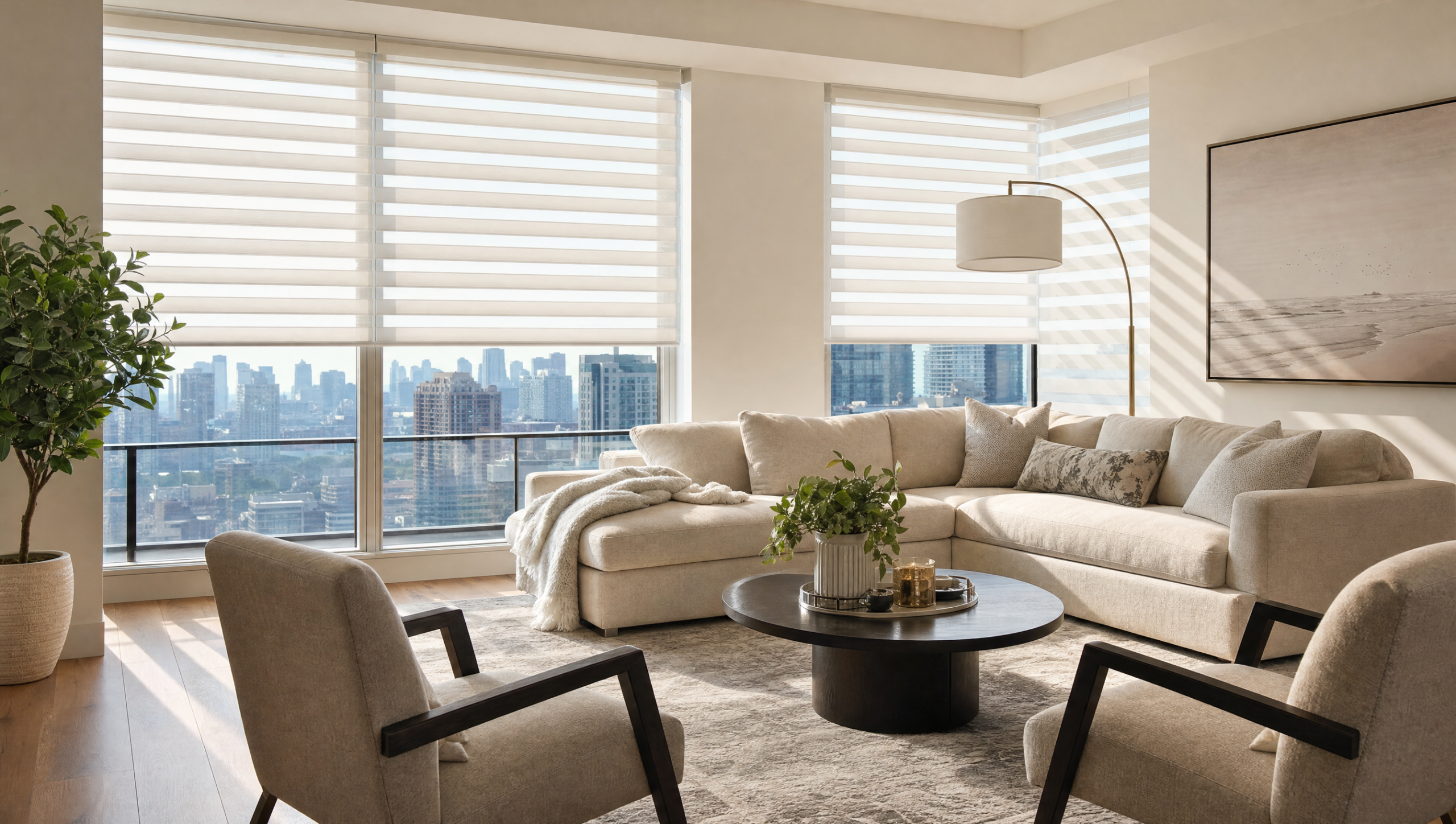

Sheer shades solve a problem that trips up a lot of Toronto homeowners. You want daylight to pour in, you want to keep your view of the street or the skyline, and you still want to feel private when the sun drops and the lamps come on. A heavy blind gives you privacy but steals the light. A bare window gives you light but no control at all. Sheer shades sit right in the middle, and once people see how they handle a bright south-facing living room or a floor-to-ceiling condo window, they tend to stop looking at anything else.
This guide walks through what sheer shades actually are, the different styles in the family, how they compare to zebra blinds and sheer curtains, and where they work best in a Toronto home. We will be straight with you about the one thing sheer shades do not do well, because knowing that up front saves a lot of disappointment later.
What Are Sheer Shades?
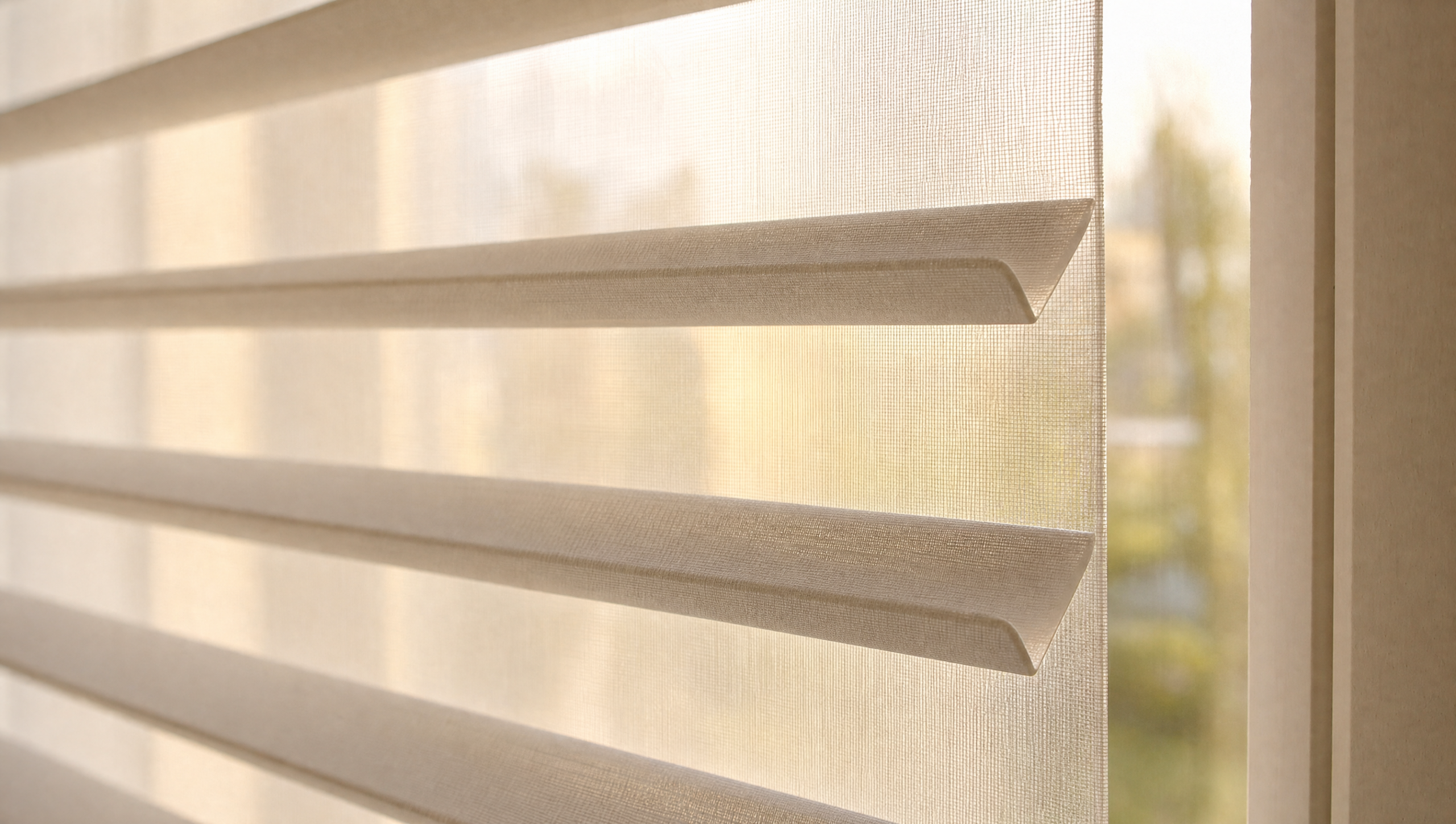
A sheer shade is a fabric window covering built from soft horizontal or vertical vanes suspended between two layers of sheer, knit fabric. When the vanes tilt open, daylight filters through the sheer facings and spreads softly across the room while you keep a hazy view outside. When the vanes close, the fabric overlaps to block the view and add privacy. You can also raise the whole shade like a roller when you want the window fully clear.
People sometimes call them soft shades, shadings, or by brand names like Silhouette. The mechanism is the same idea across the category: a light-filtering fabric that trades the hard slats of a traditional blind for a gentler, diffused glow. That glow is the reason designers reach for them in living rooms and bedrooms where the light needs to feel warm rather than striped.
How Sheer Shades Work
Think of a sheer shade as two sheer curtains held a short distance apart, with fabric vanes floating in the gap between them. A single control tilts those vanes anywhere from fully open to fully closed. Open vanes let the two sheer layers do the work, softening the sun and holding a see-through view. Closed vanes stack against each other so much less light and sightline pass through. Because the vanes are fabric rather than rigid slats, the whole shade reads as one soft panel instead of a set of hard lines.
The trade-off built into that design is worth understanding early. Sheer shades filter light beautifully, but even with the vanes closed they are still made of sheer fabric, so they are not a blackout product. If you need a room to go genuinely dark, that is a job for a different covering, and we cover the honest version of this later in the guide.
The Sheer Shade Family: Types and Styles
Sheer shades are not a single product. They come in a few distinct constructions, and the right one depends on your window shape and how you want the shade to move.
Sheer Horizontal Shades (Soft or Silhouette Style)
This is the classic sheer shade, and the one most people picture. Horizontal fabric vanes run across the window between two sheer facings, and a wand or motor tilts them. They suit standard rectangular windows in living rooms, dining rooms, and bedrooms, and they give that signature floating, diffused light. If you have seen a photo of a bright room where the window looks soft and cloud-like rather than lined with slats, you were almost certainly looking at a horizontal sheer shade.
Sheer Roller Shades
A sheer roller shade uses a single layer of open-weave, light-filtering fabric on a standard roller mechanism. It rolls up and down cleanly and disappears into a slim headrail, which makes it a favourite for minimalist condos and for windows where you want the covering to vanish when it is up. Sheer roller fabrics come in different openness factors, usually from around 1 percent up to 10 percent, which sets how much you can see through them and how much sun they cut. A related style, the banded or dual sheer roller, alternates sheer and solid stripes on one roller so you can shift between a clear view and privacy. That banded version overlaps heavily with what most Torontonians call zebra blinds, which we compare below. If a clean, contemporary roll is what you are after, our guide on how to choose roller blinds for every room pairs well with this section.
Sheer Vertical Shades
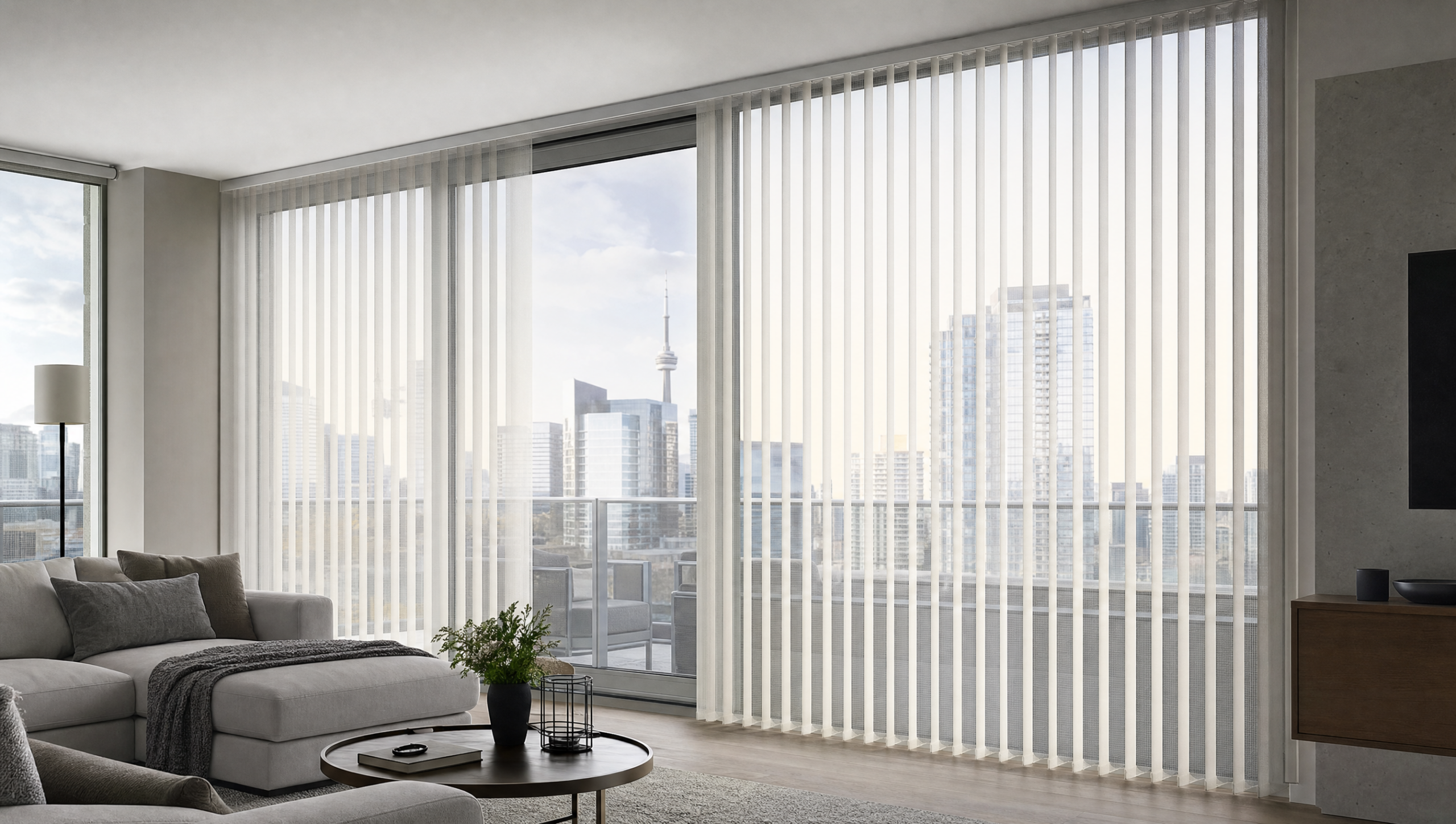
Sheer vertical shades take the same idea and turn it on its side. Vertical fabric vanes rotate between two sheer panels, and the whole assembly slides open along a track. That makes them the natural pick for wide windows, sliding glass doors, and patio doors, where a horizontal shade would be awkward to raise. They give you the soft sheer look on a scale that traditional vertical blinds handle in a much harder, clackier way. For door-height glass specifically, it helps to read our roundup of the best blinds for sliding doors alongside this.
Sheer Roman Shades
A sheer Roman shade folds a light, translucent fabric into soft horizontal pleats that stack as the shade lifts. It leans more decorative than the vane styles and brings a tailored, textile feel to a room. People often layer it with a heavier drape or a blackout liner when the window needs more than gentle filtering. If you like the folded look, our guide to custom Roman window shades for Toronto homes goes deeper on fabrics and lining.
| Sheer shade style | How it moves | Best window | Look |
|---|---|---|---|
| Sheer horizontal (soft) shade | Vanes tilt, whole shade raises | Standard rectangular windows | Floating, diffused, soft |
| Sheer roller shade | Rolls up and down | Condos, minimalist rooms | Clean, modern, understated |
| Sheer vertical shade | Vanes rotate, panel slides open | Patio doors, wide glass | Soft vertical texture |
| Sheer Roman shade | Folds and stacks upward | Feature and accent windows | Tailored, decorative pleats |
Sheer Shades Compared to Other Window Coverings
Half the questions we get about sheer shades are really questions about how they stack up against the coverings people already know. Here is where they land next to the usual alternatives.
Sheer Shades vs Zebra Shades
This is the comparison people search for most, and the two get mixed up constantly. Zebra shades, also called dual or day-and-night shades, use one layer of fabric printed with alternating sheer and solid horizontal bands on a roller. You slide the layers so the bands line up for a view or offset for privacy. Sheer shades use two separate sheer layers with fabric vanes floating between them, and the vanes tilt rather than slide.
The practical difference shows in the light. A zebra shade gives you crisp horizontal stripes of clear and opaque fabric, which many people love for a modern edge. A sheer shade gives you an even, striped-free wash of soft light. Zebra blinds tend to cost less and read more contemporary, while sheer shades feel more luxurious and diffuse. If the zebra look is calling to you, start with our explainer on what zebra blinds are and how they compare, or see how they land in a modern interior.
Sheer Shades vs Sheer Curtains
Both diffuse light, but they are different animals. Sheer curtains are loose fabric panels that hang from a rod and move side to side. They are inexpensive, easy to swap seasonally, and soft underfoot at a patio door, but they offer no vane control, so your only real settings are open and closed. Sheer shades mount tight to the window, tilt for fine light control, and raise fully out of the way. If you want adjustability and a fitted look, the shade wins. If you want billowing fabric and a quick, cheap refresh, curtains still have a place, and plenty of Toronto homes layer both.
Sheer Shades vs Cellular and Roller Shades
Cellular shades, also called honeycomb blinds, are built for insulation and can go from light-filtering to full blackout, which sheer shades cannot match. If Toronto winters and energy bills are your main worry, our guide to cellular shades and honeycomb blinds is the better starting point. Standard roller and solar shades block heat and glare more aggressively than sheers, so they are the choice for a harsh west exposure or a home office with screen glare. Sheer shades are the specialist for soft, filtered daylight with a preserved view, and they are not trying to be a blackout or an insulating product.
| Covering | Light control | Daytime privacy | View through | Blackout option |
|---|---|---|---|---|
| Sheer shades | Soft, diffused, adjustable vanes | Good with vanes closed | Yes, with vanes open | No |
| Zebra / dual shades | Striped bands, slide to adjust | Good when bands offset | Yes, when bands align | Some blackout fabrics |
| Sheer curtains | Open or closed only | Limited | Soft, always partial | No |
| Cellular shades | Light-filtering to blackout | Strong | No | Yes |
| Roller / solar shades | Even filtering, glare control | Depends on openness | Solar keeps a hazy view | Blackout roller available |
Light Control and Privacy: The Honest Version
This is the section that saves you a service call later, so we will not sugar-coat it. Sheer shades are wonderful for daytime light and daytime privacy, and they behave very differently once the sun goes down.
During the day, the light outside is brighter than the light inside. With the vanes open you get a soft view out and people struggle to see in. With the vanes closed you get gentle privacy and a glowing, filtered room. This is the sweet spot, and it is why sheer shades look so good in listing photos and design magazines.
At night, that balance flips. Once your interior lights are on and it is dark outside, anyone on the street can see shapes and movement through a closed sheer shade, because the fabric is still translucent. It is not a clear view, but it is not full privacy either. For a front-facing living room this is often fine. For a ground-floor bedroom or a bathroom, it usually is not. The common fix is to pair sheer shades with a second layer, such as a blackout roller or a drape, so you get the soft daytime light you wanted and real privacy at night. If nighttime privacy is the whole point of the project, read our piece on the best blinds for privacy in Toronto homes before you commit.
For managing harsh sun and screen glare without dropping the room into darkness, sheer shades do a genuinely good job, and you can go further with the ideas in our guide on how to block window glare without darkening rooms.
| Setting | Daytime | Nighttime with lights on |
|---|---|---|
| Vanes open | Soft view out, good privacy in | Clear view into the room |
| Vanes closed | Glowing filtered light, private | Shapes and movement visible |
| Shade raised | Full view, full light | Window fully exposed |
| Paired with blackout layer | Choose sheer light or darkness | Full privacy and darkness |
Fabrics, Openness, and Colour
The feel of a sheer shade comes down to the fabric. Openness factor is the number to know for roller-style sheers, and it describes how tightly the fabric is woven. A lower openness, around 1 to 3 percent, cuts more sun and gives more daytime privacy while keeping only a faint view. A higher openness, around 5 to 10 percent, keeps a clearer view and a brighter room but lets more sun and more sightline through. Most Toronto living rooms land comfortably in the 3 to 5 percent range.
Vane-style sheer shades come in different vane heights and fabric weights, from crisp and structured to soft and drapey. Colour matters more than people expect. Lighter fabrics keep a room bright and airy and hide dust well, while darker fabrics improve glare control and give a sharper view outside, at the cost of a slightly dimmer room. A neutral, slightly warm white is the safe default for resale-minded Toronto homes, and it flatters most wall colours. If you want the shade to disappear, match it close to the wall. If you want it to register as a design feature, go a shade or two deeper.
Best Rooms for Sheer Shades in a Toronto Home
Sheer shades are not a whole-home answer, and that is fine. They shine in specific rooms and specific exposures.
Living and Dining Rooms
This is the heartland for sheer shades. A bright living room with a nice view is exactly what the product was designed for, and the soft light flatters furniture and finishes all day. South and east exposures are ideal. Our living room blinds options page shows how sheers sit next to other choices for that space.
Bedrooms
Bedrooms are a maybe, and it depends on the sleeper. If you like waking with the light and you are not overlooked at night, sheer shades are lovely. If you need darkness to sleep or you are on a ground floor, plan on a blackout layer behind them. Our roundup of the best shades for bedrooms and better sleep lays out the darkness question in detail, and a bedroom blinds setup with two layers is a common result.
Condos and Floor-to-Ceiling Glass
Toronto condos with tall glass are a strong match, especially higher-floor units where nighttime overlooking is less of a concern. Sheer roller and sheer vertical styles keep the clean, unobstructed feel that condo owners want while taming the afternoon sun. Because condo installs come with their own rules and window quirks, our Toronto condo window covering guide for high-rises is worth a read before you order.
Patio Doors and Wide Windows
Sheer vertical shades were made for this. A sliding door gets soft, filtered light and easy walk-through access, without the hard rattle of old vertical blinds. Bay windows and unusually wide spans also do well with the vertical format, and our notes on custom shades for bay windows cover the fit details.
| Room or window | Sheer shade fit | Suggested style |
|---|---|---|
| Living room, south or east facing | Excellent | Sheer horizontal or roller |
| Bedroom, upper floor | Good, add blackout for sleep | Sheer plus blackout layer |
| Ground-floor bedroom or bath | Only with a privacy layer | Sheer plus blackout roller |
| Condo floor-to-ceiling glass | Excellent, higher floors best | Sheer roller or vertical |
| Sliding or patio door | Excellent | Sheer vertical shade |
| Home office with screen glare | Good for glare, not blackout | Low-openness sheer roller |
Inside Mount vs Outside Mount and Measuring
Where the shade sits changes how it looks and how well it controls light. An inside mount fits the shade within the window opening for a clean, built-in look that shows off the trim. It needs enough depth in the frame, and because sheer fabric leaves small gaps at the edges, a little light always sneaks around the sides. An outside mount fixes the shade to the wall or trim above the window, covers more of the opening, and reduces edge light, at the cost of a slightly bulkier look.
For sheer shades, mount choice interacts with that nighttime privacy point. If light control and coverage matter more than a flush look, lean outside mount. If you love the framed, tailored appearance and privacy is a secondary concern, inside mount is beautiful. Our comparison of inside mount versus outside mount walks through the depth requirements and the look of each.
Measuring sheer shades accurately matters more than with many coverings, because the fabric and vanes need to hang square to filter light evenly. A window that is even slightly out of square, which is common in older Toronto homes, will show it in an uneven shade. This is one product where a professional measure earns its keep, and our professional blind measurement service exists for exactly this reason.
| Factor | Inside mount | Outside mount |
|---|---|---|
| Look | Clean, built-in, shows trim | Covers frame, slightly bulkier |
| Edge light | Some light gaps at sides | Less edge light |
| Depth needed | Requires frame depth | Works on shallow frames |
| Best when | Trim looks good, view first | Coverage and privacy first |
Cordless, Motorized, and Child Safety
Cord safety is not a nice-to-have in Canada, it is the law, and it shapes how sheer shades are built today. Since May 2021, Health Canada regulations have required corded window coverings sold in Canada to meet strict limits, so that any reachable cord is short enough to remove a strangulation hazard for young children. You can read the details on Health Canada’s own page on blind cord safety, and the full text lives in the federal Corded Window Coverings Regulations.
In practice, most sheer shades today come cordless or motorized, which removes the dangling cord entirely and looks cleaner besides. Cordless shades lift with a gentle push or pull on the bottom rail. Motorized sheer shades tilt the vanes and raise the shade with a remote, an app, or a voice assistant, which is a real convenience on tall condo windows you cannot easily reach. For families, the safest choice is a cordless or motorized shade, and our guides to child-safe window coverings and cordless blinds explain the options. If you like the idea of app or voice control, our overview of automating shades and our take on motorized blinds versus curtains are good next reads.
What Drives the Cost of Sheer Shades
Sheer shades sit toward the premium end of soft window coverings, generally above basic rollers and zebra blinds and below the most elaborate layered drapery. Rather than quote a number that would be out of date by next season, it is more useful to know what actually moves the price, so you can steer the quote toward your budget.
Window size is the biggest lever, since larger and wider windows use more fabric and heavier hardware. The style matters too, with vertical and specialty configurations usually costing more than a standard horizontal shade. Fabric quality, vane height, and designer collections push the price up, as does adding motorization, a smart-home hub, or premium colours. Installation complexity plays a part, and very tall condo windows or out-of-square older frames take more time to fit correctly. For a clear, current picture tied to your exact windows, a free in-home consultation is the honest way to get real numbers.
| Cost driver | Effect on price |
|---|---|
| Window size and width | Larger windows raise the price |
| Style (horizontal, roller, vertical) | Vertical and specialty cost more |
| Fabric and vane quality | Premium collections cost more |
| Cordless vs motorized | Motorization adds to the total |
| Smart-home integration | Hubs and app control add cost |
| Install complexity | Tall or out-of-square windows add labour |
Cleaning and Maintenance
Sheer fabric asks for a gentle hand, and the good news is that day-to-day care is light. Dust is the main enemy, and a regular pass keeps the fabric looking fresh. Because the vanes are delicate, skip aggressive scrubbing and harsh cleaners, which can mark or distort the sheer weave.
For routine care, close the vanes and dust them with a soft brush attachment on low suction, or use a clean, dry microfibre cloth. For a small mark, blot gently with a barely damp cloth and let the fabric air dry fully before you operate the shade. Deep cleaning is a job for a specialist, since immersing or heavily wetting sheer fabric can ruin its shape. Motorized and cordless shades have the practical bonus of fewer parts to tangle and collect dust.
| Task | How | How often |
|---|---|---|
| Routine dusting | Soft brush or dry microfibre | Every week or two |
| Light vacuum | Low suction, brush attachment | Monthly |
| Spot clean | Blot with a barely damp cloth | As needed |
| Deep clean | Professional service | Occasionally |
Are Sheer Shades Worth It?
For the right window, yes. The soft, diffused light is genuinely different from anything a hard blind produces, and the combination of a preserved view with adjustable daytime privacy is hard to beat. They photograph beautifully, they suit modern Toronto interiors, and cordless and motorized versions make them safe and effortless.
The honest caveats are the price, which sits above basic rollers and zebra blinds, and the nighttime privacy limit that means many rooms want a second layer. If you go in knowing those two things, sheer shades rarely disappoint. If you were hoping for one product that does soft daytime light and full nighttime blackout on its own, they are not it, and that is worth being clear about.
| Strengths | Limitations |
|---|---|
| Soft, diffused daylight | Not a blackout product |
| Keeps a view with daytime privacy | Reduced privacy at night with lights on |
| Elegant, premium look | Costs more than basic rollers or zebra |
| Cordless and motorized options | Delicate fabric needs gentle care |
| Great for large and tall windows | Edge light on inside mounts |
How to Choose Sheer Shades: Questions to Ask Before You Order
Before you sign off on a quote, run through a short checklist. It keeps the project honest and stops the common regrets.
Start with the room and the exposure, then be clear about your privacy needs after dark, since that decides whether you need a second layer. Check the window depth for an inside mount, settle on cordless or motorized for safety and convenience, and pick an openness and colour that match how bright you want the room. Finally, confirm who is measuring and installing, because a precise fit is what separates a shade that looks custom from one that looks close enough.
| Question | Why it matters |
|---|---|
| What is the room and exposure? | Sets style, openness, and colour |
| Do I need nighttime privacy? | Decides if you need a second layer |
| Inside or outside mount? | Affects look and edge light |
| Cordless or motorized? | Safety and reach on tall windows |
| Which openness and colour? | Controls brightness and view |
| Who measures and installs? | A square fit filters light evenly |
Sheer Shades for Toronto Homes and Condos
Toronto light has a personality. Low winter sun cuts hard across a living room, summer afternoons blaze on west-facing condos, and older homes in the east end come with windows that are rarely perfectly square. Sheer shades handle that changing light with a softness that suits both a downtown high-rise and a century home, as long as they are measured and matched to the room.
If you are weighing sheer shades against zebra blinds, cellular shades, or a layered look, the smart move is to see the fabrics in your own light before you decide. You can browse finished projects in our window blinds gallery, explore the full range of custom window coverings in Toronto, and when you are ready, contact us to book a free in-home consultation. We will bring samples, measure your windows properly, and help you land on the light and privacy balance that fits how you actually live.
Frequently Asked Questions About Sheer Shades
What is a sheer shade?
A sheer shade is a fabric window covering with soft vanes suspended between two layers of sheer fabric. Tilting the vanes filters daylight into a soft glow while keeping a hazy view, and closing them adds daytime privacy. The whole shade can also raise like a roller to clear the window.
Are sheer shades the same as zebra shades?
No. Zebra shades use one fabric with alternating sheer and solid horizontal bands that slide to align or offset. Sheer shades use two sheer layers with fabric vanes floating between them that tilt open and closed. Zebra gives striped light, sheer gives an even, diffused wash.
Do sheer shades give privacy at night?
Only partly. During the day sheer shades give good privacy with the vanes closed. At night, once your interior lights are on and it is dark outside, people can see shapes and movement through the sheer fabric. For full nighttime privacy, pair them with a blackout layer.
Are sheer shades worth it?
For living rooms, bright spaces, and windows with a view, they usually are. You get soft, diffused daylight and adjustable daytime privacy that hard blinds cannot match. The main trade-offs are a higher price than basic rollers and the need for a second layer where full nighttime privacy matters.
How much do sheer shades cost?
Sheer shades sit toward the premium end of soft window coverings, above basic rollers and zebra blinds. The price depends on window size, style, fabric, and whether you add motorization. A free in-home consultation is the only reliable way to get current pricing for your exact windows.
Do sheer shades block out light?
No. Even with the vanes closed, sheer shades are made of translucent fabric, so they filter and soften light rather than block it. If you need a dark room for sleep or a media space, add a blackout roller or drape behind the sheer shade.
What is the difference between sheer shades and sheer curtains?
Sheer curtains are loose fabric panels on a rod that only open or close. Sheer shades mount to the window, tilt their vanes for fine light control, and raise fully out of the way. Shades give more adjustability and a fitted look, curtains give a softer, cheaper, more casual layer.
Are sheer shades good for bedrooms?
They can be, if you like waking with soft light and are not overlooked at night. For darkness or ground-floor privacy, pair sheer shades with a blackout layer. Many Toronto bedrooms use a two-layer setup so daytime stays soft and nights stay dark and private.
Can sheer shades be motorized?
Yes. Motorized sheer shades tilt the vanes and raise the shade with a remote, an app, or a voice assistant. Motorization is especially handy on tall condo windows you cannot easily reach, and it removes cords entirely, which makes the shade safer around children and pets.
Are sheer shades child safe?
Cordless and motorized sheer shades are the safe choice, since they carry no accessible pull cords. Corded window coverings sold in Canada must meet Health Canada cord-safety rules that took effect in 2021, but for homes with young children a cordless or motorized shade removes the hazard completely.
What are sheer roller shades?
Sheer roller shades use a single layer of open-weave, light-filtering fabric on a standard roller. They roll up cleanly into a slim headrail and suit minimalist condos. Openness factor, usually 1 to 10 percent, sets how much view and sun pass through, with lower numbers giving more privacy.
What are sheer vertical shades?
Sheer vertical shades have soft vertical vanes between two sheer panels, and the whole assembly slides open along a track. They are made for sliding doors, patio doors, and wide windows, giving the soft sheer look on a large scale without the hard rattle of traditional vertical blinds.
Which sheer shade is best for a patio door?
A sheer vertical shade is the natural fit for a sliding or patio door. The vanes rotate to filter light and add daytime privacy, and the panel slides aside for easy walk-through access. It handles wide, door-height glass far more gracefully than a horizontal shade would.
How do you clean sheer shades?
Close the vanes and dust them with a soft brush or a dry microfibre cloth, or vacuum on low suction with a brush attachment. Blot small marks with a barely damp cloth and let the fabric dry fully. Leave heavy or deep cleaning to a specialist, since soaking sheer fabric can distort it.
Do sheer shades help with sun and glare?
Yes. Sheer shades soften harsh sun and cut glare while keeping the room bright and the view intact, which makes them useful in living rooms and home offices. For very strong west-facing sun, a lower-openness sheer roller or a solar shade gives stronger glare control.
Are sheer shades good for Toronto condos?
Very much so, especially on higher floors where nighttime overlooking is less of a concern. Sheer roller and sheer vertical styles keep the clean, unobstructed feel condo owners want while taming afternoon sun on floor-to-ceiling glass. Check your building’s rules on window coverings before ordering.
Canadian Blinds Pros serves Toronto and the wider GTA with custom window coverings, in-home consultations, professional measuring, and installation. To see sheer shade fabrics in your own light and get accurate pricing for your windows, reach out to book a free consultation.