
Are Window Treatments Included When You Buy a Home in the GTA?

Are Window Treatments Included When You Buy a Home in the GTA?
Buying a home comes with many details to check before closing. Appliances, light fixtures, storage pieces, and window treatments can all affect how complete the home feels when you move in.
For Toronto buyers, window coverings are worth checking early because they influence privacy, natural light, room comfort, and move-in costs. Some blinds or shades may stay with the home, while curtains or removable pieces may leave with the seller. Check the Agreement of Purchase and Sale first and make sure the wording is clear.
Related Article: What Is the Difference Between Blinds and Curtains?
Are Window Treatments Included in a Home Purchase?
Window treatments may be included when buying a home, but you should never rely on assumption alone. In many real estate transactions, installed blinds, shades, and shutters are treated as fixtures because they are attached to the window frame or wall. Removable curtains, drapes, and fabric panels may be treated as personal property.
That difference matters because fixtures usually stay with the property unless the seller excludes them in writing. Chattels, or movable items, usually leave with the seller unless the buyer includes them in the purchase agreement.
For window coverings, the confusion often comes from mixed setups. If listing photos show finished windows, ask what is included before you make or finalize your offer.

Check the Agreement of Purchase and Sale
The Agreement of Purchase and Sale is the document that matters most. Listing photos, verbal comments, and showing impressions can help you ask better questions, but they do not replace written terms.
Before signing, ask your realtor to confirm how window coverings are described. Look for wording such as:
- All existing blinds and shades included
- All window coverings included
- Curtains and rods included
- Primary bedroom drapes excluded
- Motorized blinds and remotes included
The more specific the wording, the less room there is for confusion. For high-value coverings, ask for exact details by room. Include remotes, chargers, wall controls, smart hubs, and manuals if motorized systems are part of the sale.
What Buyers Should Look for During a Showing
Window treatments can look fine at first glance, but a quick check can tell you whether they are worth keeping or likely need replacing.
1. Start with fit.
Custom blinds should sit cleanly inside or outside the window frame without awkward gaps. Gaps may reduce privacy in bedrooms, bathrooms, and street-facing rooms. In older Toronto homes, windows may vary from room to room, so a poor fit in one area can be a sign that the coverings were temporary or reused.
2. Check the function.
Raise and lower blinds, tilt slats, test chains, and check whether the fabric rolls evenly. For motorized blinds, ask whether they respond smoothly and whether all controls are available.
3. Check the condition.
Look for bent slats, frayed edges, broken brackets, stains, missing valances, or damaged cords.
4. Take photos during your final walkthrough.
Compare the windows with the listing photos and your agreement. If blinds, rods, remotes, or panels are missing, raise the issue before closing is completed. This gives your realtor and lawyer a clearer record and gives both sides a better chance to resolve the concern quickly.

Why Window Treatments Matter After Moving In
Window coverings are one of the first things buyers notice after possession because empty windows create immediate problems. A bedroom without blinds can feel exposed. A living room with full afternoon sun can become uncomfortable. A street-facing condo may need privacy the first night you move in.
Good window treatments help with daily comfort from the first week in the home. They are also easier to plan before furniture blocks access to large windows.
Good window treatments help with:
- Privacy from neighbours, sidewalks, and nearby buildings
- Light control for bedrooms, nurseries, media rooms, and home offices
- Comfort during bright afternoons or colder months
- A finished look before furniture and decor are fully arranged
- Daily convenience on large or hard-to-reach windows
Should You Keep the Existing Window Coverings?
Keeping the existing window coverings can save money right after closing, especially if they are custom-fitted and in good condition. However, inherited blinds do not always suit your lifestyle, furniture, or privacy needs.
Ask yourself three questions:
- Do they fit the windows properly?
- Do they suit how each room will be used?
- Do they match the style you want for the home?
If the coverings are damaged, dated, unsafe, or poorly matched to the space, replacing them early can make the home feel more settled.
Related Article: Seasonal Blinds: Transitioning Your Window Treatments from Summer to Winter
Best Window Treatments for a New Home
The right choice depends on the room, window size, light exposure, and level of privacy needed. In Toronto homes and condos, these are common options:
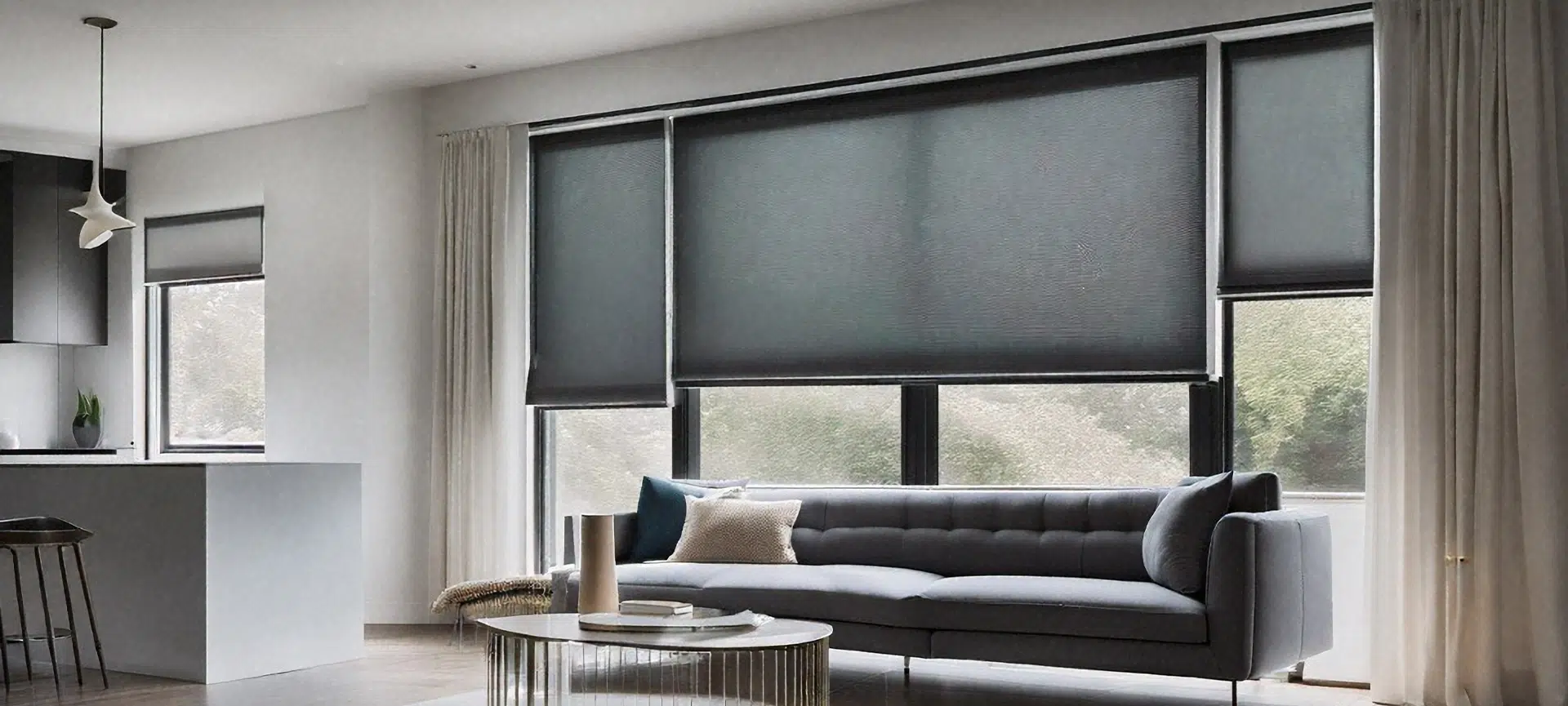
Roller Shades: Roller shades or blinds offer a clean, modern look and work well in living rooms, bedrooms, offices, and condos. They are available in light-filtering, sunscreen, and blackout fabrics.
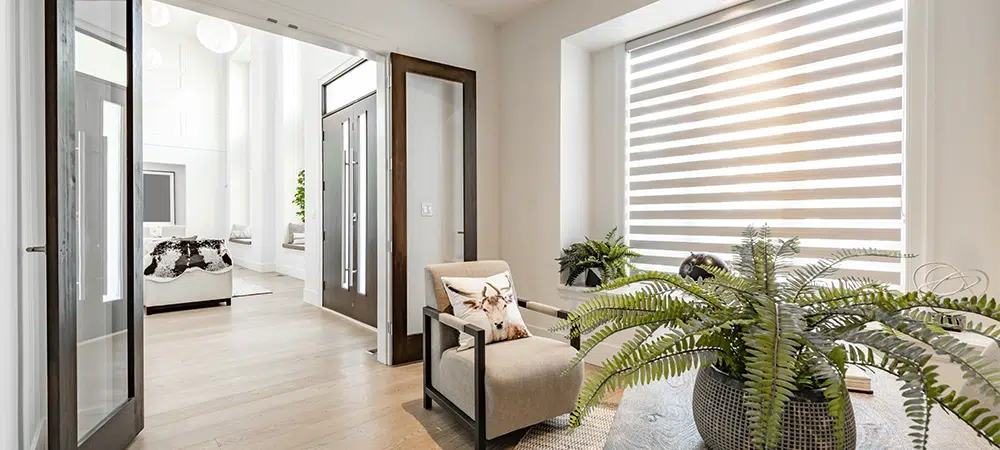
Zebra Blinds: Zebra blinds combine sheer and solid fabric bands, making it easier to shift between soft light and privacy. They work well in main living areas where you want daytime flexibility.
Motorized Blinds: Motorized blinds are useful for tall windows, wide windows, bedrooms, and smart home setups. They reduce daily effort and create a cleaner look without visible cords.
Vertical Blinds: Vertical blinds can still work well for patio doors, sliding doors, and large openings. Modern materials and cleaner profiles can make them feel more current than older plastic styles.
Custom Window Shades: Custom shades help solve fit and design issues, especially in homes with unusual window sizes, bay windows, or rooms that need a specific light level.
Related Article: Custom Window Blinds: All You Need to Know
What Sellers Should Clarify Before Listing
Sellers should decide early which window treatments will stay and which will be removed. If you plan to keep expensive drapery, custom fabric panels, or smart blinds, say so before buyers form expectations.
Remove personal or excluded items before listing photos are taken when possible. Sellers should also repair holes, exposed brackets, paint marks, or damaged trim caused by removal.
Related Article: Where to Find the Best Window Blinds Installers in GTA
When New Blinds Are the Better Choice
Even if the existing blinds are included, new window treatments may be the better long-term choice. Homes rarely come with coverings selected for the new owner’s schedule, taste, furniture, or privacy needs.
New custom blinds also give you accurate measurements and a consistent look across the home. Blinds Toronto offers custom window coverings in Toronto, including zebra blinds, roller shades, motorized blinds, vertical blinds, and custom window shades.
A free in-home consultation can help you measure properly, compare materials, and choose options that match each room. Professional installation helps every blind fit correctly and work smoothly.
Make Your New Home Feel Finished
Before you buy, confirm exactly which window treatments are included in writing. Before you move in, decide which rooms need privacy, blackout coverage, light filtering, or a style upgrade.
If the existing coverings work, keep them and settle in. If they are missing, damaged, dated, or poorly suited to your needs, start fresh with custom blinds that fit your windows and your daily routine.
Book a free in-home consultation with Blinds Toronto to choose window treatments that make your new home feel private, comfortable, and complete from the start.

Frequently Asked Questions
What should buyers check during the final walkthrough?
During the final walkthrough, test every blind or shade that will stay with the home. Check for broken cords, uneven rolling, bent slats, missing remotes, and poor privacy coverage. This helps you decide what needs replacing after move-in.
Are curtains considered fixtures or chattels?
Curtains are usually treated as movable personal property because they can slide off a rod. Curtain rods or brackets may be fixtures because they are attached to the wall. To avoid confusion, include curtains and rods clearly in the agreement.
What should I ask about window treatments before buying a home?
Ask which blinds, shades, shutters, curtains, rods, remotes, and smart controls are included. Check their condition and operation during the showing. If anything matters to you, ask your realtor to put it in writing before your purchase offer is accepted.
Should I replace window treatments after moving in?
Replace them if they are damaged, unsafe, hard to use, mismatched, or wrong for your privacy needs. New custom blinds can improve room comfort, light control, and design consistency, especially in bedrooms, condos, and street-facing spaces right away after possession.
Which window treatments are easiest to update after closing?
Roller shades and zebra blinds are often the easiest updates after closing because they suit many Toronto homes and condos. They offer clean light control, privacy, and a modern look without heavy fabric. Motorized blinds are also worth considering for wide or hard-to-reach windows.