
Best Window Coverings for Large Windows
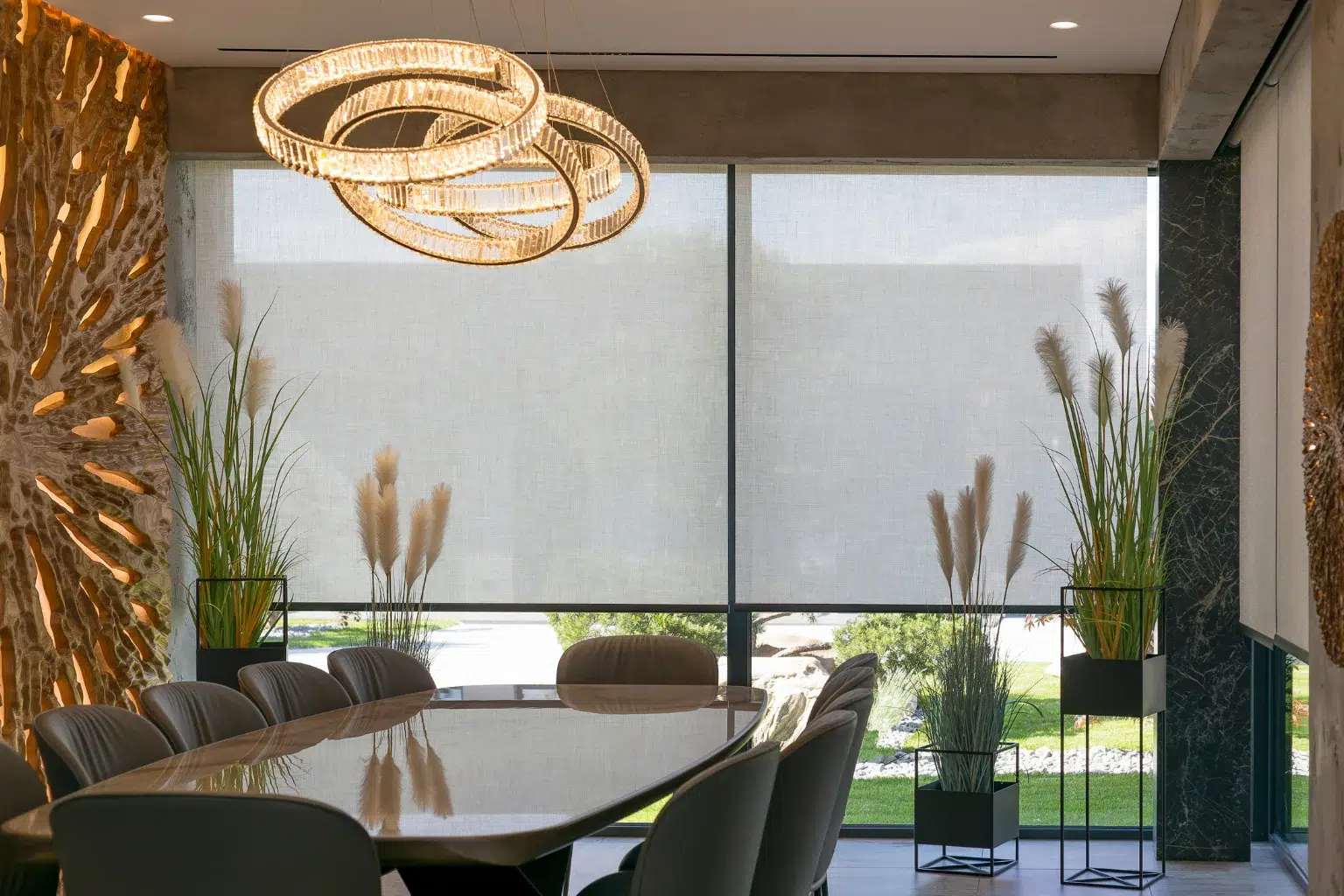

Large windows can make a room feel open, bright, and expensive – right up until the afternoon glare hits, privacy disappears, or a standard off-the-shelf shade starts to look undersized. Choosing the right window coverings for large windows is less about filling space and more about controlling light, scale, comfort, and how the room actually functions day to day.
Some of the hardest windows to cover sit overhead. For sloped roof glass, our guide to skylight blinds in Toronto explains the shade types and motorized options that work best.
That is why oversized windows deserve a more considered approach. A treatment that looks great on a small bedroom window may feel flimsy, uneven, or visually busy across a wide living room opening, a floor-to-ceiling condo window, or a commercial front-facing space. The best result usually comes from balancing appearance with operation, fabric performance, and proper installation.
What large windows really need
Large windows ask more from a covering than smaller ones do. Weight becomes a factor. So does alignment, especially when several panels are installed side by side. Light control is another major issue, because a broad glass surface can flood a room with brightness, heat, and UV exposure.
There is also the design question. Big windows naturally draw the eye, so the treatment should feel intentional rather than like an afterthought. In modern homes and condos, clients often want a clean architectural look. In offices, they may need glare reduction without making the space feel closed in. Those needs can point to very different products, even if the windows are similar in size.
The best window coverings for large windows by use case
No single product is best for every large window. The right choice depends on how much privacy you want, whether you need blackout performance, and how often the covering will be raised or adjusted.
Roller shades for a clean modern look
Roller shades are one of the most practical options for oversized windows because they keep the visual lines simple. On large expanses of glass, that simplicity matters. A bulky or highly segmented treatment can make the wall feel cluttered, while roller shades tend to look tailored and understated.
They also come in a wide range of fabrics, from light-filtering to blackout to solar materials that cut glare while preserving some outward visibility. For living rooms, family rooms, and offices, solar or light-filtering roller shades often strike the right balance. For bedrooms or media rooms, blackout fabrics usually make more sense.
The trade-off is that one extra-wide shade is not always the best answer. Depending on the window width, multiple shades aligned precisely side by side may operate better and look cleaner over time. This is where professional measuring and installation make a visible difference.
Zebra blinds for flexible light control
Zebra blinds work especially well when large windows need versatility. Their alternating sheer and solid bands let you shift between filtered daylight and more privacy without fully raising the blind. In urban settings, where windows face neighboring buildings or busy streets, that flexibility is often the main selling point.
They also suit contemporary interiors because they feel polished without looking heavy. For oversized condo windows or large living room openings, zebra blinds offer a softer look than plain blackout shades while still giving you more control than a sheer treatment alone.
What matters here is scale. On large windows, fabric quality and alignment become more noticeable. A custom fit helps the stripes line up properly and keeps the finished look crisp rather than patchy.
Roman shades when softness matters
Some large windows need structure, but others benefit from a warmer, more decorative finish. Roman shades can work beautifully in dining rooms, sitting areas, and bedrooms where you want texture and softness without going to full drapery.
This option is often chosen for style first, but it still needs to be practical. On wider windows, fabric selection and lift system quality are important because heavier materials can affect how smoothly the shade stacks and folds. Roman shades can absolutely work on large openings, but they need to be designed for the scale of the window, not treated like a small-window solution enlarged at the last minute.
Solar shades for glare-heavy spaces
If the main problem is heat, glare, or screen visibility, solar shades are often the smartest answer. They are particularly effective in offices, condos with strong sun exposure, and rooms with large windows that look beautiful but become uncomfortable at certain hours.
Solar fabrics reduce glare and help protect interiors from UV damage while keeping the space visually open. That makes them a strong choice for workspaces, living rooms with television glare, or commercial environments where comfort and visibility matter at the same time.
They are not the right fit for every room, though. At night, when interior lights are on, privacy can be limited depending on the fabric openness. Many clients pair solar shades in daytime spaces with a different privacy-focused treatment in bedrooms.
Motorized window coverings for large windows
When windows get bigger, manual operation becomes less convenient. That is especially true for tall installations, hard-to-reach windows, or rooms where several shades need to move together. Motorized window coverings for large windows solve a practical problem while also improving the overall experience of the space.
Instead of pulling multiple chains or cords across a long wall of glass, you can adjust the shades with a remote, wall control, or smart home integration. That convenience is valuable in double-height rooms, condo living areas with expansive glazing, boardrooms, and street-facing commercial spaces.
Motorization also helps protect the product itself. Smooth, consistent operation reduces strain that can happen with frequent manual handling, particularly on wider shades. For many clients, it starts as a luxury feature and quickly becomes the feature they use most.
Why custom fit matters more on oversized windows
Large windows leave very little room for approximation. A small measuring error is easier to hide on a compact opening. On a wide window or a full wall of glass, it becomes obvious fast. Gaps, uneven hems, misaligned multiple shades, and awkward clearances all stand out more when the scale is larger.
Custom sizing improves both performance and appearance. It helps with privacy at the edges, creates a cleaner line across multiple units, and allows the product to fit the room rather than forcing the room to adapt to standard sizes. This is particularly relevant in condos and newer homes where window dimensions can be generous but not necessarily standard.
Installation matters just as much. Large shades need secure mounting, level placement, and careful spacing. If the goal is a polished result, the product and the install have to work together.
Choosing by room, not just by window size
The same oversized window can call for different solutions depending on the room. In a bedroom, blackout performance and privacy usually come first. In a living room, the priority may be glare reduction without losing daylight. In a home office, screen visibility might be the deciding factor. In a commercial setting, the finish needs to look professional while standing up to everyday use.
That is why the best consultations start with how the room is used. A beautiful fabric is not enough if it does not provide the privacy you need. A high-performing shade is not the right answer either if it makes the room feel too stark. The goal is a covering that fits the architecture, supports comfort, and still looks right when it is fully lowered and fully open.
In Toronto-area condos and urban homes, this often means considering neighboring sightlines, strong west-facing sun, and clean lines that suit modern interiors. Canadian Blinds Pros works with those realities every day, which makes the selection process more practical and less guesswork-driven.
What to expect from the right solution
The right large-window treatment should do more than cover glass. It should make the room easier to live in. That may mean softer daylight in the morning, less heat in the afternoon, more privacy in the evening, or a cleaner visual finish all day long.
If you are comparing options, start with three questions: how much light do you want to keep, how much privacy do you need, and how often will you adjust the covering? Those answers usually narrow the field quickly. From there, fabric type, control method, and mounting details can shape a solution that looks intentional instead of improvised.
Large windows deserve that level of attention. When the scale is right, the operation is smooth, and the fabric suits the room, the whole space feels more finished – and more comfortable to use every day.