
Best Blinds for Sliding Doors That Actually Fit
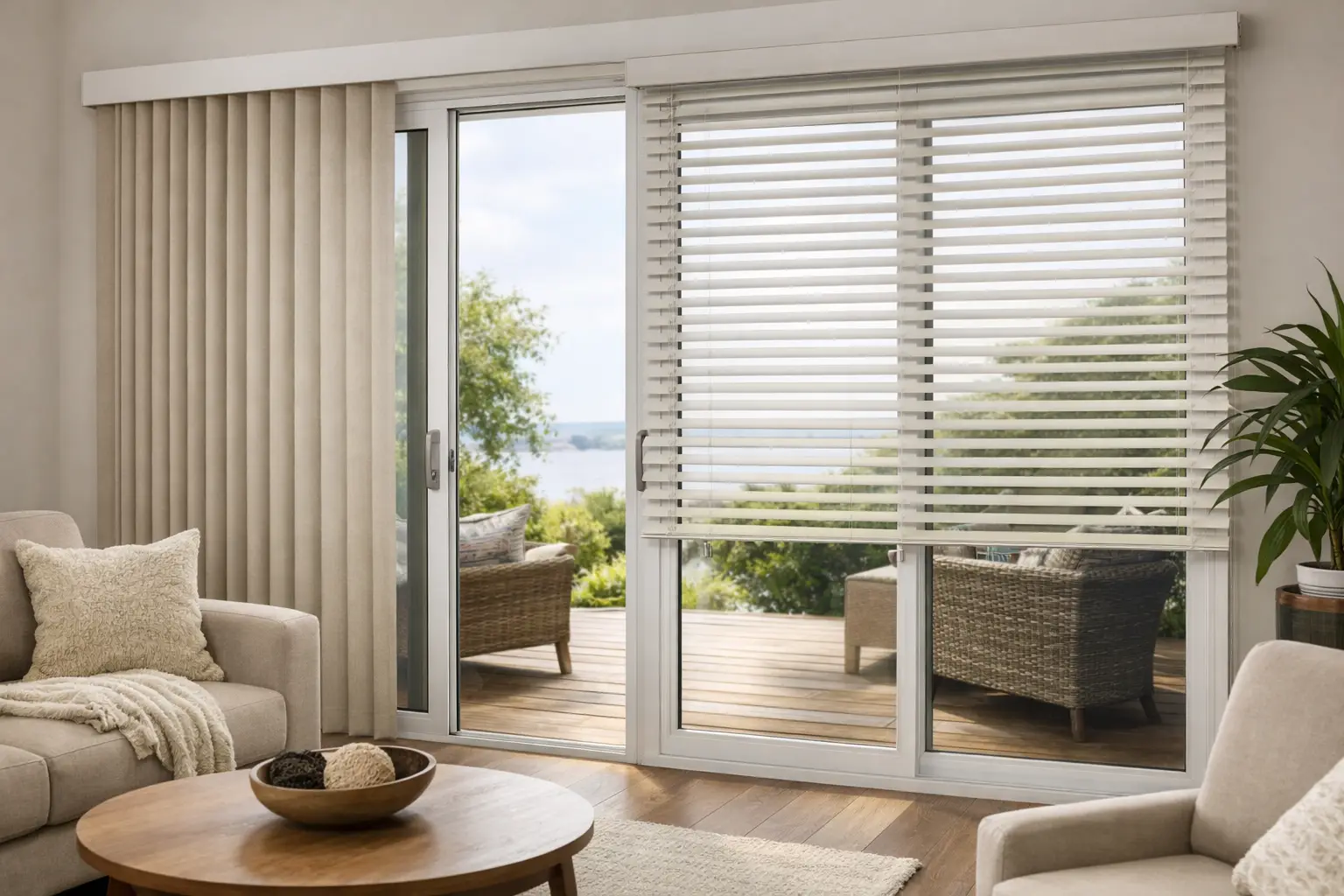

A sliding door is not just another window. It is a high-traffic opening, a source of daylight, and often the visual anchor of a living room, bedroom, office, or condo suite. The best blinds for sliding doors need to do more than look polished. They need to move out of the way easily, provide dependable privacy after dark, and fit the door’s full width without awkward gaps or dragging fabric.
One of the cleanest options for a wide slider is a set of panel track blinds that stack flat to one side and clear the doorway.
Shutters are another neat way to cover a wide sliding opening. Our guide to California shutters in Toronto covers bypass panels built for patio doors.
For Toronto-area homes and condos, the right choice often comes down to how the room is used. A patio door used by children and pets needs a different solution than a rarely opened balcony door in a high-rise unit. Custom measurement matters because sliding doors vary widely in width, handle clearance, trim depth, and the amount of space available above the opening.
What Makes Blinds Work Well on a Sliding Door?
The most successful treatments are designed around the direction your door moves. Since sliding doors open side to side, coverings that stack or glide horizontally are generally the easiest to live with. They preserve access, create a clean visual line across wide glass, and reduce the need to lift or gather material every time someone steps outside.
Vertical blinds are one of the classic side-stacking options for a slider. See our complete guide to vertical blinds for patio doors and wide windows.
Light control is equally important. Large glass doors can flood a room with beautiful morning light, but they can also create glare on screens, fade flooring and furniture, and make a space feel exposed at night. The ideal treatment gives you a practical range of control rather than forcing a choice between completely open and completely closed.
Finally, consider where the covering will sit. An inside-mounted option can look streamlined when the frame has enough depth, while an outside mount can cover more of the glass and help reduce light gaps. A professional consultation identifies these details before the product is ordered, rather than discovering limitations on installation day.
The Best Blinds for Sliding Doors by Need
Sliding Panel Shades for Wide Openings
Sliding panel shades are often the strongest choice for wide patio doors, modern condos, and commercial spaces. Large fabric panels travel smoothly along a track and stack neatly at one or both sides of the opening. Their scale suits expansive glass far better than a treatment made for a standard window.
They are available in light-filtering, room-darkening, solar, and textured fabrics, so the finished look can range from soft and airy to highly private. In a contemporary living room, a neutral woven fabric can make the door feel like part of the wall design rather than an afterthought. For bedrooms or media rooms, a more opaque fabric offers stronger light control.
The trade-off is stacking space. When panels are open, they need room beside the door, and that needs to be planned around nearby furniture, wall space, and the preferred direction of travel. A custom layout makes sure the panels stack where they are least intrusive.
Roller Shades for a Clean, Minimal Look
Roller shades are an excellent fit when a clean, architectural appearance is the priority. They work particularly well on sliding doors with adjacent windows, where matching shades can create a consistent line across the entire wall. For broader openings, multiple coordinated roller shades can be specified to cover each section of glass while maintaining a uniform finish.
Solar roller shades are especially useful in rooms with strong sun exposure. Their specialty fabrics soften glare and help protect interiors from UV exposure while retaining some outward visibility during the day. This makes them a smart choice for condo living rooms, work-from-home spaces, and offices with balcony doors.
For more privacy, choose a light-filtering or room-darkening roller fabric. Keep in mind that a standard roller shade lifts upward, so it must be raised before the door can be used. That is convenient for a balcony door opened occasionally, but less ideal for a family patio door used throughout the day.
Zebra Blinds for Adjustable Light and Privacy
Zebra blinds offer a modern balance of privacy and daylight. Their alternating sheer and solid fabric bands can be aligned to filter light, provide a clearer view outward, or create greater privacy. They are a popular option for condos because they offer more flexibility than a single-opacity shade while keeping the look sleek and compact.
On a sliding door, zebra blinds are best suited to doors that are not in constant use. They can be made as coordinated individual shades across wide glass areas, allowing you to control light by section. For example, you may want the shade near a desk positioned to reduce glare while leaving another section more open.
The practical consideration is access. Like roller shades, zebra blinds need to be raised to clear the path of the door. They shine in spaces where light management is the main goal and frequent door traffic is secondary.
Sheer Shades for Soft, Elevated Light
Sheer shades bring a refined, softer feel to living rooms, dining spaces, and principal bedrooms. They diffuse harsh sunlight and create a gentle glow without making the room feel closed in. When selected in a format suitable for a wide opening, they can complement interiors that lean more tailored and decorative.
They are not the first recommendation for every sliding door. Homes with pets, young children, or frequent outdoor traffic may benefit from a more streamlined, durable option. But where the door is mainly a source of light and view, sheer shades can add a distinctly finished look.
Motorized and Smart Blinds for Everyday Convenience
Motorization changes how a sliding-door treatment feels in daily life. Instead of reaching across a wide opening or adjusting several shades one by one, you can raise, lower, or position them with a remote, wall control, or compatible smart-home system. This is particularly helpful for tall doors, hard-to-reach installations, and rooms where glare changes throughout the day.
Smart blinds can be scheduled to close during the hottest afternoon hours, open for morning light, or provide privacy automatically in the evening. For a condo with a west-facing balcony, that can make the space noticeably more comfortable without constant manual adjustment.
Motorization is an investment, so it makes the most sense where convenience, frequent use, or difficult access justifies the added cost. It is also a strong option for households seeking cordless operation and a cleaner finish around children and pets.
How to Choose the Right Fabric and Opacity
The fabric selection often matters as much as the operating system. A light-filtering material reduces harsh sunlight while keeping the room bright. It works well in living rooms where privacy is needed but a darkened effect is not. Room-darkening fabrics provide stronger coverage for bedrooms, television rooms, and doors facing close neighbors.
Solar fabrics are designed for daylight and view management. They are measured by openness level, which affects how much light and outside visibility pass through. A more open weave preserves more view but offers less daytime privacy, while a tighter weave improves glare control and privacy but limits visibility.
Remember that daytime privacy and nighttime privacy are not the same. When interior lights are on after sunset, a sheer or open solar fabric may reveal silhouettes from outside. If evening privacy is a priority, pair the right material with an opacity that suits how the room is used after dark.
Details That Should Be Measured Before Ordering
A sliding-door covering should never be chosen from width alone. The door handle, frame depth, trim, ceiling height, and nearby walls all affect what will operate properly. So does the path of the moving door itself. A treatment that looks good in a product photo can interfere with access if its mounting location or stack position is wrong.
For condos, building rules can add another layer of consideration. Some properties have expectations around window-facing colors or installation methods, particularly where balcony doors are visible from the exterior. Confirming these requirements early prevents avoidable changes later.
At Canadian Blinds Pros, an in-home consultation helps translate these practical details into a custom solution. Measurement and installation are part of the process, giving homeowners, property managers, and business owners a finished result that operates as well as it looks.
The right sliding-door treatment should make the glass feel more useful, not more complicated. When the fabric, operation, and fit are selected around the way you actually move through the room, privacy and daylight become easier to control every day.