
How to Childproof Window Blinds at Home
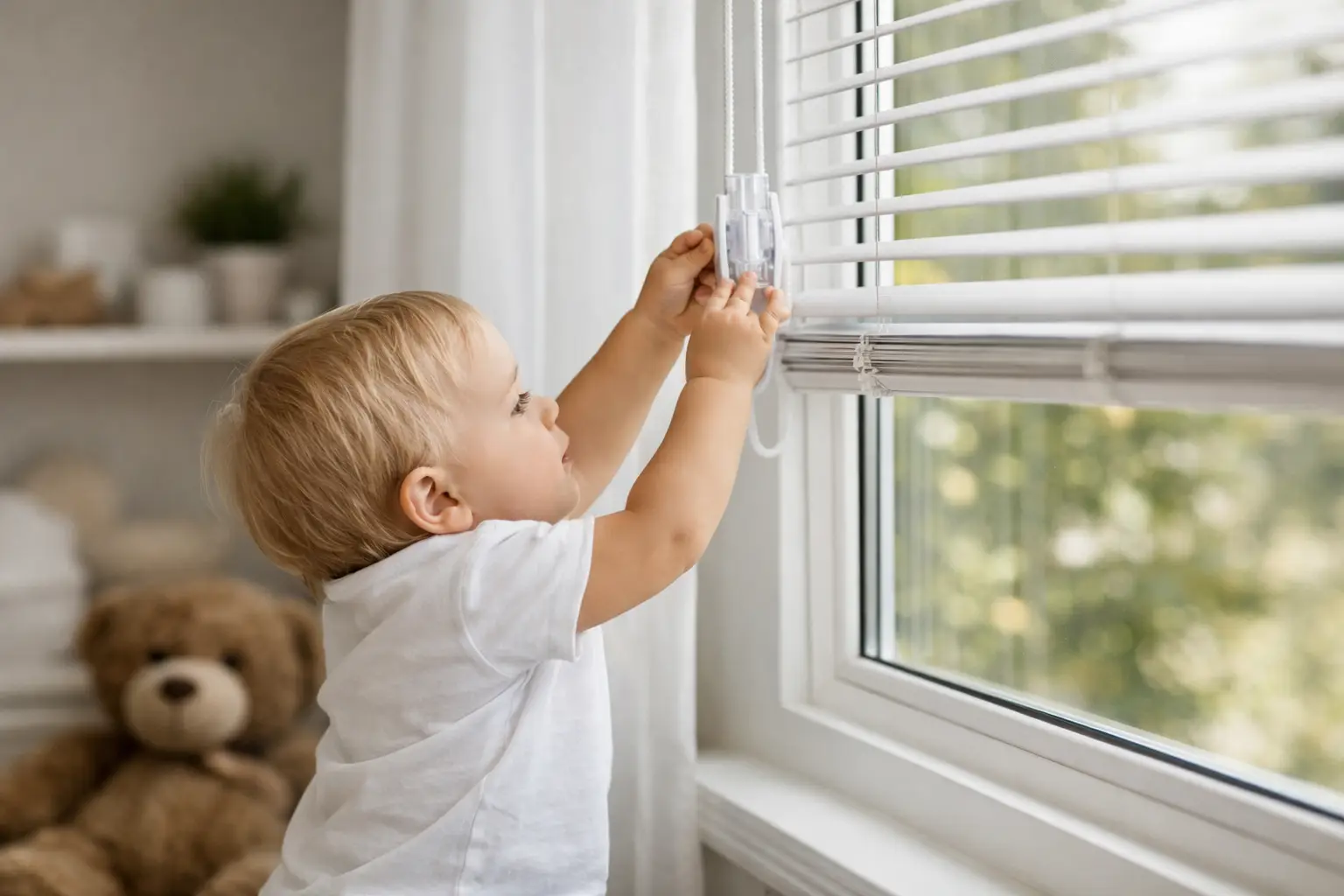

A loose blind cord can look harmless until you see it from a toddler’s height. That is usually the moment parents start asking how to childproof window blinds without turning every room into a compromise between safety and style.
Because they have no pull cords, shutters are a naturally child-safe choice. Our guide to California shutters in Toronto explains the cordless advantage in more detail.
The good news is that child safety and clean design can absolutely work together. The right solution depends on the type of blinds you have, the age of the children in the space, and whether you are trying to make an existing setup safer or replace it altogether. In many homes, especially condos and family spaces with large windows, the safest choice is also the one that looks more refined and functions better day to day.
Why childproofing window blinds matters
Window covering safety is not a small detail. Any accessible cord or loop can create a serious hazard for infants and young children. What makes blinds tricky is that the risk is often easy to miss during everyday routines. A cord hanging behind a sofa, next to a crib, or near a low bench may seem out of reach until a child starts climbing, pulling, or exploring.
That is why learning how to childproof window blinds starts with treating every reachable cord as a problem worth fixing now, not later. Children grow fast, furniture gets moved, and rooms rarely stay arranged exactly as planned. A setup that feels safe today may not be safe a few months from now.
There is also a practical side to this beyond safety. When homeowners replace older corded blinds with modern cordless or motorized options, they often gain smoother operation, a cleaner look, and better control over privacy and light. For busy households, that is a meaningful upgrade.
How to childproof window blinds you already have
If replacing your blinds is not the immediate plan, you can still reduce risk with the right adjustments. The first step is to identify every exposed cord, loop, chain, or pull that a child could touch from the floor, a bed, or nearby furniture.
Start by shortening or securing loose cords using approved safety devices designed to keep them taut and out of reach. Cord cleats and tension devices can help, but they need to be installed correctly and checked regularly. A safety device that is loose, poorly placed, or used inconsistently is not much of a safety feature.
You should also move furniture away from windows whenever possible. Cribs, toy bins, benches, and chairs can all give children access to cords that seem safely positioned at first glance. In a nursery or child’s room, this spacing matters as much as the blind itself.
Older blinds deserve extra attention. Some products were made before current child safety expectations became standard, and they may include long looped cords or operating systems that are simply not ideal for a family home. In those cases, retrofitting can help, but replacement is often the more reliable long-term choice.
The safest blind options for families
When clients ask us how to childproof window blinds in a way that feels complete, the answer is usually cordless or motorized window coverings. These options remove the most obvious hazard instead of trying to manage around it.
Cordless blinds and shades
Cordless systems are one of the most practical choices for family homes. They operate without dangling lift cords, which immediately improves safety and gives the window a cleaner visual line. They work especially well in bedrooms, living rooms, and condos where a streamlined look matters.
That said, cordless is not one-size-fits-all. Very large or hard-to-reach windows may be better suited to motorization, and some households want a solution that combines child safety with maximum convenience.
Motorized and smart blinds
Motorized blinds are often the strongest option when safety, design, and ease of use all matter. Because they operate by remote, wall switch, or app, there are no accessible cords for a child to grab. They also make everyday life easier, especially in homes with tall windows, layered furniture layouts, or multiple blinds in one room.
For condo owners and busy families, this can be a smart upgrade rather than a luxury add-on. You get precise light control, a polished appearance, and a safer environment with less manual handling. In rooms where windows are used constantly throughout the day, that convenience tends to matter more than people expect.
Roller and zebra blinds with safer operation
Some of the most popular modern window treatments, including roller blinds and zebra blinds, are available in child-safe configurations. The key is not just the style but the operating system and the quality of installation.
A made-to-measure product fitted properly will generally perform better than an off-the-shelf blind adjusted after the fact. The fit is cleaner, the mechanism is more reliable, and there is less chance of improvised fixes that can weaken safety.
Where childproofing matters most
Every room should be assessed, but a few spaces deserve priority because children spend more time there or are more likely to be unsupervised for short periods.
Bedrooms and nurseries are the most obvious starting point. If a blind is near a crib, bed, or reading chair, any exposed cord should be addressed immediately. Living rooms are next, especially if there are floor-level windows, toy areas, or furniture placed close to the glass.
In condos, large windows and compact layouts can create a different challenge. Furniture often sits closer to the window than it would in a larger house, which can make blind accessibility harder to control. In these spaces, cordless or motorized systems are often the cleanest answer because they reduce both clutter and risk.
Offices, waiting areas, and multi-unit properties should not be overlooked either. Property managers and business owners may not always think of childproofing first, but family-friendly commercial spaces benefit from safer window coverings just as much as homes do.
Installation makes a bigger difference than most people think
One of the most overlooked parts of child safety is installation quality. Even a well-designed blind can become a problem if the hardware is loose, the tension device is not mounted correctly, or the product is not suited to the window and room layout.
This is where custom measurement and professional installation genuinely matter. A properly fitted blind sits correctly, operates as intended, and avoids the workarounds that often happen with generic products. It also helps ensure the window covering matches the way the room is actually used, whether that means blackout performance in a child’s bedroom or glare control in a family living space.
For homeowners upgrading several rooms at once, it is often worth thinking beyond immediate safety and considering how the window treatments will function over time. Children grow, rooms change, and daily routines evolve. A safer system that also improves comfort and light control tends to be the better investment.
Common mistakes to avoid when childproofing blinds
The biggest mistake is assuming a quick fix solves everything. Tying cords up temporarily, draping them over hardware, or pushing furniture slightly away from the window may help for the moment, but these are not reliable long-term strategies.
Another mistake is focusing only on one room. If a child visits grandparents, plays in a home office, or spends time in a den that adults rarely think about, those windows still matter. Safety needs to be consistent across the whole home.
It is also easy to prioritize style first and ask about safety later. In reality, modern custom blinds make it possible to have both. The best result usually comes from choosing a product that was designed with current safety expectations in mind, rather than trying to force an older system to behave like a newer one.
When replacement is the better option
Sometimes the most practical answer to how to childproof window blinds is to stop trying to rescue outdated blinds. If the cords are long, the mechanisms are aging, or the blinds already look worn, replacement can be more sensible than patching together safety devices.
This is especially true if you are already updating a nursery, moving into a new condo, or renovating common areas in a family home. Replacing older window coverings with custom cordless or motorized options can improve safety while also sharpening the overall look of the room.
At that point, the decision is not just about removing a hazard. It is about creating a window treatment setup that feels easier to live with every day – better light control in the morning, better privacy at night, and less visual clutter overall. That is why many homeowners who start with a safety concern end up making a broader upgrade.
If you are evaluating your windows room by room, start with the spaces where children sleep, play, and climb. Safer blinds should never feel like an afterthought, and with the right solution, they do not have to look like one either.