
Solar Shades vs Blinds: Which Fits Your Space?
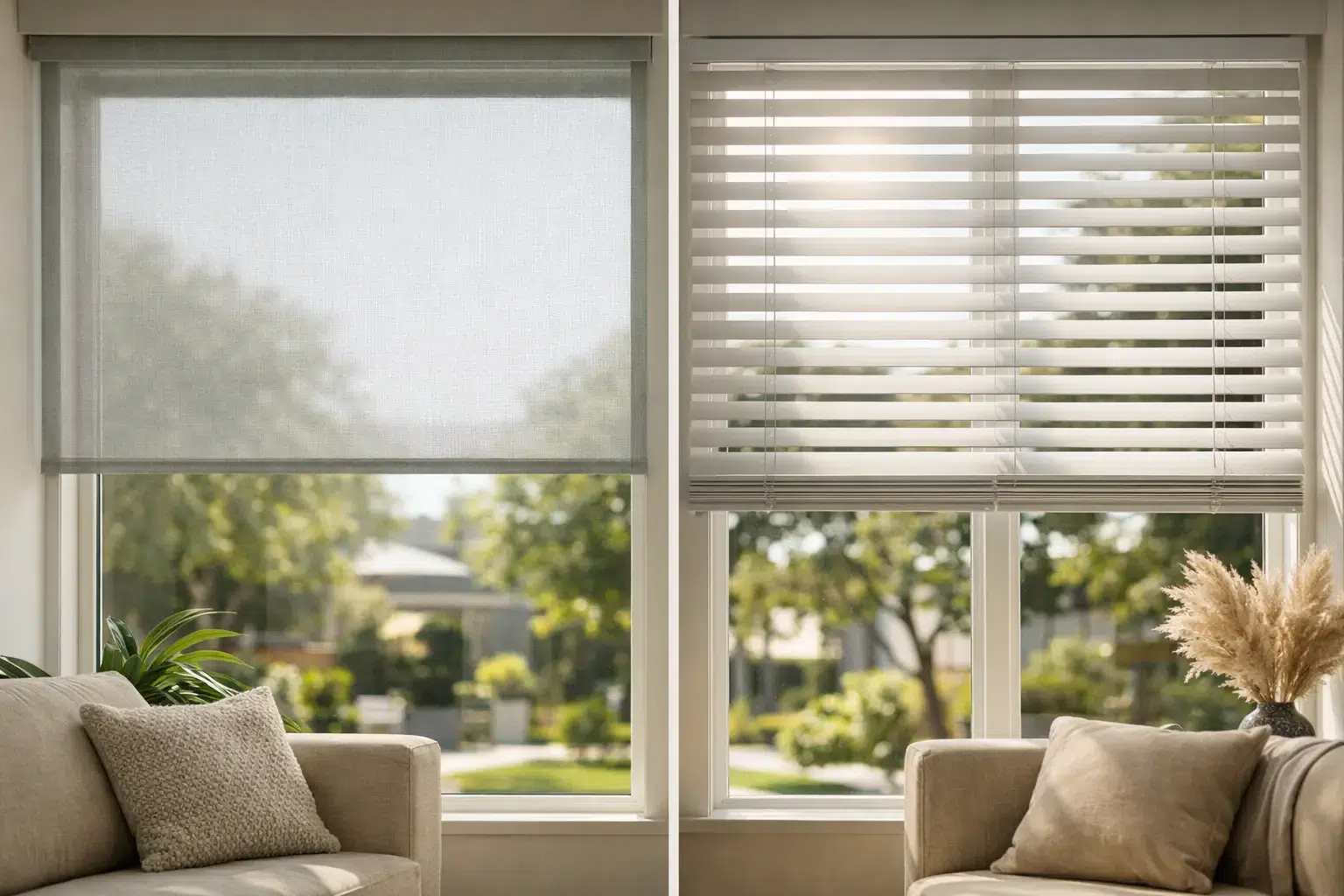

A south-facing condo window can deliver a beautiful city view at 10 a.m. and an uncomfortable screen glare by noon. That is where the solar shades vs blinds decision becomes more than a style preference. The right treatment can soften harsh daylight, protect furnishings, improve privacy, and make a room feel intentionally finished without sacrificing the way you live in it.
Both options can be custom-made for your windows and installed with a clean, tailored look. The better choice depends on what matters most in the room: preserving a view, achieving nighttime privacy, directing light away from a workspace, or creating a stronger decorative statement.
Solar Shades vs Blinds: The Essential Difference
Solar shades are made from a specially woven performance fabric designed to filter sunlight. They reduce glare and UV exposure while allowing some outward visibility during the day. Rather than breaking light into slats, they create a smooth, uniform panel across the glass.
Blinds use adjustable vanes or fabric layers to control light more actively. Depending on the style selected, you can tilt or align the material to change the amount and direction of incoming daylight. This makes blinds especially useful when your needs shift throughout the day, such as in a bedroom, family room, or office.
The distinction is simple: solar shades prioritize filtered light and daytime views, while blinds typically offer more flexible light positioning and often stronger privacy. Neither is automatically better. A lake-facing living room and a ground-floor bedroom have very different requirements.
When Solar Shades Are the Better Choice
Solar shades work best when natural light is an asset, but unfiltered sun is not. Their fabric is available in different openness levels, which determine how much light and view come through. A more open weave preserves a clearer view and brightens the room. A tighter weave blocks more glare and provides greater daytime privacy, though it also limits visibility outward.
For view-focused rooms
In a high-rise living room, dining area, or office with an attractive skyline, solar shades let you keep the glass visually present. They reduce the washed-out effect of direct sun without turning the window into a solid wall. This is particularly valuable in compact condos, where daylight and sightlines can make the space feel larger.
They also create a restrained, contemporary look. The flat fabric panel suits modern interiors, and it does not compete with clean-lined furniture, architectural windows, or layered drapery.
For glare, UV exposure, and screen comfort
A solar shade is an effective choice for rooms where people work, watch television, or spend long periods near windows. It can reduce glare on monitors and help protect flooring, artwork, and upholstery from fading caused by UV exposure.
Keep expectations realistic, however. Solar fabric filters light rather than creating total darkness. It is excellent for a bright office or sun-filled living room, but it may not be the first choice for someone who needs a dark room for daytime sleep.
For a simple, low-profile finish
Solar shades sit close to the window and have a neat, uncluttered profile. This makes them useful for wide windows, patio-facing glass, and rooms where bulky treatments would feel heavy. Motorized operation can make them even more practical on hard-to-reach windows or across multiple openings.
When Blinds Are the Better Choice
Blinds are often the stronger solution when light control and privacy need to be more adjustable. Rather than choosing between fully raised and fully lowered, you can fine-tune how daylight enters the room. That flexibility changes the feel of a space from morning to evening.
For bedrooms and privacy-sensitive spaces
A bedroom, bathroom, or street-level room usually needs more than glare reduction. It needs privacy when interior lights are on. Solar shades provide useful daytime privacy because the brighter exterior makes it difficult to see inside. At night, that relationship reverses. If lights are on indoors, silhouettes may be visible through many solar fabrics.
Blinds can offer more dependable privacy, especially when specified with room-darkening materials or layered light-control designs. Zebra blinds are a popular option for this reason: their alternating sheer and opaque bands allow you to shift between softly filtered daylight and a more private setting without fully raising the shade.
For changing light throughout the day
Rooms with multiple uses benefit from adjustability. A home office may need daylight in the morning, reduced glare for an afternoon meeting, and complete privacy after dark. A family room may need an open view on weekends and softened sun when watching a movie.
With blinds, the treatment can respond to those changes. This is also helpful for east- and west-facing windows, where the angle of the sun can be more disruptive than its overall brightness.
For a more decorative presence
Blinds come in styles that can become part of the room’s design rather than simply fading into the background. Roman shades, for example, introduce softness and texture. Roller blinds keep a minimal profile but can be selected in a wider range of opacities and decorative fabrics. The best direction depends on whether the window treatment should disappear into the architecture or add warmth and visual interest.
Privacy Is Not the Same as Light Control
This is one of the most common points of confusion when choosing window coverings. A product may cut glare beautifully but still provide limited privacy at night. Another may block views from outside but allow a significant amount of indirect light around its edges.
For solar shades, the openness factor matters, as does the color. Darker fabrics often preserve the view more clearly during daylight, while lighter fabrics can reflect more light and create a softer interior appearance. Neither feature guarantees nighttime privacy.
For blinds, the way the treatment is mounted matters just as much as the product itself. An inside mount can look streamlined but may leave small light gaps at the sides. An outside mount can provide better coverage when privacy or room darkening is a priority. Accurate measuring is what turns a good product choice into a reliable result.
Consider the Room Before the Product
A practical selection process starts with the room’s job, not with a swatch book. In a living room with a view, solar shades may be the natural first choice. In a nursery or bedroom, a more private blind or a layered treatment may make better sense. For commercial offices, solar shades often create a polished appearance while reducing monitor glare and solar heat gain.
Window orientation should also influence the decision. South-facing windows often receive sustained direct sunlight. West-facing windows can create intense late-day heat and glare. North-facing rooms may need only gentle filtering, so an overly dense fabric could make the room feel dim.
If the room serves competing needs, layering can solve the problem. A solar shade can manage daylight and preserve the view, while a secondary room-darkening treatment adds evening privacy when needed. This approach is especially effective in primary bedrooms and living spaces with expansive glass.
Operation, Cleaning, and Long-Term Convenience
Both solar shades and blinds are relatively straightforward to maintain, but their construction affects daily use. Solar shades have a continuous fabric surface that can usually be dusted or lightly vacuumed with an appropriate attachment. Their simple design also means fewer visible components.
Blinds may require more detailed dusting because of their layered or adjustable construction. In return, they give you more ways to control light. For busy households and offices, motorized blinds or shades can make the routine easier, allowing several window coverings to move together on a schedule or by remote control.
Motorization is not just a luxury for tall windows. It can help protect the treatment from frequent pulling, improve child safety by reducing exposed cords, and make it easier to use the covering as intended every day. A shade left open because it is inconvenient to reach cannot provide glare or UV protection.
Why Custom Fit Makes a Visible Difference
Ready-made treatments may appear economical at first, but they often create compromises around width, height, coverage, and mounting. Those details are more noticeable on large windows, condo glass, and spaces with several windows aligned in the same room.
Custom window coverings allow the fabric, opacity, control type, and mounting approach to match the window’s exact dimensions and the room’s purpose. Professional measurement also identifies practical issues before installation, such as deep frames, handle clearance, limited ceiling space, or uneven surfaces.
For Toronto-area homes, condos, and workplaces, Canadian Blinds Pros helps simplify those decisions with in-home consultation, made-to-measure products, and professional installation included with every order. The result is not simply a treatment that fits the glass, but one that works with the room’s light, layout, and daily routine.
The most satisfying choice usually starts with one honest question: do you want to preserve the daylight, reshape it, or shut it out when you need to? Once that answer is clear, the right window covering becomes much easier to see.