
Motorized and Smart Blinds for Modern Spaces
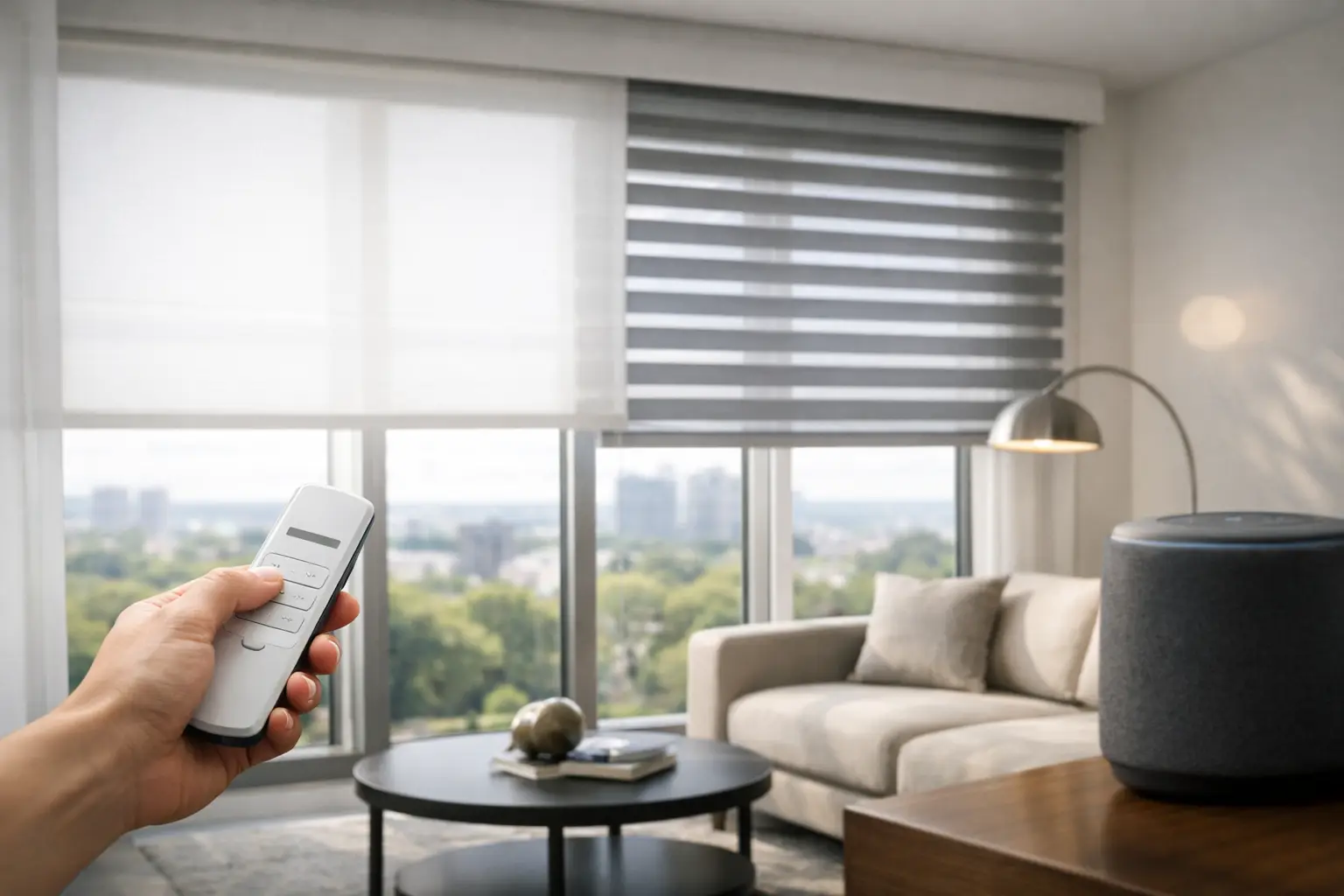

You notice the difference right away when a room adjusts to the light instead of forcing you to adjust to it. Motorized and smart blinds change the daily routine of opening, closing, and fine-tuning window coverings into something quieter, cleaner, and far more precise. For homeowners, condo residents, and business owners who want comfort without adding clutter, they offer a practical upgrade that also looks intentionally modern.
What makes these blinds worth serious consideration is not just the technology. It is the combination of custom fit, better light management, improved privacy, and a more polished living or working environment. When they are selected well and installed properly, they feel less like a gadget and more like part of how the space is supposed to function.
What motorized and smart blinds actually do
At the simplest level, motorized blinds open and close with powered operation instead of a manual chain or cord. Smart blinds take that a step further by adding app control, scheduling, voice assistant compatibility, and in some cases scene-based automation. That means you can lower shades in a bedroom before bedtime, raise them in the morning, or adjust glare in a conference room without walking window to window.
The distinction matters because some clients want convenience, while others want full home integration. A motorized system may be exactly right if the goal is smooth operation on hard-to-reach windows or improved child safety with no dangling cords. A smart system makes more sense if you want your shades to respond to your routine, coordinate with lighting, or support a connected home setup.
Neither option is automatically better. It depends on the room, the number of windows, your preferred controls, and how much automation you will actually use.
Why motorized and smart blinds work so well in condos and urban homes
In condos and city homes, windows often do more than bring in daylight. They shape privacy, temperature, glare, and how open the space feels. Floor-to-ceiling glass can look impressive, but it can also create too much afternoon sun, reduced privacy at night, and constant adjustment throughout the day.
This is where motorized and smart blinds become especially useful. In a condo living room, one-touch control makes it easy to manage a wide bank of windows without interrupting work, dinner, or downtime. In a bedroom, scheduled blackout shades can support a more consistent sleep routine. In a home office, shades can reduce glare on screens while still keeping the room bright enough to feel comfortable.
They also suit a cleaner aesthetic. Without exposed cords and with a made-to-measure fit, the finished look feels more tailored. That matters in compact spaces where every visible detail has more impact.
Design matters as much as automation
Technology gets attention, but style is what people live with every day. The best motorized window treatments do not announce themselves as high-tech. They simply fit the room well, move smoothly, and support the design instead of competing with it.
Roller shades are a strong choice for modern interiors because they keep lines clean and work well in living rooms, bedrooms, offices, and condos. Zebra blinds are also popular for clients who want flexible light control with a more layered visual effect. Roman shades can bring softness to spaces that need a warmer, more decorative finish, especially when paired with motorization.
Fabric selection is just as important as the control system. Sheer and light-filtering options can soften daylight and preserve openness, while blackout fabrics make more sense for bedrooms, media rooms, or spaces where privacy is a priority. Solar fabrics can help manage heat and UV exposure without fully blocking the view. The right answer is usually tied to how the room is used, not just what looks good in a sample book.
Where smart blinds make the biggest difference
Some rooms benefit more from automation than others. Bedrooms are one of the clearest examples because scheduled opening and closing can support both comfort and privacy. Living rooms with large windows also gain a lot from motorization, especially when sunlight changes dramatically throughout the day.
Offices and commercial spaces often see a different kind of value. Here, the benefit is consistency. Shades can be adjusted for presentations, glare control, and occupant comfort without relying on someone to manage every window manually. In client-facing spaces, that consistency also contributes to a more refined appearance.
There are also windows that are simply awkward to operate. High windows, extra-wide spans, or areas behind furniture are often where motorization stops being a luxury and starts being the most practical option.
The real benefits beyond convenience
Convenience is usually the first reason people ask about motorized blinds, but it is rarely the only reason they choose them. Privacy becomes easier to manage because you are more likely to use your shades consistently when operation is effortless. That can be especially helpful in street-facing rooms and high-rise units where openness by day can become exposure by night.
Energy performance can improve too, although results depend on window exposure, fabric choice, and daily habits. Shades that are actually used at the right times can help reduce heat gain during strong sun and support insulation after dark. They are not a replacement for quality windows, but they can absolutely help the room feel more controlled.
Child safety is another major advantage. Cordless operation creates a cleaner look while also reducing risk for families with young children or pets. For many households, that peace of mind is part of the value, not an added bonus.
What to consider before choosing a system
This is where a lot of buying decisions get clearer. The best system is not always the one with the longest feature list. It is the one that fits the space, your habits, and the level of support you want after installation.
Power source is one consideration. Battery-powered systems can work very well and are often a practical choice for retrofits, especially when minimizing wiring is a priority. Hardwired systems may be better for larger projects, new construction, or clients who want a more integrated setup from the beginning. Each has advantages, and the right fit depends on access, budget, and the number of windows involved.
Control method matters too. Some people prefer a simple remote mounted on the wall. Others want app access, scheduling, or voice control. If multiple people use the space, ease of use should carry real weight. A system that feels intuitive every day is better than one with features nobody ends up using.
Then there is the question of installation. Precision matters with custom shades, especially in condos and commercial properties where window dimensions, recess depth, and mounting conditions can vary. Professional measuring and installation help avoid the common problems of poor fit, uneven alignment, and inconsistent operation.
Why custom fit is part of the technology conversation
With motorized products, customization is not just about appearance. It affects performance. A shade that is measured accurately and matched to the window opening will operate more reliably, block light more effectively, and look cleaner when raised or lowered.
That is especially true for larger windows and multi-window rooms, where alignment becomes very visible. It is also important in condos where tight tolerances, concrete construction, and building requirements can affect how shades are mounted. A one-size-fits-all approach usually creates compromises that become obvious once the product is installed.
This is why service matters as much as product selection. A well-planned consultation can narrow the options quickly and tie them to real priorities such as sleep, privacy, glare control, or a more finished design.
Are motorized and smart blinds worth it?
For the right space, yes. They make the strongest case when your windows are large, your schedule is busy, your style leans modern, or your current window coverings are inconvenient enough that you avoid using them properly. They are also a smart investment when safety, comfort, and clean presentation all matter at once.
That said, not every room needs full automation. Sometimes it makes sense to motorize the main living areas and primary bedroom while keeping simpler manual options in secondary spaces. A thoughtful mix can deliver most of the benefit without overcomplicating the project.
At Canadian Blinds Pros, that is often the most useful part of the conversation – figuring out where automation will genuinely improve the space and where a simpler solution may be the better choice.
The best window treatments should make a room feel easier to live in from morning to night. When motorized and smart blinds are chosen with the room, routine, and design in mind, they do exactly that.