
How to Block Window Glare Without Darkening Rooms
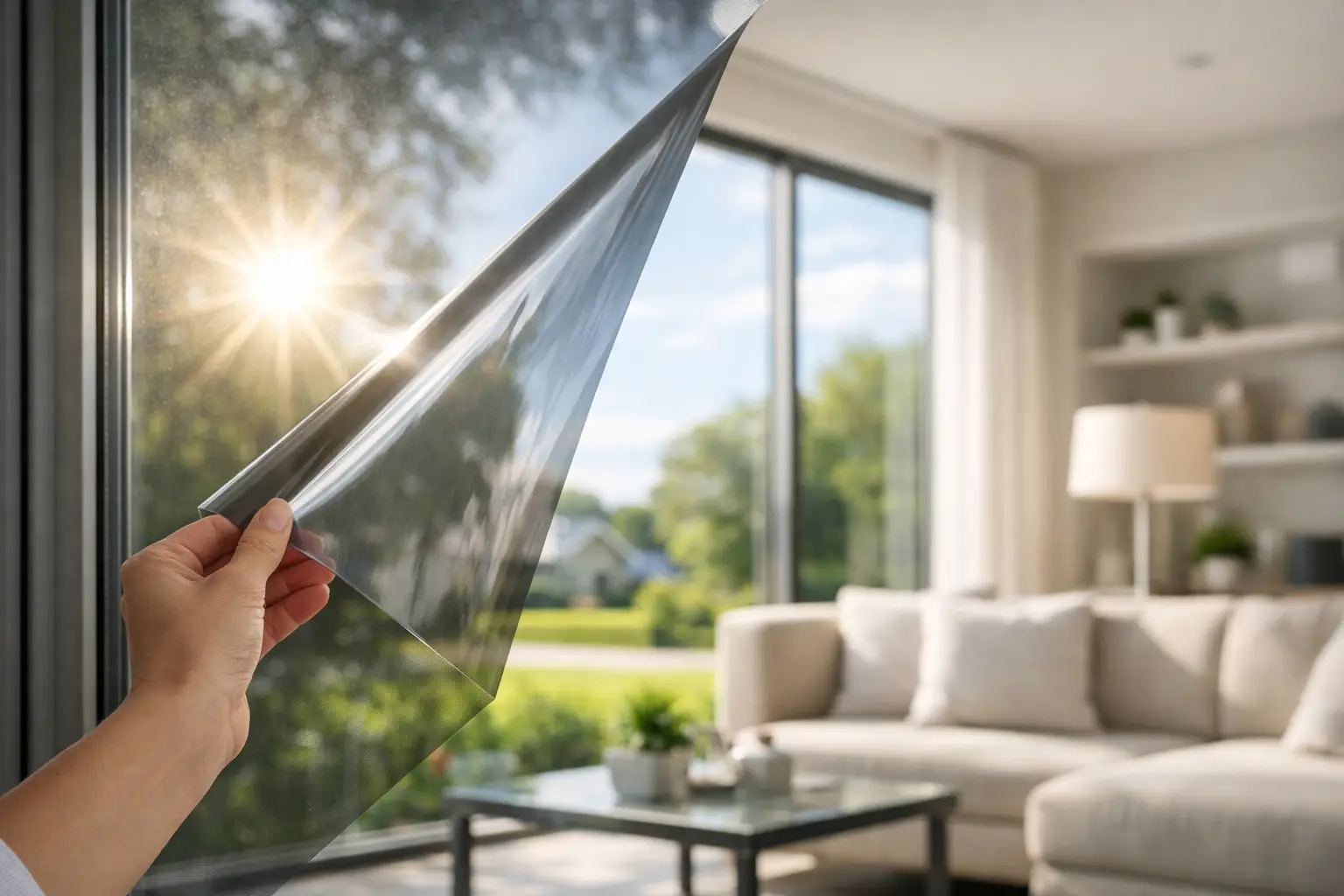

A bright room can feel inviting until sunlight turns a laptop screen into a mirror, washes out the television, or makes the dining table uncomfortable by mid-afternoon. Knowing how to block window glare is not simply about making a room darker. The best solution softens direct sun where it causes problems while preserving the daylight, views, and clean design that made the room appealing in the first place. Soft, view-preserving sheer shades are another way to tame glare without darkening a room.
Overhead glare from a skylight needs its own approach. Our guide to skylight blinds in Toronto covers how to cut the midday beam from roof windows without darkening the room.
When the glare comes in low on the glass, top down bottom up shades let you cover the bottom while keeping the bright top open.
For a covering that cuts glare and adds insulation at the same time, see our guide to cellular shades in Toronto.
For condos, homes, and offices, glare control starts with the window itself: its direction, size, surrounding buildings, and how the room is used. A custom window treatment gives you far more control than a one-size-fits-all curtain or a permanently darkened film.
Identify What Is Causing the Glare
Glare is created when intense light enters a space and reflects off a surface, such as a monitor, TV, glossy countertop, framed art, or polished floor. It is often strongest when the sun is lower in the sky, which is why a room that looks fine in the morning may become difficult to use later in the day.
Before choosing shades, take note of when the issue occurs and where the light lands. East-facing windows typically create morning glare, while west-facing windows can make late afternoons especially harsh. South-facing windows often receive prolonged direct sun, and north-facing windows may need lighter filtering rather than heavy coverage.
The room’s purpose matters just as much. A living room may need view preservation and flexible TV glare control. A home office needs a screen-friendly solution without creating a cave-like workspace. In a bedroom, early sun and privacy may make room-darkening performance the higher priority.
How to Block Window Glare With the Right Shade
The right product depends on how much light you want to keep, how much privacy you need, and whether the window has a standard, oversized, or unusual shape. Custom measurements are especially valuable for high-rise condo windows, where even small side gaps can let concentrated sunlight through.
Solar shades for daytime glare and view retention
Solar shades are one of the most effective options for rooms where you want to reduce glare but still enjoy natural light and an outward view. Their specialized fabric filters sunlight before it reaches the room, helping reduce reflections on screens and limiting UV exposure that can fade flooring, furniture, and artwork.
The openness factor of the fabric makes a difference. A lower openness level provides stronger glare reduction and more daytime privacy, while a higher openness level allows a clearer view and more light. There is a trade-off: the clearer the view, the less aggressively the shade filters sunlight. A design consultation can help match the fabric to the room’s exposure rather than relying on a sample viewed under showroom lighting.
Solar shades work particularly well in living rooms, condo great rooms, offices, and commercial spaces with broad glass areas. They create a crisp, minimal look and can be fitted close to the window to minimize light gaps.
Roller shades for focused light control
Roller shades offer a clean, contemporary solution with a wide range of fabrics, from light-filtering materials to room-darkening options. If glare occurs only during certain hours, a light-filtering roller shade can soften the sun while keeping the room bright. For media rooms, bedrooms, or west-facing spaces that receive intense afternoon sun, a more opaque fabric provides stronger control.
Color matters here. Darker solar fabrics can improve outward visibility during the day, while lighter fabrics may better complement a pale interior and reflect more heat. Neither is universally better. The right choice depends on the direction of the window, the desired look, and whether daytime viewing or brightness is the greater concern.
For maximum coverage, consider an outside-mounted roller shade that extends beyond the window frame. This approach can reduce the narrow strips of light that often escape around the edges of an inside-mounted treatment. It is a practical detail that has a noticeable impact in a room with strong direct sun.
Zebra blinds for adjustable daylight
Zebra blinds are designed for people who want the ability to shift between filtered daylight, partial view-through, and greater privacy throughout the day. Their alternating sheer and opaque bands can be aligned to diffuse the sun or adjusted for more coverage when glare becomes distracting.
This makes them a strong choice for multipurpose spaces. In a condo living room, for example, you may want soft daylight while working in the morning, a clearer view in the afternoon, and privacy after dark. Zebra blinds offer that flexibility without the visual weight of heavier window treatments.
They are not always the best choice when complete blackout performance is the main goal, since light can still enter around the sides and through the band structure. But for everyday glare control and a polished modern appearance, they are highly versatile.
Sheer shades for soft, refined light
Sheer shades diffuse harsh sunlight into a softer glow, making them well suited to formal living rooms, dining areas, and spaces where ambiance matters as much as function. They reduce the sharp contrast that causes discomfort while maintaining an airy feel.
This option is especially appealing when the problem is not a direct reflection on a screen but the overall intensity of sunlight in the room. Sheer fabrics can make a bright space more comfortable without visually closing it off. For evening privacy, however, they may need to be paired with a more private treatment or selected with a room-specific privacy plan in mind.
Use Motorization When the Sun Moves Faster Than You Do
The most effective glare solution is only useful when it is actually adjusted at the right time. Motorized and smart blinds make that easier, especially for tall windows, difficult-to-reach glass, or busy households and workplaces.
With scheduled operation, shades can lower before the strongest afternoon light reaches a workstation or television area, then raise later to restore the view. This can also help manage solar heat gain during warmer months. In commercial settings, consistent automated positioning gives the space a more professional appearance while reducing screen glare for staff and visitors.
Motorization is not necessary for every room, but it is worth considering when windows are large, numerous, or part of a daily routine. It also eliminates the need for dangling cords, which supports a cleaner look and a safer environment for families.
Match the Mount and Fabric to the Window
Even an excellent shade fabric can underperform if the treatment is measured or installed incorrectly. The distance between the shade and the glass, the depth of the window frame, the placement of handles, and the shape of the trim all affect how much light escapes into the room.
Inside mounts offer a tailored, architectural appearance and work beautifully when window frames are deep and square. Outside mounts can provide broader coverage and are often preferable when glare enters at the edges, the frame is shallow, or the goal is to make a window look taller or wider.
For bedrooms and media spaces, side channels or a carefully planned outside mount can further reduce light leakage. For an office, a solar fabric that cuts reflections may be more useful than a blackout treatment that forces you to use artificial lighting all day. The best answer is rarely the darkest possible shade. It is the one that supports how the room is actually lived in.
Avoid Quick Fixes That Create New Problems
Temporary solutions such as taping paper to the glass, leaving bulky curtains closed all day, or applying low-quality film can solve glare at the cost of style, daylight, or window appearance. Some films can also change the look of the glass permanently and may not suit certain condo or commercial building requirements.
Another common mistake is choosing a treatment based only on privacy. A shade that provides privacy at night may not adequately filter direct sunlight during the day. Likewise, a screen-like fabric that preserves a view may not offer enough coverage for a bedroom. Evaluating glare, privacy, UV protection, and desired light level together produces a more satisfying result.
A professional in-home consultation is useful because glare is highly specific to the room. Seeing the window orientation, furnishings, wall colors, and screen placement in person makes it easier to recommend the right fabric, mount, and operating style.
When bright sunlight interferes with the way you work, relax, or entertain, the goal is not to shut the light out. It is to put it under your control. Canadian Blinds Pros can help create a made-to-measure solution that keeps a room comfortable, functional, and beautifully connected to the view outside.