
Skylight Blinds in Toronto: A Complete Guide to Shading Roof Windows

Skylights bring in a kind of light no wall window can match. They also bring in heat, glare, and a control problem: the glass is often high overhead, tilted, and completely out of reach. If your upstairs bedroom bakes on a July afternoon or your loft glows too bright to watch a screen, the fix is usually a shade built for that overhead glass rather than a standard blind. This guide walks through skylight blinds for Toronto and GTA homes, covering the shade types that work, how motorized and solar power solve the reach problem, how these shades mount on sloped glass, what drives the cost, and how to measure and plan an installation that actually fits.
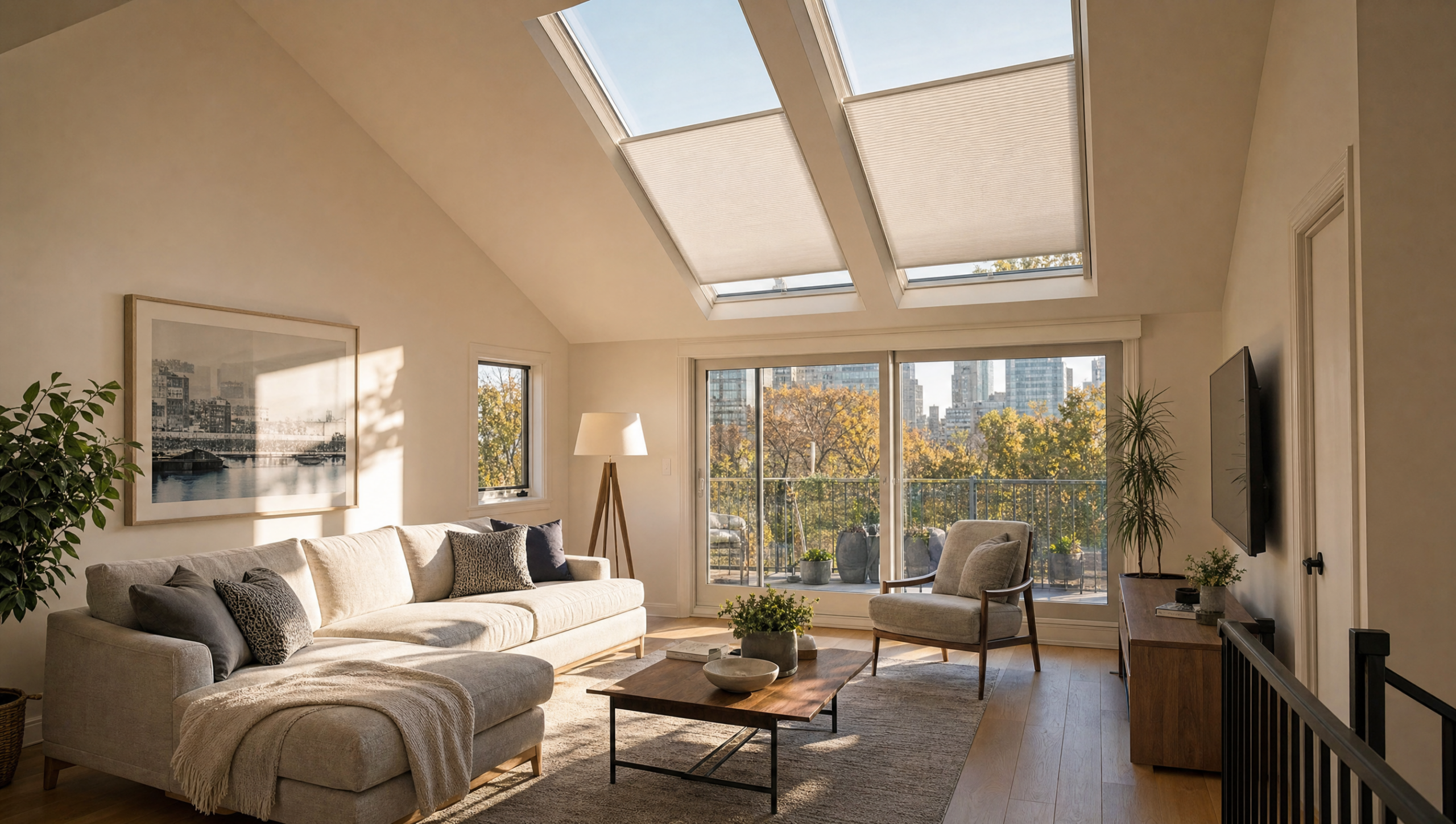
What Are Skylight Blinds?
Skylight blinds are window coverings made specifically for roof windows and overhead glass. Because a skylight often sits on an angle, a shade that simply hangs from a headrail would sag away from the glass and let light spill around the edges. Skylight shades solve this with side guide channels or tensioned tracks that hold the fabric flat against the pane at any angle, so the covering stays put whether the glass is flat, sloped, or set into a light well.
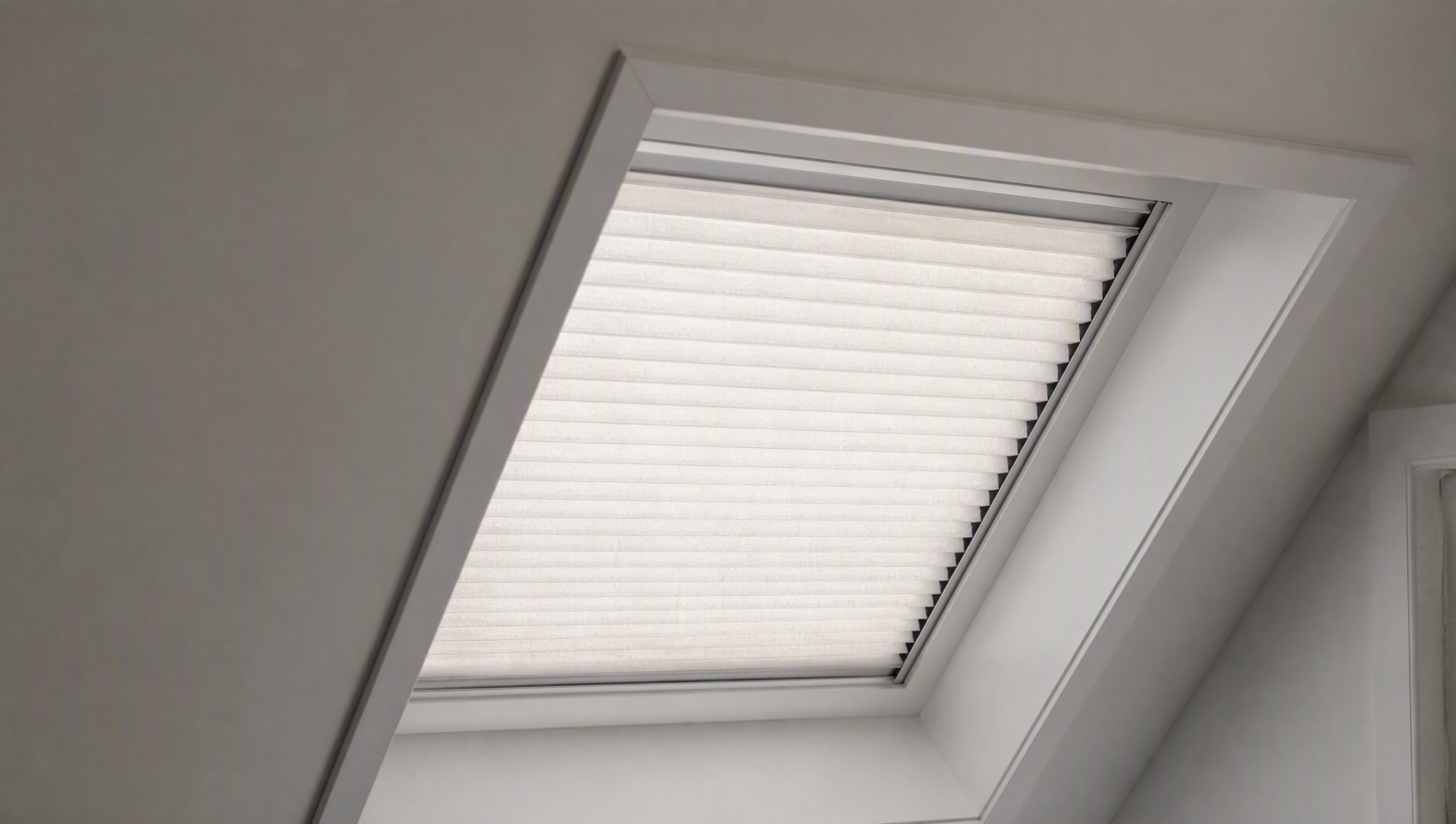
Most skylight coverings today use a cellular (honeycomb) or pleated fabric because it folds compactly and runs smoothly inside slim side channels. You will also find roller and blackout versions built the same way. The defining feature is not the fabric, it is the track system that keeps the shade tight to angled glass and lets you move it up or down a slope you cannot always reach by hand.
How Skylight Shades Differ From Standard Blinds
A regular blind relies on gravity. A skylight shade cannot, so it adds side rails, tensioned cords or a rigid track, and often a motor. On a steep or high skylight, the covering also needs to stay flat when it is only partway open, which is why quality systems use a bottom rail that locks along the guides. If you have compared roller and cellular styles for standard windows, the same fabrics apply here, but the hardware is the part that matters. Our overview of cellular honeycomb shades and their energy performance explains why that pleated fabric is such a common pick for overhead glass.
Do You Actually Need a Skylight Blind?
Not every skylight needs covering. A north-facing skylight over a stairwell may never cause glare or heat. The rooms that benefit most are bedrooms, home offices, kitchens, and open lofts where direct sun creates heat, washes out screens, or fades furniture and floors. If your skylight sits above a sleeping area or a workspace, a shade is usually worth it. If it is purely there for ambient light in a hallway, you may not need one at all.
Why Toronto Homes Add Shades to Skylights
Overhead glass is one of the hardest working surfaces in a house. In a Toronto climate that swings from humid summers to deep winter cold, an uncovered skylight can be a comfort and energy weak point in both seasons.
Heat is the first reason. A skylight faces the sky directly, so it collects solar gain through the middle of the day when the sun is high. That is welcome in January and punishing in July. According to Natural Resources Canada, ENERGY STAR certified skylights are roughly 35 percent more efficient than standard models, and the energy performance of windows, doors, and skylights in Canada is tested to the CSA A440.2 standard. A cellular shade adds a second layer of insulation on top of the glass itself, trapping air in its honeycomb pockets to slow heat transfer in either direction. If summer heat is your main concern, our guide to the best blinds for keeping Toronto homes cooler covers the same principle for vertical windows.
Glare is the second reason. Midday sun through a skylight lands right where you do not want it, on a television, a monitor, or a kitchen island. A light filtering shade keeps the room bright while cutting the harsh beam, which is the same balance we describe in our piece on blocking window glare without darkening a room. The third reason is fading. Overhead UV is strong, and it slowly bleaches wood floors, art, and upholstery. The fourth is sleep, since a skylight in a bedroom lets in early summer light long before you want to be awake.
Types of Skylight Blinds and Shades
The right fabric depends on what you need the shade to do: insulate, dim, filter, or fully black out. Here are the main options for overhead glass.
Cellular (honeycomb) skylight shades are the most popular choice in the GTA. The pleated pockets add insulation, the fabric is light, and it folds down small so it barely shows when open. They come in light filtering and room darkening opacities.
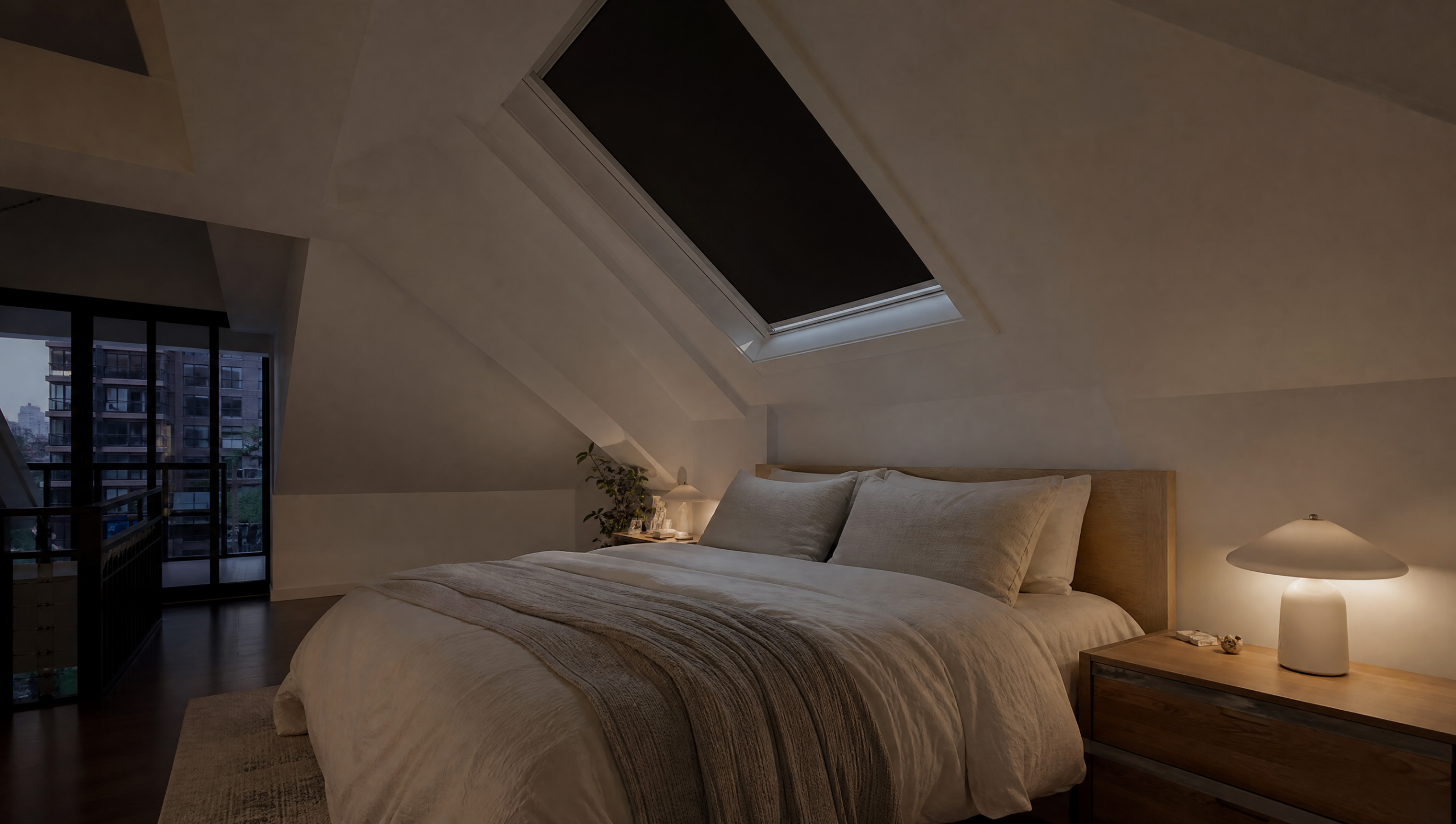
Blackout skylight shades use an opaque fabric, usually cellular, run in tight side channels to cut edge light. They are the pick for bedrooms and media rooms where a skylight would otherwise flood the room at dawn. See our blackout blinds options for the equivalent fabrics.
Roller and light filtering shades give a clean, simple look and a soft glow. On a skylight they need a tensioned track or side rails to stay flat. Our roller blinds range shows the fabric families that carry over to roof windows.
Pleated skylight shades are a lighter single-layer alternative to cellular, often used where insulation is less critical and budget matters more.
Exterior and solar screen shades mount outside the glass to stop heat before it enters. They are less common on residential skylights but effective for extreme solar gain.
| Shade Type | Light Control | Insulation | Best For |
|---|---|---|---|
| Cellular light filtering | Soft, diffused | High | Living rooms, lofts, kitchens |
| Cellular blackout | Room darkening | High | Bedrooms, media rooms |
| Roller light filtering | Soft glow | Moderate | Simple modern spaces |
| Pleated | Soft, diffused | Lower | Budget-conscious projects |
| Exterior solar screen | Blocks heat outside | Very high heat control | Extreme solar gain |
Manual, Motorized, and Solar-Powered Options
The reach problem is what separates a skylight shade from an ordinary blind. If you cannot comfortably touch the glass, you need a way to move the shade from the floor. This is where motorization earns its keep, and it is the single most common upgrade Toronto homeowners ask about for roof windows.
Why Motorization Matters on a Skylight
A skylight over a two-storey great room or a high loft is effectively unreachable without a ladder. A motor removes that entirely: you raise and lower the shade with a remote, a wall switch, an app, or a schedule. On multiple skylights, you can run them as a group so they open together in the morning and close against the afternoon sun. The same convenience we cover in automating roller shades applies here, only the payoff is bigger because the alternative is climbing.
Battery, Solar, and Hardwired Power
Motorized skylight shades run on one of three power sources. Rechargeable battery motors are the simplest to install and need no wiring, though the battery has to be recharged periodically. Solar-assisted motors use a small panel that tops up the battery from the daylight the skylight already receives, which suits a sunny roof window well. Hardwired motors draw constant power and never need charging, but they call for wiring run to the skylight, ideally planned before finishing or during a renovation, and any line-voltage work should be done by a licensed electrician. Our explainer on whether motorized blinds need electricity breaks these down in more detail.
| Power Source | Wiring Needed | Maintenance | Best Fit |
|---|---|---|---|
| Rechargeable battery | None | Recharge periodically | Retrofits, rentals, quick installs |
| Solar assisted | None | Minimal, panel tops up battery | Sunny, hard-to-reach skylights |
| Hardwired | Yes, licensed electrician | None | New builds, planned renovations |
Smart Home Control
Most motorized skylight shades can join a smart home system so you can control them by voice or automate them by time of day and sun position. That means the shade closes itself against the noon sun and opens again in the evening without you thinking about it. Our smart blinds and motorized blinds pages explain the control options, and our seasonal guide to motorized blinds for summer sun control shows how scheduling cuts heat without touching a single window.
Mounting Systems for Sloped and Overhead Glass
How a skylight shade attaches depends on the skylight itself. Roof windows come in different frame styles, and the mounting has to match the recess, the slope, and whether the window opens.
Inside the Recess With Side Channels
The most common approach fits the shade inside the skylight opening, running the fabric in side channels screwed to the light well or frame. This keeps the covering tight to the glass and hides the edges. It gives the cleanest look and the best light control, which matters most for blackout fabrics.
Curb-Mount Versus Deck-Mount Skylights
Skylights are generally installed as curb-mount, sitting on a raised frame, or deck-mount, sitting closer to the roof line. The frame style affects how deep the recess is and which bracket system fits. Branded roof windows such as VELUX or FAKRO also have their own factory blind options sized to the unit, alongside custom covers made to the opening. A measure visit sorts out which route fits your specific skylight.
Fixed Versus Venting Windows
Some skylights open for ventilation and some are fixed. A venting skylight needs a shade that clears the operating hardware and does not block the window when it tilts. This is a detail worth flagging before ordering, because the covering has to work around the movement.
No-Drill and Tension Options for Renters
If you rent or cannot drill into the frame, tension-mounted skylight shades brace inside the opening without permanent fixings, similar to the damage-free approach in our no-drill blinds guide for renters and condos. They suit flatter, lower skylights better than steep overhead ones, where a fixed track holds the fabric more reliably.
| Mount System | Holds Fabric Flat | Permanent | Best For |
|---|---|---|---|
| Inside recess, side channels | Yes, at any angle | Yes | Most homes, blackout needs |
| Factory branded blind | Yes | Yes | VELUX or FAKRO units |
| Tension mount, no drill | On flatter openings | No | Renters, low skylights |
How to Measure a Skylight for Blinds
Skylight measuring is less forgiving than a wall window because the recess is often deep and the glass is angled. The goal is a shade that runs true in its channels with no binding and no light gaps.
Start by measuring the exact width and length of the glass opening, or the inside of the recess if the shade will mount there. Measure at the top, middle, and bottom, since older Toronto homes and custom light wells are rarely perfectly square. Note the recess depth, which determines whether channels and a headrail will fit cleanly. Record the skylight brand and model if it is a branded unit, since that unlocks factory-sized options. Finally, note the slope and whether the window opens. For anything overhead or steep, a professional measure is the safer path, and it is the same discipline we cover in our how to measure windows for shades and step-by-step measuring guides. If you would rather not climb, our professional measurement service handles the numbers for you.
Skylight Blinds Cost in Toronto: What Drives the Price
Skylight shades sit at the higher end of window covering pricing, and the reasons are physical. Every one is custom sized, the track hardware is more involved than a standard blind, motorization adds a motor and power source, and installing overhead glass takes more time and equipment. Rather than quote a figure that would not match your project, it helps to understand the drivers so you can weigh where the money goes. For a broader view of custom pricing, see our overview of what custom window coverings cost.
| Cost Driver | Why It Matters |
|---|---|
| Shade size | Larger skylights use more fabric and heavier track. |
| Fabric and opacity | Blackout and premium cellular cost more than basic pleated. |
| Manual or motorized | A motor, remote, and power source add to the base shade. |
| Power type | Hardwiring adds electrical work; battery and solar do not. |
| Access and height | High or steep glass needs more install time and equipment. |
| Number of skylights | Grouped units share setup but each still needs a shade. |
Choosing the Right Skylight Shade for Each Room
The best fabric changes room to room. A bedroom wants darkness, a kitchen wants easy-clean light filtering, and a living space wants glare control without going dim.
In bedrooms and nurseries, a blackout cellular shade is the clear pick so early light does not cut sleep short, the same logic behind our best shades for bedrooms. In kitchens and bathrooms, a light filtering cellular or pleated shade handles moisture and softens glare while keeping the space bright. In living rooms, lofts, and open great rooms, a light filtering shade tames the midday beam without darkening the room, and these are often the spaces with the highest, hardest-to-reach glass, which is covered further in our guide to window coverings for large windows. In home offices, glare on a screen is the enemy, so a diffusing shade you can schedule pays off daily. Condo owners with sloped or clerestory glass will find related advice in our piece on coverings for floor-to-ceiling condo glass.
| Room | Recommended Fabric | Priority |
|---|---|---|
| Bedroom, nursery | Blackout cellular | Darkness and sleep |
| Kitchen, bathroom | Light filtering cellular or pleated | Moisture, soft light |
| Living room, loft | Light filtering cellular | Glare control, brightness |
| Home office | Light filtering, motorized | Screen glare, scheduling |
Installation and Safety Considerations
Installing a skylight shade is not the same job as hanging a blind at eye level. The glass is overhead, often on a slope, and sometimes two storeys up, so the work involves ladders or scaffolding and careful bracket placement into the light well. A shade that binds in its channels or hangs crooked is hard to fix once you are back on the ground, which is why a professional fit pays off on anything high or steep. Our guide on preparing for a blind installation covers what to expect on the day.
Cord safety deserves attention here too. A skylight is usually well out of a child’s reach, but any operating cord is still a hazard, and Canada now has strict rules. Health Canada’s window covering safety regulations limit reachable cords, and cordless or motorized operation sidesteps the issue entirely, which is one more reason motorization suits overhead shades. For a full look at safe choices, see our roundup of child-safe window coverings. If your shade is hardwired, leave the line-voltage connection to a licensed electrician rather than improvising.
Skylight Shades Versus Other Ways to Control Overhead Light
A shade is not the only way to manage a skylight, but it is usually the most flexible. Window film and tint cut some heat and UV, yet they are permanent and cannot adapt when you want full light on a grey day. Exterior solar screens block heat before it enters and work well for extreme gain, though they change the look of the roof and are harder to service. A dynamic interior shade lets you choose brightness moment to moment, insulate in winter, and black out for sleep, which is why it remains the default for most homes. The wider comparison in our overview of the role of blinds in home energy efficiency applies directly to overhead glass.
Frequently Asked Questions About Skylight Blinds
Can you put blinds on a skylight?
Yes. Skylight blinds are made for overhead and angled glass. They use side channels or a tensioned track to hold the fabric flat against the pane, so the covering stays in place at any angle instead of sagging the way a standard hanging blind would.
What type of blinds are best for skylights?
Cellular honeycomb shades are the most common choice because they insulate well, fold up small, and run smoothly in side channels. Blackout cellular suits bedrooms, while light filtering cellular or roller fabrics suit living spaces that need brightness with less glare.
What is the best way to shade a skylight?
For most homes, an interior cellular shade in side channels gives the best mix of insulation, light control, and clean looks. If the skylight is high or on a steep slope, adding a motor so you can operate it from the floor is the practical way to make it usable every day.
Should you put blinds on skylights?
If the skylight causes heat, glare, fading, or early morning light in a bedroom or workspace, a shade is worth it. A north-facing skylight over a hallway that never causes discomfort may not need one. Match the decision to how the room is actually used.
How do you block sunlight from a skylight?
A blackout cellular skylight shade run in tight side channels blocks direct sun and cuts edge light. For heat specifically, a cellular fabric adds insulation, and an exterior solar screen stops heat before it reaches the glass in extreme cases.
Are there no-drill blinds for skylights?
Tension-mounted skylight shades brace inside the opening without permanent fixings, which suits renters and flatter, lower skylights. For steep or high overhead glass, a fixed track holds the fabric more reliably, so no-drill works best on easier openings.
What are easy-install skylight blinds?
Battery or solar powered shades are the simplest to install because they need no wiring. Paired with an inside-recess bracket kit, they go up without electrical work, which makes them a popular retrofit for existing skylights.
Do skylight blinds help with heat in summer?
Yes. A cellular shade traps air in its honeycomb pockets and adds an insulating layer over the glass, slowing solar heat gain through the middle of the day. Closing it against the noon sun makes a noticeable difference in rooms under a skylight.
Are motorized skylight blinds worth it?
For high or hard-to-reach skylights, motorization is usually the difference between a shade you use and one you ignore. Operating it from a remote, app, or schedule removes the ladder from the equation, and grouped skylights can move together.
How are motorized skylight blinds powered?
They run on rechargeable batteries, a solar-assisted battery topped up by a small panel, or a hardwired connection. Battery and solar need no wiring, while hardwired power never needs charging but calls for a licensed electrician to run the line.
Can you get blackout blinds for a skylight?
Yes. Blackout skylight shades use an opaque fabric, usually cellular, in tight side channels to cut edge light. They are the standard pick for bedrooms and media rooms under a skylight where dawn light would otherwise flood in.
Do skylight blinds come cordless?
Cordless and motorized skylight shades are widely available and often the better choice overhead. They align with Health Canada’s window covering safety rules on reachable cords and remove a hazard while making a high shade easier to operate.
How much do skylight blinds cost in Toronto?
Cost depends on the shade size, fabric, whether it is motorized, the power type, and how high or steep the glass is. Every skylight shade is custom sized, and overhead installation adds labour, so a measure visit is the accurate way to get a real number for your project.
Can you put blinds on VELUX or FAKRO skylights?
Yes. Branded roof windows have factory blind options sized to the unit, and custom shades can also be made to the opening. Recording the brand and model at the measure stage helps identify which factory or custom route fits best.
How do you measure a skylight for blinds?
Measure the glass opening or recess width and length at the top, middle, and bottom, note the recess depth, record the brand and model if branded, and note the slope and whether the window opens. For overhead or steep glass, a professional measure avoids costly sizing errors.
Can you control skylight blinds with Alexa or Google Home?
Most motorized skylight shades can join a smart home system for voice control and automated schedules, so the shade can close against midday sun and open in the evening on its own. Compatibility depends on the motor and hub you choose.
Do skylight blinds work on sloped or angled glass?
Yes, that is exactly what they are built for. Side guide channels or a tensioned track hold the fabric against the pane on a slope, keeping it flat and gap-free where a gravity-hung blind would sag away from the glass.
Who installs skylight blinds in Toronto?
Custom window covering specialists measure, supply, and install skylight shades across Toronto and the GTA. Because the glass is overhead and often high, professional measuring and installation is the safest way to get a clean, reliable fit.
Get Your Skylight Shades Measured and Installed in Toronto
Overhead glass is one of the trickier things to cover well, and it is worth getting right the first time. If you have a skylight that overheats a room, washes out a screen, or wakes you at dawn, we can help you choose the fabric, decide between manual and motorized, and handle the measuring and installation from the floor up. Browse our window blinds gallery for ideas, look through our custom window shades options, then contact us for a free in-home consultation and we will take it from there.