
California Shutters in Toronto: A Complete Buyer’s Guide to Materials, Cost, and Style

California shutters have become something close to a default choice in Toronto homes, and once you have seen a room fitted with them it is easy to understand why. The clean white louvres suit a downtown condo and a century home in Riverdale equally well, they hold their value, and they solve the two problems every window faces at once, which are light and privacy. This guide walks through what these shutters actually are, the materials and options that matter when you order, what drives the price, and how to decide whether they are the right fit for your windows.
Shutters are just one insulating option. For the full picture, see which window coverings insulate best in Toronto.
If you love a natural material but want a softer, woven texture instead of solid slats, our guide to natural bamboo blinds is worth a read alongside this one.
If you are still weighing shutters against fabric options before you read on, our overview of custom window coverings gives useful context on where shutters sit alongside blinds, sheers, and other shades.
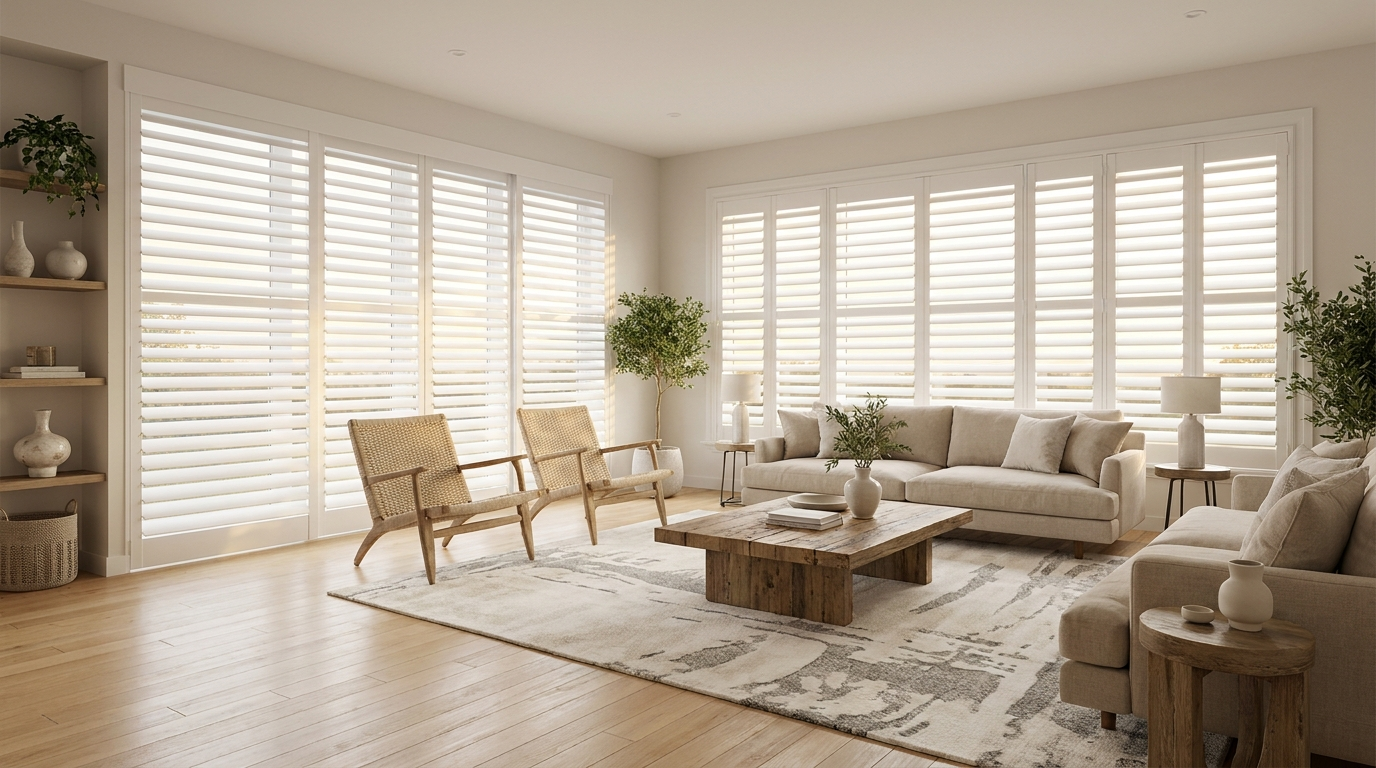
What Are California Shutters?
California shutters are interior plantation shutters built from wide, adjustable louvres set inside a solid frame that mounts to your window. You tilt the louvres to let light in or angle them closed for privacy, and the panels themselves swing open on hinges when you want the glass fully clear. They are a fixed, furniture-grade covering rather than a soft shade that rolls up, and that permanence is a large part of their appeal.
The name causes a bit of confusion, so it helps to clear it up. In Canada the term California shutters is used interchangeably with plantation shutters. There is no structural difference between the two. Both describe interior shutters with wide louvres, usually somewhere between two and a half and four and a half inches across. The wider the louvre, the more open the view when the shutter is tilted, and the more contemporary the look tends to read.
Because they are custom built to the exact opening, shutters fit in a way that off-the-shelf products rarely match. That precision is one of the reasons people who want a lasting result lean toward custom over store-bought options.
Why California Shutters Are So Popular in Toronto
Part of it is simple taste. White shutters read as clean and timeless, and they photograph well, which matters in a city where a lot of homes get listed and sold. Real estate agents across the GTA tend to treat quality shutters as a feature worth mentioning, because buyers see them as a permanent upgrade that stays with the house.
The practical side matters just as much. Toronto windows deal with hard winters, bright summers, and, in a lot of neighbourhoods, close sightlines to the house or condo next door. Shutters handle all of that. Tilt the louvres down and you get privacy while daylight still filters in. Close them fully on a cold night and you add a layer over the glass. Swing the panels open and the window is completely clear for the view. For condos with floor-to-ceiling glass, they are one of several strong options alongside lighter blinds and shades.
They also age well. A fabric shade will eventually show wear, but a well-built shutter holds its finish for many years, which is why so many owners consider them a long-term rather than a short-term purchase.
California Shutters Compared to Blinds and Shades
Shutters are not automatically the right answer for every window. They cost more than most fabric coverings, and in a rental or a room where you change the look often, a shade can make more sense. The table below lays out how shutters compare with the popular alternatives Toronto homeowners tend to consider.
| Covering | Look and feel | Light control | Best suited to |
|---|---|---|---|
| California shutters | Solid, architectural, permanent | Excellent, tilt plus full open | Long-term homes, resale, heritage and modern alike |
| Zebra blinds | Soft, striped, adjustable sheer | Very good, sheer to private | Condos and modern rooms wanting a lighter look |
| Roller shades | Flat, minimal, many fabrics | Depends on fabric, sheer to blackout | Clean modern spaces and tighter budgets |
| Cellular shades | Soft, textured, insulating | Good, light filtering to blackout | Rooms where warmth and energy matter most |
California Shutters or Zebra Blinds?
This is one of the questions we hear most, and the honest answer is that they suit different goals. Zebra blinds give you an adjustable striped view that shifts from sheer to private, they cost noticeably less, and they bring a softer, more current feel to a condo. Shutters give you a solid, built-in look with better insulation and a longer life, at a higher price. If you want to see the lighter option side by side with another favourite, our comparison of zebra blinds and roller shades for a Toronto condo is a good starting point, or you can read the full overview of zebra blinds on our site.
Shutters Next to Roller and Roman Shades
Roller and Roman shades win on price and on the sheer variety of fabrics and patterns available, which lets you bring colour and softness into a room. Shutters trade that flexibility for structure and permanence. If a flat, tailored fabric look appeals to you, roller blinds and Roman shades are worth weighing before you decide.
Shutter Materials: Wood, Faux Wood, Vinyl, and Composite
Material is the first real decision once you have settled on shutters, and it affects the look, the weight, the durability, and the price. Here is how the common options break down.
| Material | Strengths | Watch for | Best rooms |
|---|---|---|---|
| Basswood (real hardwood) | Lightest weight, finest finish, widest louvre spans | Highest cost, not ideal for wet rooms | Living rooms, bedrooms, dining rooms |
| Faux wood and engineered wood | Durable, resists warping, good value | Heavier, limits very wide panels | Most rooms, high-traffic homes |
| Vinyl and PVC | Moisture resistant, easy to wipe clean | Can look less refined up close | Bathrooms, kitchens, laundry rooms |
| Composite and poly | Stable, moisture resistant, holds paint well | Heavier than basswood | Bathrooms, basements, humid areas |
When to Choose Real Wood
Basswood is the premium pick. It is light, which lets a single panel span a wider window without sagging, and it takes a painted or stained finish beautifully. The trade-off is cost, and the fact that real wood does not belong in a steamy bathroom or directly over a kitchen sink. For living rooms and bedrooms where you want the best-looking result, it is hard to beat.
When Faux Wood or Vinyl Makes More Sense
In bathrooms, kitchens, and basements, moisture is the enemy of real wood. Vinyl, PVC, and composite shutters shrug off humidity and wipe clean with a damp cloth, which makes them the sensible choice in those spaces. If you are furnishing a bathroom specifically, our guide to the best bathroom blinds covers the moisture question in more depth. The same logic that drives the choice between wooden and faux wood blinds applies to shutters, so that comparison is useful reading too. If you want that louvre look in a movable blind rather than a fixed panel, aluminum and wood Venetian blinds use the same tilting slats.
Louvre Size and What It Changes
Louvres are the horizontal slats you tilt, and California shutters usually come in three widths. The size you pick is mostly about look, with a small effect on the view and the light.
| Louvre width | Look | View when open | Suits |
|---|---|---|---|
| 2.5 inch | Traditional, more slats | More slat lines across the glass | Smaller windows, classic or heritage rooms |
| 3.5 inch | Balanced, most popular | Open and clear | Most Toronto windows |
| 4.5 inch | Bold, contemporary, fewer slats | Widest, least obstructed | Large windows and modern spaces |
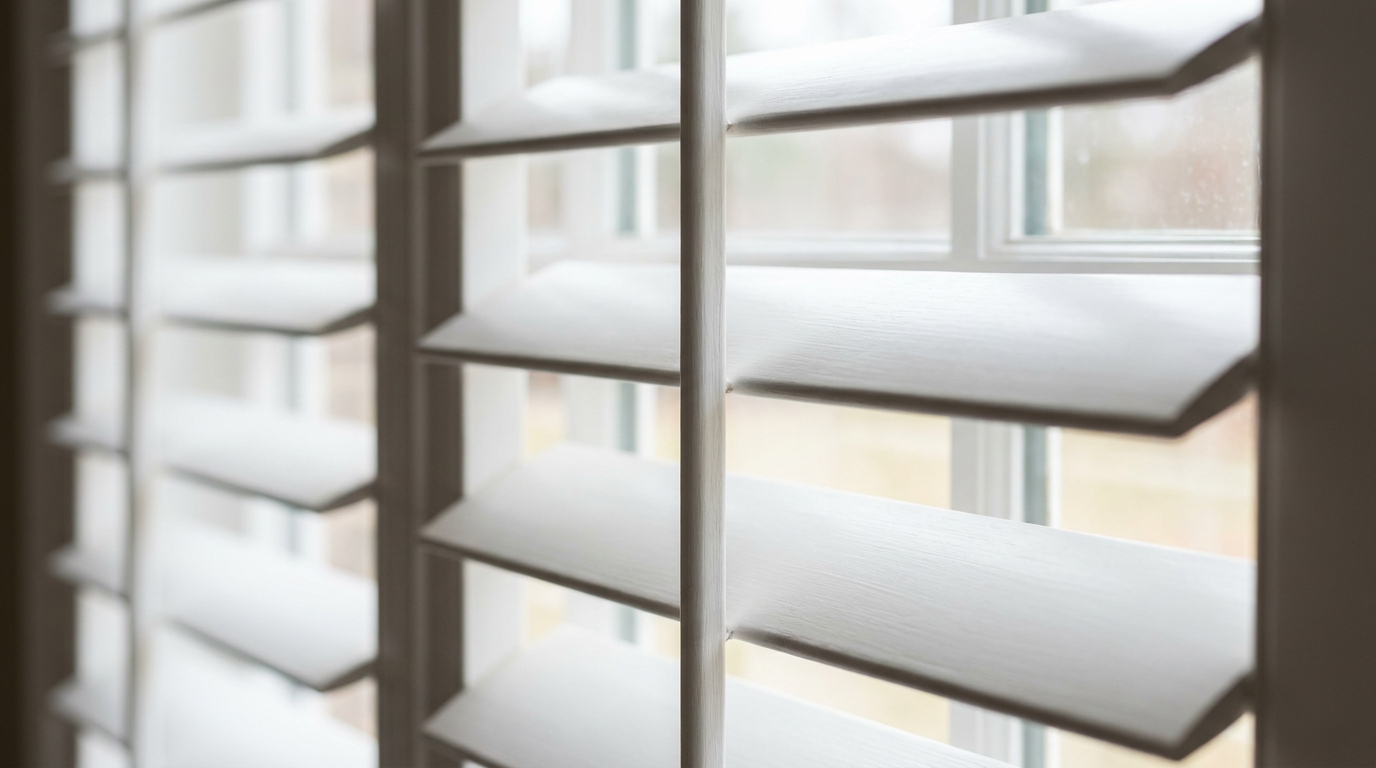
The 3.5 inch louvre is the everyday favourite because it balances a clean, open look with a scale that suits most rooms. Go wider for large modern windows and narrower if you are matching the feel of an older home.
Frames, Mounts, and How the Panels Are Arranged
The frame and mount decide how the finished shutter meets your window, and getting this right is where professional measuring earns its keep.
Inside Mount or Outside Mount
An inside mount sits the shutter within the window opening for a built-in look, which needs enough depth in the frame to house the louvres. An outside mount fixes the shutter to the wall or trim around the window, which suits shallow openings and can make a small window look larger. Each has its place, and we walk through the full trade-off in our guide to inside mount versus outside mount.
Frame Styles
Shutters come with a few frame profiles. An L-frame gives a clean, low-profile edge that works almost everywhere. A Z-frame adds a lip that overlaps the trim, which is handy for hiding uneven older openings. A deco or decorative frame brings a wider, more traditional moulding for heritage rooms. The right one depends on your window depth and the look you are after, which is exactly the kind of detail a proper measure sorts out.
Tilt Options
How you angle the louvres is a small choice with a big effect on the finished look. A traditional center tilt bar runs down the front of the panel and reads classic. A hidden or rear tilt moves that mechanism to the back, so the front face is clean and uninterrupted, which is the choice most modern rooms lean toward. A split tilt lets the top and bottom halves move independently, so you can angle the lower louvres closed for privacy while the top stays open for light.
Panel Layouts, Including Doors
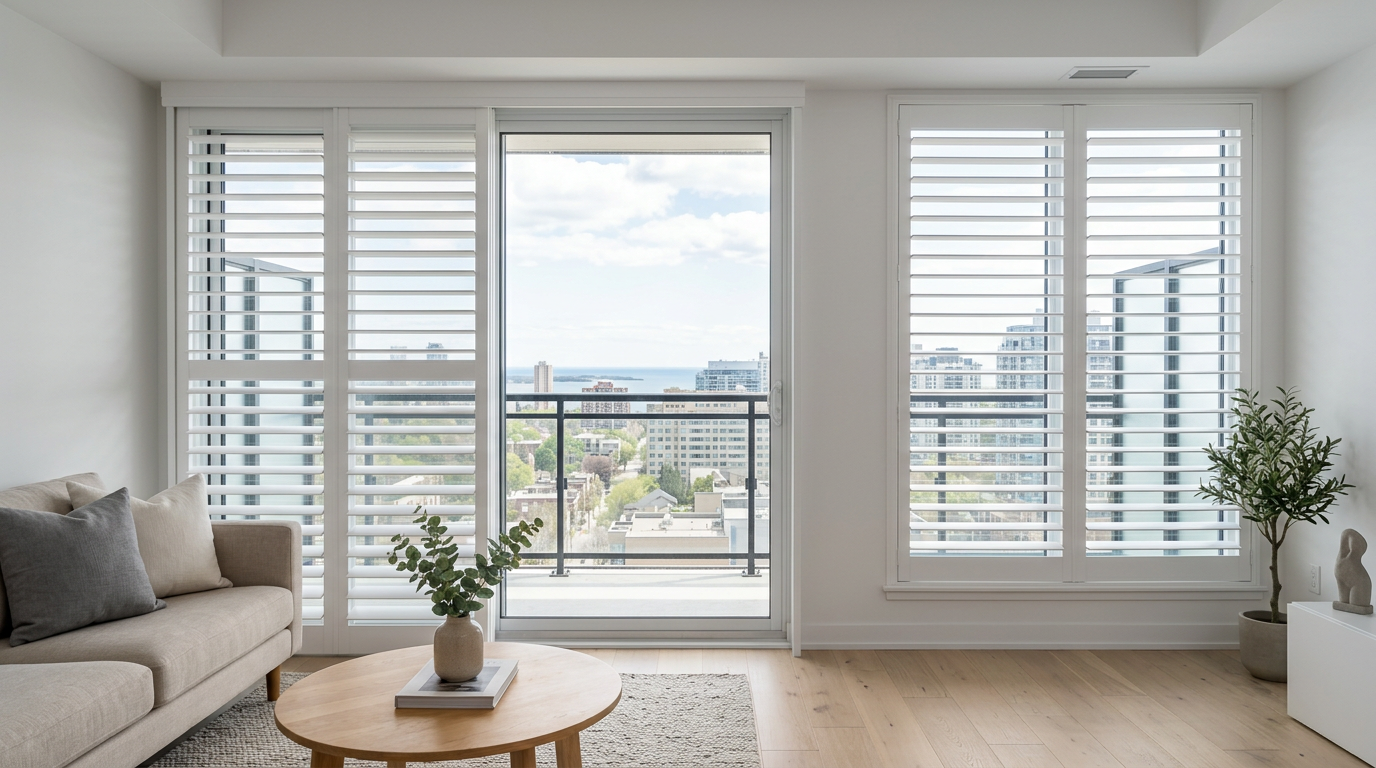
Wide openings get divided into multiple panels so they are easy to operate, often with a divider rail across the middle for the same reason as a split tilt. For patio and closet openings, bypass and bi-fold configurations let the panels slide or fold out of the way. Shutters can be built for a sliding glass door, and they are a tidy alternative to the options in our guide to the best blinds for sliding doors. They also work on French doors, where a cutout can be added so the shutter clears the door handle.
Light Control and Privacy
This is where shutters really earn their keep. Because the louvres tilt through a full range and the panels open completely, you get more positions than most coverings offer. Angle the slats upward and light bounces toward the ceiling while sightlines from the street are blocked. Angle them down and you keep privacy with a softer glow. Close them flat for the most privacy the fabric-free design allows, then swing the whole panel open when you want the glass clear.
They are a strong privacy tool, which is why they show up often when we discuss the best options for privacy in Toronto homes. One point to keep in mind is that even closed louvres leave hairline gaps, so a shutter is not a true blackout product. In a bedroom where full darkness matters, some owners pair shutters with a blackout treatment, an approach we cover in our guide to blackout roller shades, or they choose a dedicated bedroom shade instead. On rooms plagued by afternoon sun, the tilt control also helps with the glare problem we tackle in our article on blocking window glare without darkening the room.
Do California Shutters Help With Insulation?
They help, within reason. A closed shutter puts a solid barrier and a pocket of still air over the glass, which slows the heat moving in or out. It is not the same as replacing the window, and a soft cellular shade with its air-pocket cells generally edges out a shutter on pure insulation, as we explain in our guide to cellular shades. Still, in a Toronto winter, closing your shutters at night makes a room feel less drafty, and in summer, tilting them against the afternoon sun keeps things cooler. Either way, closing them at the right time of day plays a real part in how energy efficient a room feels.
Child and Pet Safety: The Cordless Advantage
One of the quieter benefits of shutters is that they have no pull cords. You operate them by hand, tilting the louvres and swinging the panels, so there is nothing dangling for a small child or a pet to reach. That matters more than it used to. In 2019 the federal government brought in the Corded Window Coverings Regulations to reduce the strangulation risk that loose cords pose to young children, a change you can read about in the Government of Canada announcement on corded window coverings. Shutters sidestep that concern entirely by design, which puts them alongside the cordless choices we recommend in our guide to childproofing window blinds at home.
How Much Do California Shutters Cost in Toronto?
Shutters sit at the higher end of the window-covering range, and that is worth saying plainly so the quote does not surprise you. They cost more than roller, zebra, or cellular shades because each panel is built to measure from solid material and installed to fit the exact opening. What you get for that is a covering that lasts for years and tends to stay with the home, so a lot of owners view it as an investment rather than a running cost, a point we make in our article on why made-to-measure blinds are worth it.
Rather than quote a figure that would not hold true for your specific windows, here are the factors that move the price up or down.
| Cost driver | Effect on price |
|---|---|
| Window size and count | Larger and more numerous openings cost more |
| Material | Real basswood typically costs more than faux wood or vinyl |
| Louvre width and frame style | Specialty profiles add to the base price |
| Shape of the opening | Arched, angled, and specialty shapes cost more to build |
| Panel configuration | Doors and bypass layouts add hardware and labour |
| Installation complexity | Difficult access or out-of-square openings add time |
The only way to get an accurate number is to have the windows measured. A free in-home consultation gives you a firm quote based on your actual openings and the material you choose.
Measuring and Installation
Shutters are less forgiving than a shade when it comes to measuring, because a solid frame has to fit an opening that is often not perfectly square, which most older Toronto homes are not. A professional measure records the depth, the squareness, and any obstructions such as handles or cranks, so the finished shutter fits cleanly. If you want to understand what a proper measure involves, our overview of how to measure windows for shades covers the basics, and our professional measurement service handles it for you.
Installation is best left to a pro as well. A shutter that is even slightly out of level will bind when you swing the panel, and the hinges and frame need to be anchored securely. Done right, the result is a covering that operates smoothly for years.
Cleaning and Maintenance
Shutters are among the easiest coverings to keep clean, which is another mark in their favour for busy households. Dust the louvres with a soft cloth or a brush attachment every couple of weeks, tilting them one way and then the other to reach both faces. For a deeper clean, a lightly damp cloth handles most marks, and vinyl or composite shutters can take a slightly wetter wipe than real wood. There is no fabric to stain and nothing to launder, which makes upkeep simpler than it is for most other coverings.
Are California Shutters Still in Style and Worth It?
Trends in window coverings move slowly, and shutters have stayed in favour for decades because they are not tied to a passing look. White plantation shutters read as classic in a heritage home and as clean and architectural in a modern condo, so they rarely date the way a bold fabric pattern can. On the resale question, quality shutters are one of the few coverings that buyers consistently treat as a selling point, since they stay with the house and signal a finished, cared-for home. For most owners planning to stay put for a while, the combination of durability, easy upkeep, and lasting appeal is what makes them worth the higher upfront cost.
Choosing the Right California Shutters
Pulling it together, a good decision comes down to a short list of questions. What is the room, and does it get wet, which points toward vinyl or composite over real wood? How large are the windows, which affects louvre width and panel count? Do you have young children or pets, where the cordless design is a clear plus? And how long do you plan to stay, since shutters reward a longer horizon? Working through those with someone who measures and installs them every day removes most of the guesswork. Our team is happy to walk your home, take proper measurements, and show you material and louvre samples in your own light before you commit to anything.
Talk to Canadian Blinds Pros
Canadian Blinds Pros builds and installs custom window coverings for homes and businesses across Toronto and the GTA. If California shutters are on your shortlist, the best next step is a free in-home consultation, where we measure your windows, bring samples, and give you a firm quote with no pressure. You can book your free consultation here, browse finished projects in our window coverings gallery, or explore the full range of custom window shades we offer. If you are outside the core city, we also serve surrounding communities, including Mississauga.
Frequently Asked Questions About California Shutters
Are California shutters available in Canada?
Yes. California shutters are widely available across Canada and are one of the most popular interior window coverings in the Toronto area. They are custom built to fit your windows and installed locally.
What is the difference between California shutters and plantation shutters?
There is no real difference. California shutters and plantation shutters both describe interior shutters with wide adjustable louvres set in a solid frame. The two names are used interchangeably in Canada.
Are California shutters worth it?
For a home you plan to keep, they usually are. They last for years, need little upkeep, add a finished look that buyers value, and give excellent light and privacy control. The main trade-off is a higher upfront cost than fabric shades.
Are California shutters still in style?
Yes. White shutters have stayed in demand for decades because they suit both traditional and modern rooms and do not tie a space to a passing trend. Wider louvres give a more contemporary feel if that is your goal.
How much do California shutters cost in Toronto?
Cost depends on the size and number of windows, the material, the louvre and frame style, the shape of the opening, and the installation. Shutters sit at the higher end of the covering range, so the most reliable way to get a real number is a free in-home measure and quote.
Are California shutters more expensive than zebra blinds?
Generally yes. Zebra blinds cost noticeably less than custom shutters. Shutters cost more because each panel is built to measure from solid material, but they also last longer and tend to stay with the home.
What are the downsides of California shutters?
The main ones are the higher cost and the fact that closed louvres still leave small light gaps, so they are not true blackout. They are also permanent, which is a drawback if you like to change a room’s look often or you are renting.
What shutter material is best for bathrooms and kitchens?
Vinyl, PVC, or composite shutters are the best choice for humid rooms because they resist moisture and wipe clean easily. Real wood is better kept to living rooms and bedrooms, where it will not be exposed to steam.
Do California shutters help with insulation in winter?
They help. A closed shutter adds a solid barrier and a pocket of still air over the glass, which reduces drafts on cold nights. They do not insulate as strongly as cellular shades, but they make a noticeable difference in comfort.
Are California shutters good for privacy?
They are one of the best privacy options. You can tilt the louvres to block sightlines while keeping daylight, or close them flat for maximum privacy, then swing the panels fully open when you want the view.
Can you get California shutters for patio doors and French doors?
Yes. Bypass and bi-fold panel layouts are made for sliding patio doors, and shutters for French doors can include a cutout so the panel clears the door handle. These are custom configurations set during the measure.
Are California shutters child safe?
Yes. Shutters have no pull cords. You operate them by hand, so there is nothing dangling for a child or pet to reach, which makes them one of the safer coverings for family homes.
How do you clean California shutters?
Dust the louvres with a soft cloth or brush every couple of weeks, tilting them to reach both sides. Use a lightly damp cloth for marks. Vinyl and composite shutters tolerate a wetter wipe than real wood.
Should shutters be inside mount or outside mount?
Inside mount gives a built-in look but needs enough window depth to house the louvres. Outside mount fixes to the wall or trim, suits shallow openings, and can make a small window look larger. A professional measure confirms which fits your window.
Do California shutters add resale value?
They are among the few coverings buyers consistently treat as a feature, because they are permanent and signal a finished home. Many Toronto sellers keep their shutters in place specifically for that reason.
How long do California shutters last?
Well-built shutters last many years with light care. There is no fabric to fade or wear, and the frame and louvres hold up well, which is a large part of why they are seen as a long-term investment.
Can California shutters be installed on bay or arched windows?
Yes. Shutters are custom built, so they can be shaped for bay, angled, and arched windows. Specialty shapes take more work to build and measure, which affects the price.
How long does it take to get custom shutters made and installed?
Because they are made to order, shutters take longer to arrive than stock shades. Lead times vary with the material and the size of the order, so ask for the current timeline when you get your quote.