
Inside Mount vs Outside Mount: Which Fits?
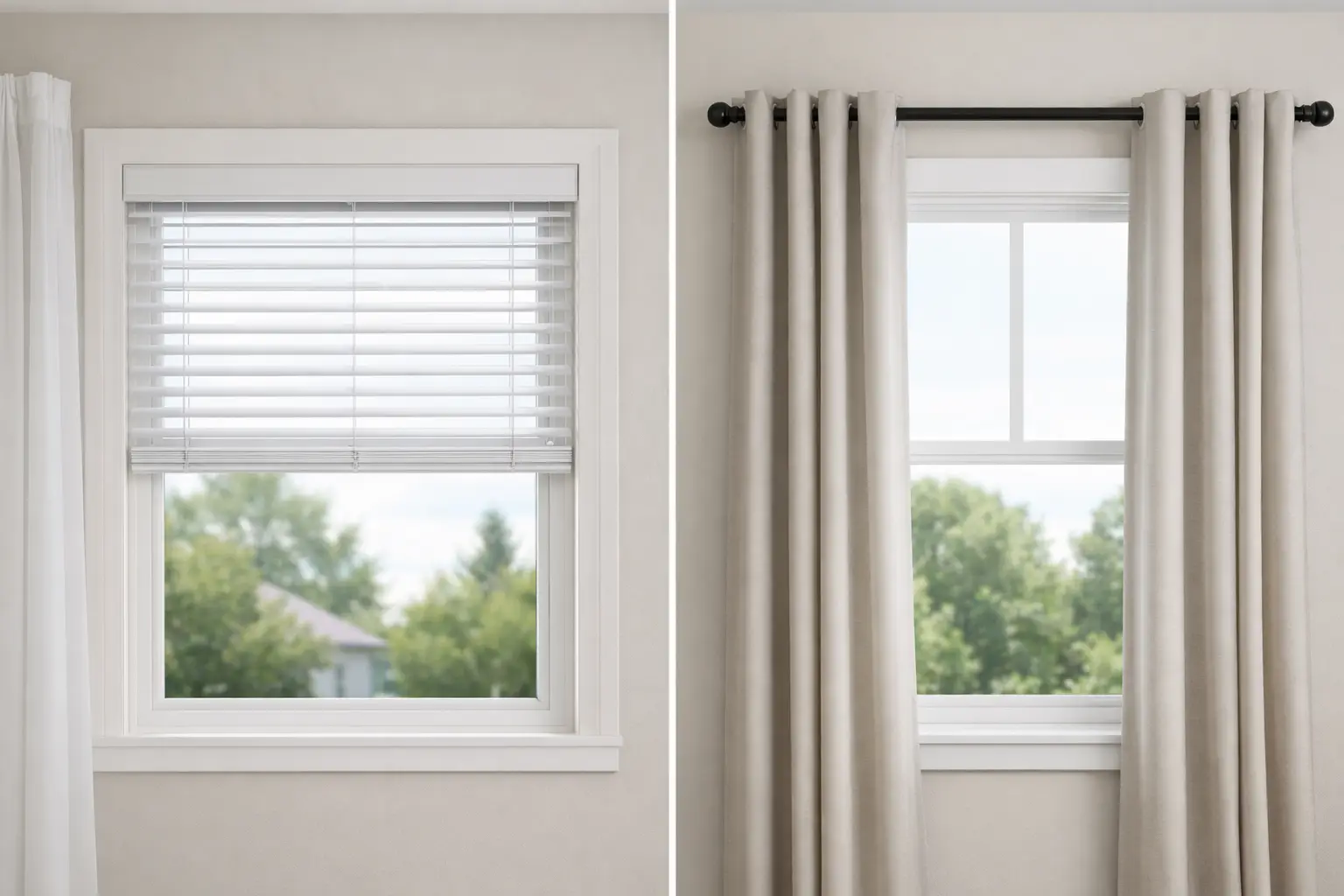

A window can look completely different depending on where its shade is installed. The choice between inside mount vs outside mount affects more than appearance: it changes how much light enters, how private the room feels, whether the window looks larger or more streamlined, and which products will operate properly. For a custom result, the mounting decision should come before fabric selection, color, or smart-control options.
When drilling is off the table, see how mounting works without screws in our guide to no-drill blinds.
Mount choice matters just as much for solid shutters. Our guide to California shutters in Toronto shows how inside and outside mounts change the finished look.
Mount choice matters even more with insulating shades, as our guide to cellular shades and honeycomb blinds explains.
For Toronto-area condos, family homes, and commercial spaces, there is no universal “better” choice. Inside mount creates a clean, built-in look when the window frame can support it. Outside mount offers greater coverage and flexibility when the frame is shallow, uneven, or interrupted by trim and handles. The right answer comes down to your window construction and the way you want the room to function.
Inside Mount vs Outside Mount: The Core Difference
An inside-mounted blind or shade sits within the window opening. Its brackets are secured to the top, sides, or back of the frame, depending on the product and available mounting depth. The finished treatment stays visually contained within the frame, allowing the surrounding trim to remain visible.
An outside-mounted blind or shade is installed on the wall, window trim, or ceiling above the opening. It extends beyond the glass area, typically with extra width on both sides and additional height above the frame. This approach creates more complete coverage and can make a smaller window feel more substantial.
Patio-door coverings such as vertical blinds usually take an outside mount, as our vertical blinds buyer’s guide explains.
Both can look refined when they are measured and installed correctly. The difference is in the visual effect and practical performance.
When an Inside Mount Is the Right Choice
Inside mount is often the preferred choice for modern condos and contemporary interiors because it feels tailored and uncluttered. It works especially well when windows have deep, square openings and attractive trim that you do not want to cover.
Roller shades, zebra blinds, solar shades, and many Roman shade styles can all suit an inside mount. In a living room with large, well-finished windows, this installation keeps the focus on the glass, the view, and the architecture rather than on the window treatment itself. It is also a smart option when two windows sit close together and separate outside-mounted treatments would appear crowded.
There are practical benefits as well. An inside-mounted shade generally takes up less wall space, which matters in compact bedrooms, dens, and condo layouts where furniture may sit close to the window. It can also work neatly around nearby artwork, shelving, or built-in cabinetry.
That said, an inside mount requires enough usable depth. The frame may look deep at first glance but still contain a handle, crank, sensor, mullion, or uneven surface that prevents the brackets from sitting level. A professional measurement checks the narrowest points of the opening, not just the front edge. Even a small obstruction can affect clearance, alignment, and daily operation.
Inside mount also leaves small light gaps along the sides of the shade. These are normal because the product must fit and move freely within the opening. For living spaces, offices, and areas where filtered daylight is welcome, the gaps are rarely a concern. In a bedroom where darkness is the priority, they may be more noticeable, particularly with east-facing windows or bright city surroundings.
Best uses for inside mount
Inside mount is often an excellent fit for living rooms, kitchens, offices, and condo spaces where clean lines matter most. It is also well suited to windows with sufficient depth, consistent frame dimensions, and minimal hardware inside the opening.
For light-filtering or solar fabrics, the slight perimeter gaps are usually an acceptable trade-off for the crisp, architectural finish. Motorized shades can also be installed inside the frame, provided the mounting surface and depth accommodate the system.
When Outside Mount Delivers Better Coverage
Outside mount is the more forgiving option when the window opening is shallow, irregular, or blocked by hardware. Because brackets can be positioned above or beyond the frame, the treatment does not depend on a perfectly clear recess. This gives designers and homeowners more freedom with challenging windows.
It is often the stronger choice for bedrooms, nurseries, media rooms, and any space where reducing light leakage matters. By extending the shade wider and taller than the opening, an outside mount covers more of the glass perimeter. A blackout fabric still cannot make every room perfectly dark on its own, but this installation method can significantly improve the result.
Outside mount is also useful for windows with narrow frames. If an inside-mounted product would look compressed or leave too little coverage over the glass, installing the shade above the opening creates better proportions. In some cases, mounting close to the ceiling makes the room feel taller by drawing the eye upward.
For patio doors or wide openings, outside mount can provide the coverage needed without forcing the treatment into a limited frame depth. The product can be sized around the full opening rather than restricted by it, making operation and light control easier to manage.
Best uses for outside mount
Choose outside mount when privacy, room darkening, or visual scale is the priority. It is particularly effective for bedroom windows, shallow frames, older homes with uneven openings, and condo windows with handles or building hardware that intrude into the recess.
This option can also be the better design choice when the trim is minimal and you want to create a more intentional window feature. A carefully selected fabric and a properly placed headrail can make the entire wall feel more finished, not just the window.
Light Control and Privacy: Where Mounting Matters Most
Fabric choice matters, but mounting style determines how fully that fabric can perform. An inside-mounted blackout roller shade may block most direct light, yet light will still appear around its edges. An outside-mounted blackout shade with generous overlap will reduce those side gaps and provide a more controlled sleep environment.
The same principle applies to privacy. In a high-rise condo, especially where neighboring towers face one another, an outside mount can offer more complete coverage after dark. An inside mount still provides privacy when lowered, but a wider outside-mounted shade may feel more secure around the edges of the window.
For daytime privacy with natural light, zebra blinds, sheer shades, and solar shades offer versatile solutions in either mounting style. The installation choice should reflect whether you want the treatment to blend into the window frame or cover the full opening with greater authority.
Measuring Is Not a DIY Detail
Inside and outside mount measurements are taken differently. For an inside mount, the critical information includes the opening width at multiple points, height, depth, and any obstructions. The final product is usually made with necessary deductions so it can fit and operate within the frame. Ordering to the exact opening width without those allowances can result in a shade that is too tight.
For an outside mount, the measurement starts with the area you want to cover. That includes deciding how far the shade should overlap the window on each side and how much space is available above the frame. The right overlap depends on the product, the room’s lighting needs, trim dimensions, and the location of nearby walls, ceilings, or cabinetry.
This is why professional consultation adds real value. A specialist can identify issues that are easy to miss, such as an out-of-square opening, a window that tilts inward, limited mounting surface, or a condo wall condition that requires a specific installation approach. The goal is not simply to make the shade fit. It is to make it look balanced and work reliably every day.
How to Choose for Your Room
Start by deciding what the window needs to do. If you want a minimal, built-in finish and your frame has enough clear depth, inside mount is likely the natural choice. If the room needs stronger light blocking, more complete privacy, or a solution for a shallow or obstructed frame, outside mount will often perform better.
Then consider the room from a distance. Inside mount preserves trim and keeps the window visually light. Outside mount can add presence, conceal an unattractive frame, and make narrow windows appear wider. Neither approach is a compromise when it is selected intentionally.
A well-chosen mount should feel effortless once it is installed. Canadian Blinds Pros can assess your window dimensions, room goals, and preferred style during an in-home consultation, so the finished treatment supports the way you live rather than asking you to work around it.