
Toronto Condo Window Covering Guide for High-Rises
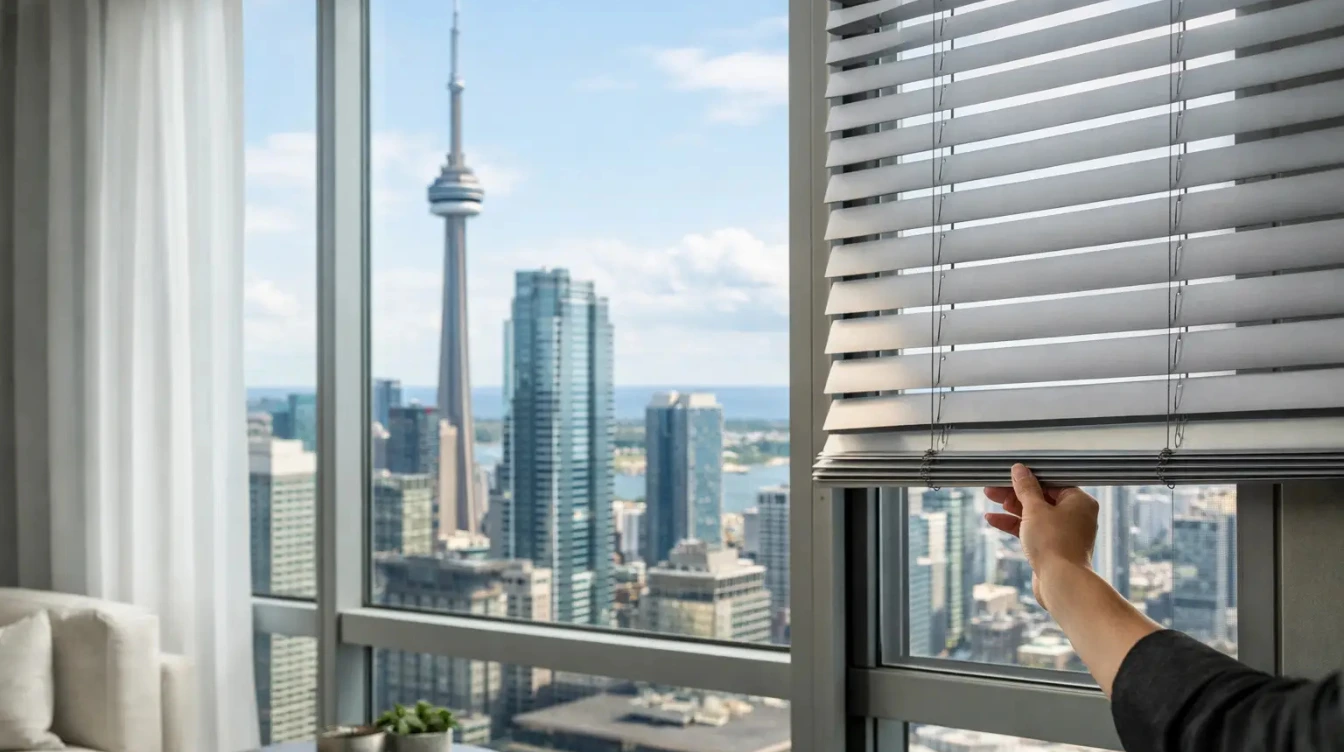

Floor-to-ceiling glass can make a Toronto condo feel bright, open, and unmistakably urban. It can also turn a living room into a fishbowl after sunset, make a bedroom too bright for sleep, and expose furniture to intense afternoon sun. This Toronto condo window covering guide focuses on choosing solutions that look refined while meeting the everyday demands of high-rise living.
If your condo sits in the east end, our blinds in Scarborough guide walks through local buildings and light.
Looking at a condo further west? Our guide to window coverings in Mississauga covers the local market in detail.
Beyond condos, see our full guide to choosing blinds in Toronto walks through the whole decision.
Large condo windows gain and lose the most heat, so it is worth reading about energy efficient window coverings for Toronto homes.
For a balcony slider or a wide glass wall, many condos also weigh panel track blinds that park in a tidy flat stack.
The right treatment is rarely just about color or fabric. Condo windows are often oversized, closely spaced, set beside balcony doors, or governed by building rules. A made-to-measure approach helps ensure the finished result controls light properly, respects the window layout, and feels like part of the home rather than an afterthought.
Start With How Each Room Needs to Work
A single condo can need several different levels of privacy and light control. The living area may benefit from daylight and an outward view during the day, then more privacy at night. A bedroom may need room-darkening performance. A home office needs glare reduction without making the space feel closed in.
Before selecting a style, consider when you use the room, which direction the windows face, and what sits outside them. A south- or west-facing unit can receive strong sun for hours, while a unit facing another tower may need privacy even in the middle of the day. These details affect the ideal fabric openness, shade type, and control method.
For compact spaces, window coverings should also support the room’s visual flow. Clean-lined roller shades often suit contemporary interiors because they stack neatly when raised. Zebra blinds offer a more adjustable look, using alternating sheer and opaque bands to shift between filtered light, view-through, and privacy. Roman shades can add softness and texture when the room calls for a more layered, residential finish.
Toronto Condo Window Covering Guide: Key Decisions
Privacy does not have to mean darkness
Many condo residents want privacy without losing the light that drew them to the unit in the first place. Sheer shades and light-filtering roller fabrics soften daylight while reducing direct visibility from nearby buildings. They are often a strong choice for living rooms, kitchens, and offices where complete blackout is not necessary.
At night, the calculation changes. When interior lights are on, a sheer treatment alone may not provide enough privacy. In spaces facing close neighbors, consider a more opaque fabric or a dual treatment that allows softer daytime filtering and stronger evening coverage. The best option depends on sightlines, not simply the floor number. Even a high-floor unit can be visible from surrounding towers.
Match the fabric to sun exposure
Solar shades are a practical choice for rooms with broad city views and regular direct sun. Their specialty fabrics help reduce glare and UV exposure while preserving an outward view. This can make computer screens easier to see and help protect flooring, artwork, and upholstery from fading.
Openness matters. A more open solar fabric preserves a clearer view but offers less daytime privacy and less glare reduction. A tighter weave provides more control, though it can make the view feel more muted. During an in-home consultation, it is useful to look at fabric samples against the actual glass because window orientation changes how every material performs.
For bedrooms, a blackout or room-darkening shade is usually the more reliable choice. True darkness also depends on installation details. Light can enter through side gaps, above the shade, or around an irregular window frame. A professional measurement helps identify these issues early and select a mounting approach that delivers a more restful result.
Plan around balcony doors and window walls
Balcony doors need easy, frequent access, so the window covering should move smoothly and leave a clear path. A roller shade on the door itself can work well when there is sufficient mounting space and the door handle clears properly. In other layouts, a coordinated shade arrangement may be more practical.
Window walls create a different challenge. Several individual shades can provide precise control across separate panes, while a wider treatment can create a calmer, more continuous appearance. Neither option is automatically better. Individual shades are useful when one section gets more sun or needs to stay lowered while another remains open. Wider treatments can reduce visual interruption in an open-concept room.
This is where exact measurements matter most. High-rise glazing, deep window returns, handles, mullions, and sprinkler clearances can all affect what will fit. Choosing a product from a photo or standard-size package may seem simpler, but it often produces uneven coverage or an awkward installation.
Choose Controls That Fit Your Routine
Manual controls remain a practical, streamlined choice for many condo rooms. They are easy to operate and work especially well for standard-height windows that are adjusted occasionally. For large, tall, or hard-to-reach windows, motorized blinds and smart blinds offer a meaningful upgrade in convenience.
Motorization allows shades to move with the touch of a remote, wall control, or app. It is particularly useful for a bank of windows that would otherwise require several separate adjustments. Smart scheduling can also support comfort: lower shades during periods of strong afternoon sun, then raise them when you want to enjoy the evening view.
The value is not only convenience. Consistent use can help manage glare and heat gain, and cordless motorized operation eliminates hanging control cords. That is an especially appealing safety consideration for families with children or pets. The right power option depends on the window location, access to electrical service, and how often the shade will be used.
Work With Your Building, Not Against It
Condo corporations may have requirements that affect what is visible from the exterior. In some buildings, all window coverings must present a neutral or consistent street-facing appearance. Others have rules about drilling, window frames, balcony access, or contractor hours.
Review your building’s guidelines before placing an order, particularly if you are installing treatments in a recently completed unit or making changes after a move. Renters should also check their lease and ask for approval where required. A well-chosen custom shade can be designed around many practical restrictions, but those restrictions should be known before measurement day.
Professional installation is worth considering in condos because access is often more complicated than it appears. Elevators may need to be booked, parking can be limited, and large glass areas leave little room for trial and error. Properly mounted coverings operate better, sit evenly across the window, and avoid unnecessary damage to walls or frames.
Coordinate the Look Without Overdesigning
Condo interiors tend to benefit from restraint. A neutral fabric can connect the living room, kitchen, and hallway even when each room has a different purpose. White, soft gray, warm beige, and charcoal are dependable starting points, but the best color should relate to wall paint, flooring, and the light entering the unit.
Texture can create interest without adding visual clutter. A subtly woven roller fabric may feel warmer than a flat plain material, while Roman shades can bring depth to a bedroom or den. If your furniture and finishes are already detailed, a simpler window treatment may be the better balance.
Consider what the coverings look like both raised and lowered. In a small room, bulky stacks can make windows feel shorter and consume valuable visual space. Low-profile shades are often a strong fit for modern condos because they keep the glass area clean when open.
Why Custom Measurement Changes the Result
Condo windows may look uniform, but small differences are common. One pane can be slightly wider than the next. Drywall returns may not be square. A balcony door handle may require extra clearance. Those details determine whether a shade hangs level, blocks light effectively, and clears the hardware every time.
A free in-home consultation from Canadian Blinds Pros gives you the chance to assess fabric samples, privacy needs, mounting options, and operating styles in the actual space. Installation included with the order also removes the need to coordinate separate suppliers, installers, and building logistics.
The most successful condo window coverings make daily life easier without competing with the architecture. Choose the level of privacy you actually need, let the sun exposure guide the fabric, and give proper measurement the attention it deserves. Then your windows can remain the feature you loved at move-in, with comfort and control built in.