
Blinds in Mississauga: A Complete Local Buyer’s Guide to Window Coverings
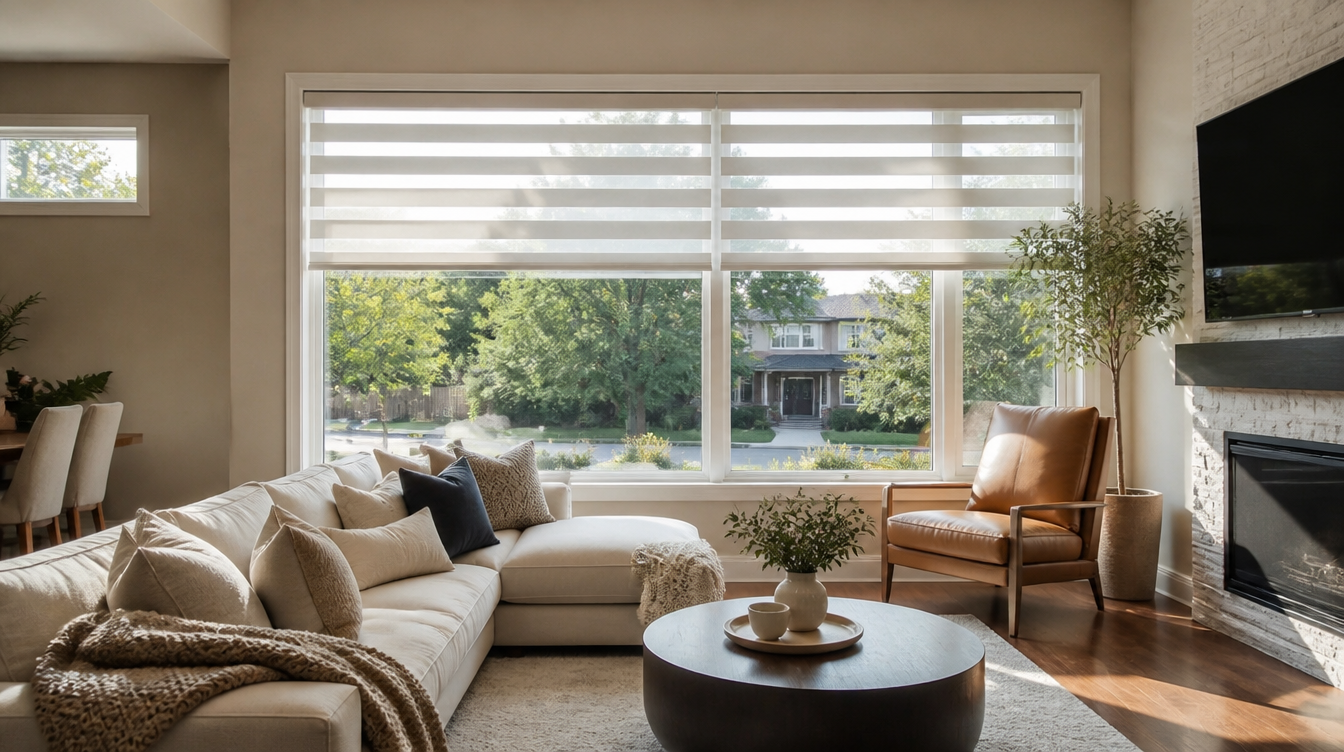

Buying blinds in Mississauga is rarely a one-size decision. A glass-walled condo near Square One has nothing in common with a 1970s side-split in Applewood, and a lake-facing living room in Port Credit deals with light that a north-facing townhouse in Churchill Meadows never sees. The window covering that looks perfect in a showroom can disappoint once it is hanging in your own home, facing your own street, catching your own afternoon sun.
Shopping on the east side of the GTA instead? Our guide to blinds in Scarborough covers the same ground for Scarborough homes.
This guide walks through how to choose window coverings for a Mississauga home the way a local installer would think about it. We cover the main blind and shade types, which rooms they suit, how light and privacy play out across the city’s different neighbourhoods, what measuring and mounting involve, and the questions worth asking before you order anything. There are no invented prices here and no pressure. The goal is to help you order once and get it right.
Why Window Coverings in Mississauga Call for Local Thinking
Mississauga is not one kind of place, and its windows reflect that. The housing stock runs from downtown high-rises and lakeshore condos to detached homes in Lorne Park, builder towns in Lisgar and Meadowvale, and older bungalows in Cooksville and Malton. Each of those comes with its own window sizes, sightlines, and light problems. A good window covering choice starts with the building, not the fabric swatch.
The City’s Housing Mix Shapes the Decision
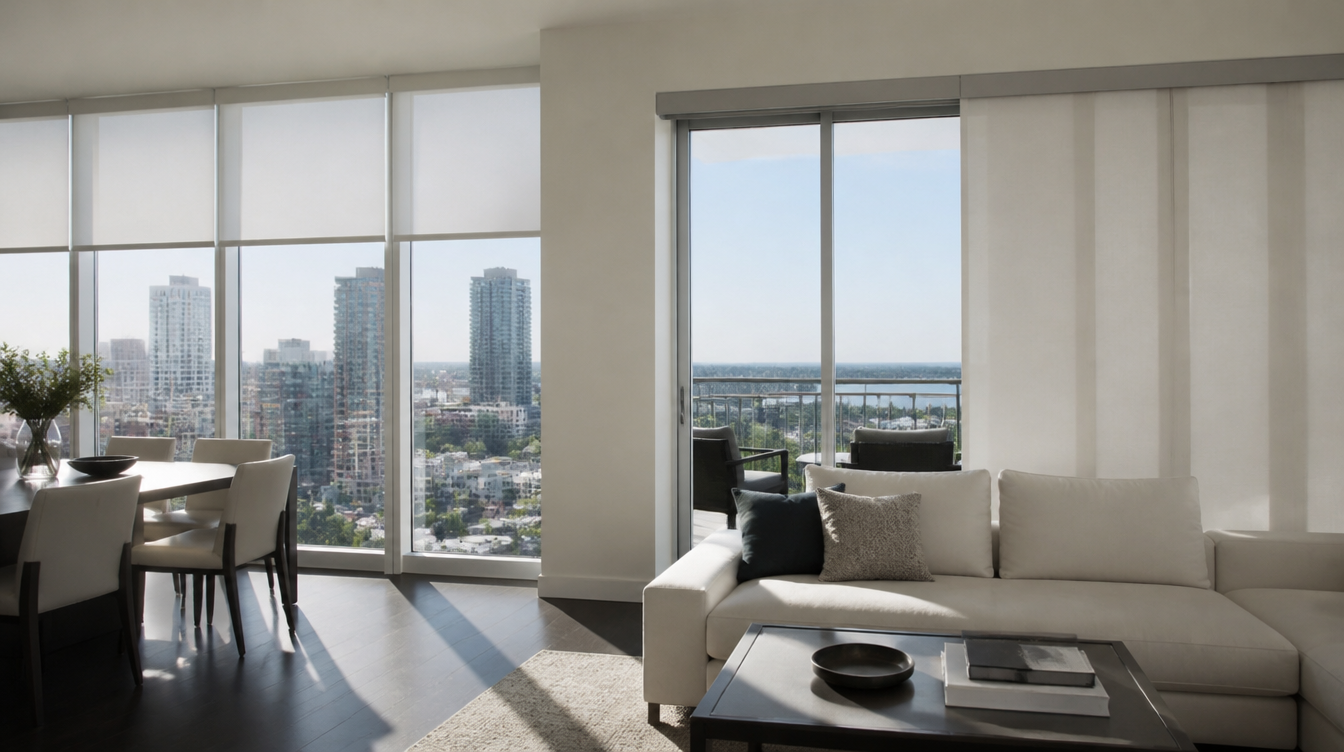
Condos tend to have large floor-to-ceiling glass and sliding doors onto balconies, which pushes you toward roller shades, vertical blinds, or panel track shades for the wide spans. Many condo boards also set rules about what the street sees, so the colour facing outward sometimes matters as much as the one facing in. Our condo window covering guide goes deeper on that.
Detached and semi-detached homes give you more freedom and usually more windows to coordinate. Here the question becomes consistency: carrying one style through the main floor while still solving blackout in the bedrooms and moisture resistance in the bathrooms. Townhomes often sit close to a neighbour, so privacy on the ground floor tends to drive the choice.
Lake Ontario Light and West-Facing Glare
Mississauga’s southern edge runs along Lake Ontario, and homes in Port Credit, Lakeview, and Clarkson deal with bright, reflected light off the water for much of the day. West-facing rooms anywhere in the city get harsh late-afternoon sun that fades floors and makes screens hard to read. Solar and roller shades with a light-filtering fabric cut that glare while keeping the view, which is why they are so common in lake-facing living rooms.
Cold Winters, Warm Summers, and the Energy Question
Window coverings do real work against Mississauga’s temperature swings. In January a bare window leaks heat; in July it lets it pour in. Cellular shades, with their honeycomb pockets of trapped air, insulate better than most other coverings and can take the edge off both seasons. If energy matters to you, our guide to energy efficient window coverings covers the trade-offs in detail. Natural Resources Canada explains how the broader ENERGY STAR program rates efficiency for home products.
The Main Types of Blinds and Shades, and Where They Fit
Most Mississauga homes end up with a mix rather than a single product everywhere. It helps to know what each type does best before you start matching them to rooms.
Zebra and Dual-Layer Shades
Zebra shades alternate sheer and solid bands, so a small pull shifts the room from open view to private in seconds. They are the most requested style in the GTA right now, and they suit living rooms and bedrooms where you want flexible light through the day. We cover them on our zebra blinds page, and there is a dedicated zebra blinds Mississauga page for local buyers.
Roller Shades
Roller shades are the clean, modern default. One fabric, one smooth roll, and a range that runs from near-transparent solar screen to full blackout. They work almost anywhere and pair well with drapery when a room needs softening.
Cellular (Honeycomb) Shades
When insulation is the priority, cellular shades lead. The honeycomb structure holds a layer of air against the glass, which slows heat moving in or out. They come in light-filtering and blackout fabrics and fold up compactly off the window.
Roman Shades
Roman shades bring fabric warmth without a full set of curtains. They fold into soft horizontal pleats when raised, and with a blackout lining they handle a bedroom nicely. See our roman shades buyer’s guide for fold styles and linings.
Wood and Faux-Wood Blinds
Horizontal slat blinds still look right in traditional and transitional homes. Real wood is light and warm toned; faux-wood and aluminum venetian blinds resist humidity, which matters in a kitchen or bathroom. For a softer natural look, bamboo and woven wood shades are worth a look.
Vertical Blinds and Panel Tracks for Wide Glass
Sliding doors and wide windows need a covering that moves sideways. Vertical blinds remain the practical answer for a patio door, while panel track shades give the same sideways operation with a cleaner, more contemporary panel. Both are common in Mississauga condos and walk-out basements.
Sheers, Shutters, and Drapery
Sheer shades float a fabric vane between two sheers for a diffused, elegant light. California shutters add permanent architectural value and suit heritage and high-end homes. And full custom curtains and drapery layer over any blind when a room wants more softness and sound absorption.
| Covering | Best at | Where it fits in a Mississauga home |
|---|---|---|
| Zebra shades | Flexible view-to-privacy | Living rooms, bedrooms, condo main rooms |
| Roller shades | Clean, versatile, any opacity | Almost any room, lake-facing glare |
| Cellular shades | Insulation and energy saving | North-facing rooms, drafty older homes |
| Roman shades | Fabric warmth, soft look | Bedrooms, dining rooms, feature windows |
| Faux-wood blinds | Humidity resistance | Kitchens, bathrooms, laundry rooms |
| Vertical / panel track | Wide spans, sideways travel | Patio doors, condo glass walls |
| Shutters | Permanent, architectural | Detached homes, heritage properties |
Choosing Blinds Room by Room
The fastest way to a good decision is to go room by room and ask what each window actually needs. Light, privacy, moisture, and noise all weigh differently depending on where you are standing.
Living Rooms and Lake-View Windows
Main living spaces usually want to keep the view while controlling glare. Zebra shades and light-filtering roller or solar shades do that well, and they look at home in both a Port Credit condo and a Meadowvale family room. If you have a wall of west-facing glass, a solar screen protects furniture from fading without closing the room off. Our living room blinds page shows the range.
Bedrooms and Blackout
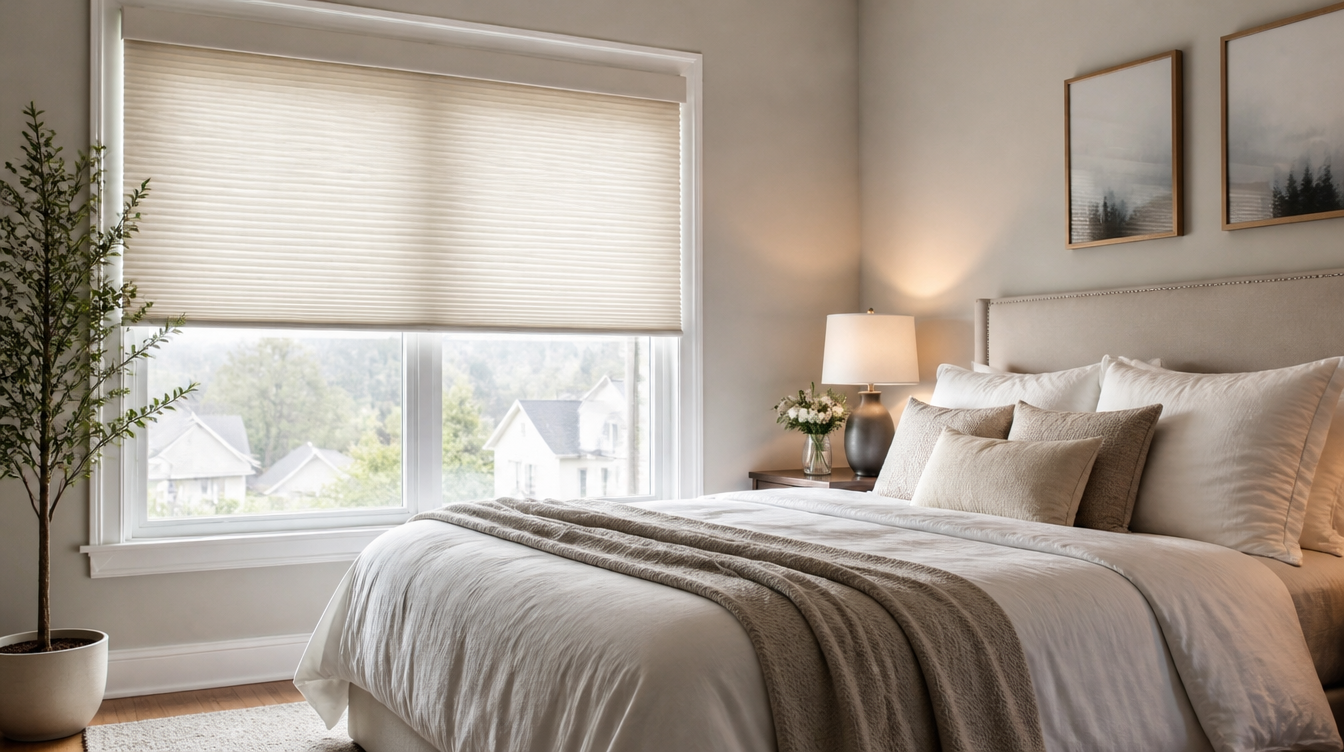
Bedrooms are where blackout earns its keep, especially for shift workers, young children, and anyone facing a streetlight. Blackout roller shades, cellular shades, or lined roman shades all darken a room; for near-total darkness, an outside mount or side channels close the light gaps at the edges. See our bedroom blinds and blackout blinds options, plus the local blackout blinds Mississauga page.
Kitchens and Bathrooms
Steam, splashes, and grease rule out most fabrics and all real wood here. Faux-wood blinds, aluminum blinds, and easy-wipe roller shades handle the moisture and clean up without warping. Cordless or motorized operation also keeps cords away from a sink or stovetop.
Home Offices
With so many Mississauga residents working from home, glare on a monitor is a daily problem. Light-filtering roller or solar shades soften the light without darkening the room, and a dual setup pairs a solar shade for day with a blackout layer for video calls or screen glare. Our office blinds page covers workspace setups.
Condos Near Square One and the Lakeshore
Condo windows are tall, wide, and often share a single header across several panels. Roller shades on a continuous headrail, panel tracks for the balcony door, and motorization for high or hard-to-reach glass are the usual answers. Because you cannot always drill into certain condo surfaces, mounting options and no-drill solutions come up often.
| Room | Main concern | Common choices |
|---|---|---|
| Living room | Glare, view, style | Zebra, solar, light-filtering roller |
| Bedroom | Darkness, privacy | Blackout roller, cellular, lined roman |
| Kitchen / bath | Moisture, cleaning | Faux-wood, aluminum, wipe-clean roller |
| Home office | Screen glare | Solar shade plus blackout layer |
| Condo great room | Wide glass, height | Roller on shared headrail, panel track, motorized |
Light Control, Privacy, and Insulation
Three things decide how a window covering feels day to day: how much light it lets through, how much it hides, and how much heat it holds back. They often pull against each other, so it helps to understand the levels.
Opacity Levels Explained
Fabric opacity runs on a scale. Sheer fabrics keep the view and soften light but give little privacy after dark. Light-filtering fabrics glow softly and hide shapes without full darkness. Room-darkening cuts most light, and blackout blocks it almost entirely. Many homes mix levels across the house, and a single room sometimes layers two.
| Opacity | Daytime light | Privacy after dark | Best for |
|---|---|---|---|
| Sheer | Bright, keeps view | Low | Layering, decorative |
| Light-filtering | Soft glow | Medium | Living rooms, kitchens |
| Room-darkening | Dim | High | Media rooms, nurseries |
| Blackout | Very dark | Very high | Bedrooms, shift workers |
Privacy for Street-Facing and Close-Neighbour Homes
Mississauga’s townhouse blocks and older infill streets often put windows close together. A sheer that works beautifully by day turns into a lit display at night, so street-facing ground-floor rooms usually want a light-filtering or room-darkening fabric, or a zebra shade you can close fully. Top-down bottom-up operation is a neat trick here: it lets light in from above while keeping the lower half of the window covered.
Insulation and Energy Savings
If your heating and cooling bills climb with the seasons, cellular shades are the strongest single upgrade on a window-covering budget. The trapped air slows heat transfer, which helps a north-facing room hold warmth in winter and a west-facing room stay cooler in summer. Pairing shades with lined drapery adds another insulating layer for the coldest months.
Measuring and Mounting: Inside or Outside
How a blind is mounted changes how it looks and how well it controls light. The two options are an inside mount that sits within the window frame and an outside mount that covers the opening from the wall or trim.
Inside Mount Versus Outside Mount
Inside mount gives a clean, built-in look and shows off the trim, but it leaves small light gaps at the edges and needs enough depth in the frame. Outside mount covers those gaps, makes a window look larger, and suits shallow frames or walls without usable depth, which is why it is the go-to for true blackout. The right call depends on your frame depth, your trim, and whether darkness or looks matters more.
| Factor | Inside mount | Outside mount |
|---|---|---|
| Look | Clean, built-in | Fuller, window looks larger |
| Light gaps | Small gaps at edges | Gaps covered |
| Frame depth | Needs enough depth | Works on shallow frames |
| Best for | Showing trim, tidy look | Blackout, odd-shaped openings |
Getting the Measurements Right
Precise measuring is where custom window coverings win over ready-made. Frames are rarely perfectly square, especially in older Cooksville and Malton homes, so measuring the width at the top, middle, and bottom and taking the smallest reading keeps an inside-mount blind from binding. Our full guide to measuring windows for blinds walks through it, and a professional measure during an in-home visit removes the guesswork entirely.
Motorized and Smart Blinds in Mississauga Homes
Motorization has moved from luxury to mainstream, and it solves real problems in local homes: tall condo windows you cannot reach, a bank of living-room shades you would rather raise at once, and skylights or stairwell windows that are awkward by hand.
Battery Versus Hardwired Power
Most retrofits use rechargeable battery motors because they install without opening walls, which suits condos and finished rooms. Hardwired motors suit new builds and major renovations where wiring can be run before the drywall closes. Both can tie into a smart blinds setup with a remote, an app, or a voice assistant, and schedules can raise and lower shades automatically through the day. Our motorized blinds page has the details.
| Power type | Install | Best for | Trade-off |
|---|---|---|---|
| Rechargeable battery | No wiring, quick | Condos, existing homes | Occasional recharging |
| Hardwired | Runs to power, permanent | New builds, renovations | Needs wiring access |
Child and Pet Safety
If young children or pets are in the home, cord safety is not optional. Pull cords and inner lift cords are a strangulation hazard, and the safest route is a cordless or motorized operating system with no accessible cords at all. Canada regulates this directly: the federal Corded Window Coverings Regulations (SOR/2019-97) set safety limits on cords for products sold here. Choosing cordless blinds in children’s rooms and play areas is the simplest way to stay on the safe side.
Custom, Ready-Made, or Big-Box
Mississauga buyers generally weigh three paths: custom window coverings measured and made to fit, ready-made blinds cut down at home, and big-box or online panels. Each has a place, and the right one depends on your windows and how long you want the result to last.
Where Custom Pays Off
Ready-made works for a standard window where a close fit is good enough. It falls short on anything out of the ordinary: wide spans, tall glass, bay and specialty-shaped windows, or an older home where nothing is quite square. Custom shades are measured to the opening, built to your fabric and opacity, and installed to sit cleanly. Our custom window shades and local custom shades Mississauga pages show what that involves.
What Actually Drives the Price
Rather than quote numbers that change with fabric and size, it helps to know what moves a quote up or down. These are the real cost drivers, and a measured quote is the only honest way to price your specific windows.
| Cost driver | Why it matters |
|---|---|
| Window size and count | Larger and more windows mean more material and labour |
| Covering type | Shutters and specialty shapes cost more than basic rollers |
| Fabric and opacity | Designer fabrics and blackout linings add cost |
| Motorization | Motors, hubs, and smart controls raise the total |
| Mounting and access | High or hard-to-reach windows take longer to install |
What to Look for in a Mississauga Blinds Company
The product matters, but so does who measures, builds, and installs it. A few things separate a company you will be glad you called from one you will chase for a remake.
Look for an in-home consultation with real fabric samples rather than a phone quote, professional measuring so the fit is their responsibility and not yours, a clear written quote with no vague extras, and installation by the same company that sold the blinds. Ask whether they serve your part of the city, how they handle a remake if a measurement is off, and whether cordless and child-safe options are standard. You can see finished local projects in our window blinds gallery, and our wider Toronto blinds buyer’s guide covers the questions in more depth.
Neighbourhoods We Serve Across Mississauga
We measure and install throughout Mississauga, from the lakeshore to the northern edge. That includes Port Credit, Lakeview, Clarkson, and Lorne Park near the water; City Centre and the condos around Square One; Erin Mills, Sheridan, and Streetsville in the west; Meadowvale, Lisgar, and Churchill Meadows to the northwest; and Cooksville, Applewood, Dixie, and Malton to the east. You can start on our Mississauga blinds page, and we cover neighbouring cities too, including Brampton, Etobicoke, and Vaughan.
How the Process Works
Ordering custom window coverings is simpler than most people expect. It starts with a free in-home consultation where we bring samples, talk through each room, and take professional measurements. You choose fabrics, opacity, colours, and controls, we build the order to fit, and our team installs it and checks the operation before we leave. If you would like to begin, you can contact us to book a visit and talk through your windows with no obligation.
Frequently Asked Questions
What are the best blinds for a Mississauga condo?
Roller shades on a shared headrail, panel track shades for balcony doors, and motorized operation for tall or hard-to-reach glass are the usual choices in Mississauga condos. Zebra shades are also popular for flexible light, and no-drill or tension options help where you cannot drill into certain surfaces.
How much do custom blinds cost in Mississauga?
Price depends on window size, the covering type, fabric, opacity, and whether you add motorization, so there is no single figure. A measured in-home quote is the only accurate way to price your specific windows, and it comes with no obligation to buy.
Do you offer free in-home consultations in Mississauga?
Yes. A consultant brings fabric and colour samples to your home, reviews each room, and takes professional measurements. Seeing samples against your own walls and light makes the choice much easier than ordering blind.
What blinds are best for large lake-facing or west-facing windows?
Solar and light-filtering roller shades cut glare and block UV while keeping the view, which suits lake-facing rooms in Port Credit and Lakeview. For wide spans, panel track or vertical blinds move cleanly aside, and motorization helps on tall glass.
Which blinds give the best blackout for bedrooms?
Blackout roller shades, cellular shades with a blackout fabric, and lined roman shades all darken a bedroom. For near-total darkness, an outside mount or side light-blocking channels close the gaps at the window edges where light usually sneaks in.
Are cordless blinds safer for children?
Yes. Cordless and motorized blinds remove the accessible pull and inner cords that pose a strangulation risk to children and pets. Canada’s Corded Window Coverings Regulations set safety limits on cords, and cordless systems are the simplest way to avoid the hazard entirely.
What is the difference between zebra shades and roller shades?
Roller shades use one fabric that rolls up and down. Zebra shades layer alternating sheer and solid bands, so a short pull shifts the window between an open view and full privacy without fully closing the shade. Zebra offers more day-to-day flexibility; roller offers a wider fabric and opacity range.
Which blinds work best in a kitchen or bathroom?
Faux-wood blinds, aluminum blinds, and wipe-clean roller shades handle steam and splashes without warping or staining, unlike real wood or delicate fabrics. Cordless or motorized operation also keeps cords away from sinks and cooktops.
Can you motorize blinds in an existing home without rewiring?
Yes. Rechargeable battery motors install on existing windows with no wall opening or new wiring, which makes them ideal for condos and finished rooms. Hardwired motors are usually reserved for new builds and renovations where wiring can be run in advance.
Do cellular shades really save on energy bills?
Cellular shades insulate better than most coverings because their honeycomb cells trap a layer of air against the glass, slowing heat moving in or out. They help a window hold warmth in winter and block summer heat, though savings depend on the window, exposure, and how often the shades are used.
Should I choose an inside mount or an outside mount?
Inside mount sits inside the frame for a clean, built-in look but leaves small light gaps and needs enough frame depth. Outside mount covers the opening from the wall, hides light gaps, and makes a window look larger, which is why it is preferred for blackout and shallow frames.
How do I measure my windows for blinds?
Measure the width at the top, middle, and bottom and the height at the left, centre, and right, then follow inside or outside mount rules for which number to use. Because frames are rarely perfectly square, many buyers prefer a professional measure so the fit becomes the installer’s responsibility.
What blinds look the most high-end?
Shutters, layered drapery over shades, and sheer shades tend to read as the most upscale, along with wide-slat wood blinds and roman shades in quality fabric. Motorization also lifts the look by removing visible cords and giving a clean, uniform line across a room.
How long does it take to get custom blinds in Mississauga?
Timelines vary with the covering type, fabric, and whether motorization is involved, so your consultant gives a realistic window at the time of your quote. Custom orders take longer than ready-made panels because each piece is built to your measurements.
Do you install the blinds you sell?
Yes. The same team that measures and supplies your window coverings handles installation, so fit and finish stay with one company. Professional installation also makes sure each blind operates smoothly and sits level before the job is considered done.
Which Mississauga neighbourhoods do you cover?
We serve all of Mississauga, including Port Credit, Lakeview, Clarkson, Lorne Park, City Centre and the Square One area, Erin Mills, Streetsville, Meadowvale, Lisgar, Churchill Meadows, Cooksville, Applewood, and Malton, plus neighbouring cities across the GTA.
Choosing window coverings for a Mississauga home comes down to matching the covering to the window, the room, and the light you actually live with. Take it room by room, lean on custom fit for anything non-standard, and ask for an in-home measure so the result fits the first time. When you are ready, we are glad to help you plan it.