
What’s the Best Way to Add Privacy Without Losing Light in Basement Windows?


What’s the Best Way to Add Privacy Without Losing Light in Basement Windows?
Basement windows need a different privacy solution than main-floor windows. They sit low, face sidewalks, driveways, backyards, or neighbouring homes, and often bring in the only natural light the room gets.
The best way to add privacy without losing light in basement windows is to use custom light-filtering shades or blinds that soften outside views while still allowing daylight to pass through.
The right choice depends on how the basement is used. A family room, rental suite, home office, and bedroom all need different levels of privacy, brightness, and control.
Related Article: What’s the Difference Between Automatic Window Shades and Motorized Blinds?
Why Basement Windows Need a Smarter Privacy Solution
Basement windows are small, exposed, and easy to overlook during window covering decisions. A standard blind can solve part of the problem, but it may darken the room too much or feel awkward on a short window.
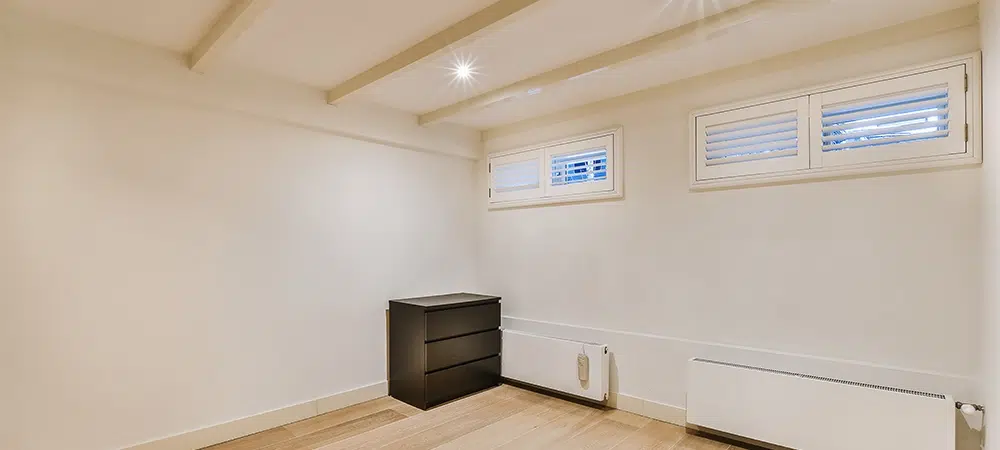
Because basement windows are closer to ground level, people outside can see in more easily. Even a quick glance from the sidewalk, driveway, or garden can make the space feel less comfortable. Covering the window too heavily can make the basement feel closed in.
That balance matters because many basements already have limited daylight. If the room has a low ceiling, darker flooring, or smaller window wells, every bit of natural light helps. A privacy solution should reduce visibility from outside without turning the basement into a dim room during the day.
Related Article: What Rooms Benefit from Automatic Window Shades and Blinds?
Light-Filtering Shades Are Usually the Best Starting Point
Light-filtering shades are often the most practical option for basement windows because they blur the view while allowing soft daylight into the room.
A good light-filtering fabric helps in several ways:
- Reduces direct visibility from outside
- Softens glare on screens and furniture
- Keeps the room feeling open during daylight hours
- Adds a cleaner finish than temporary films or paper coverings
For basement living areas, playrooms, workout spaces, and home offices, this is usually enough. The key is to choose fabric that suits the window’s location. A front-facing basement window near a sidewalk may need a denser fabric, while a backyard-facing window may only need a softer translucent shade.
Roller Shades Give the Cleanest Look
Roller shades are one of the strongest choices for basement windows because they sit neatly inside or over the frame. Their simple design works well on smaller windows, where bulky coverings can look oversized.
For privacy without losing light, choose light-filtering roller shades instead of blackout fabric. Blackout shades are useful for bedrooms or media rooms, but they block daylight completely when lowered. Light-filtering roller shades let the room stay bright while limiting the outside view.
For extra control, dual roller shades can be useful. One layer provides daytime privacy and filtered light. The second layer provides room darkening at night or during movie time.
Zebra Blinds Offer More Flexible Light Control
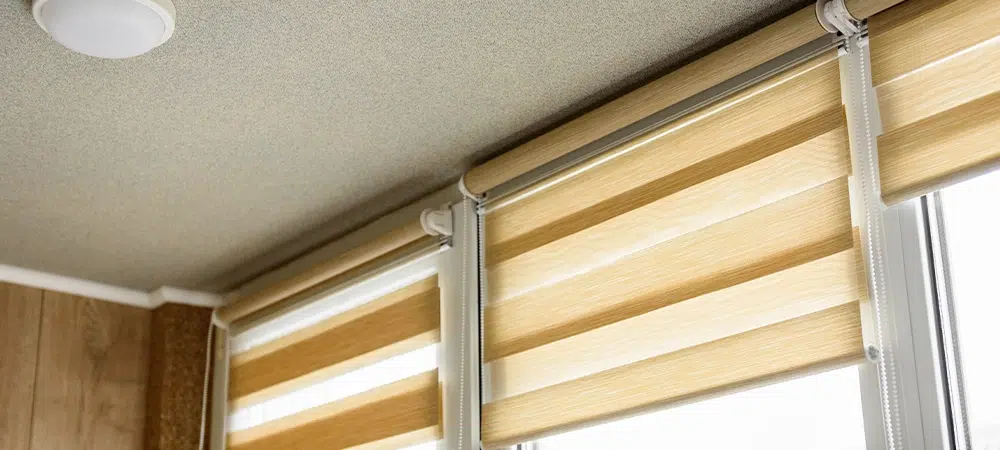
Zebra blinds are a good fit when you want privacy that can change throughout the day. Their alternating sheer and solid fabric bands allow you to adjust the amount of light and visibility without fully raising the blind.
This matters in basements because light changes quickly. A window may feel private in the morning, then become exposed in the evening when indoor lights turn on. Zebra blinds let you shift from a brighter open setting to a more private closed setting with one adjustment.
Zebra blinds give a more finished look than basic horizontal blinds. They also make small basement windows feel more intentional, which helps if the basement has been renovated into a main living space.
Cellular Shades Help With Privacy and Comfort
Cellular shades are another strong option for basement windows, especially in Toronto homes where basements can feel cooler in winter and warmer or damp in summer. Their honeycomb structure traps air within the shade, which can improve comfort around the window.
For privacy and daylight, choose a light-filtering cellular fabric. It allows brightness to enter while obscuring the view.
Top-down, bottom-up cellular shades can be particularly useful. You can lower the shade from the top to bring in daylight while keeping the lower part of the window covered. This helps ground-level basement windows, where the bottom half is most exposed.
Avoid Heavy Curtains on Small Basement Windows
Curtains can work in some basements, but they are rarely the best first choice for small or low windows. They often take up more wall space than the window itself and can make a basement feel heavier.
In rooms with limited daylight, thick curtains create another problem. They either sit open and provide no privacy, or they close and block too much light. That all-or-nothing result is usually the opposite of what basement windows need.
Curtains may still help as a decorative layer in a larger finished basement, but a shade or blind should handle the daily privacy.
Privacy Changes at Night
Daytime privacy and nighttime privacy are different. During the day, light outside is usually stronger than light inside, so light-filtering fabrics can provide good privacy. At night, indoor lighting makes the basement more visible from outside.
This is why basement window coverings should be chosen based on how the room is used after dark. A laundry room may only need daytime privacy. A bedroom, rental suite, or home office used at night needs stronger coverage.
If the basement is used in the evening, consider zebra blinds with solid bands closed, dual roller shades with a room-darkening layer, or cellular shades in a denser light-filtering fabric. The goal is to avoid being surprised by visibility at night.
Related Articles: There Is a Perfect Window Blind for Every Part of the House
Custom Fit Matters More in Basement Windows
Basement windows often have unusual measurements. Some are short and wide. Others sit deep in the wall, inside window wells, or close to ceiling lines. Ready-made blinds may leave gaps, drag awkwardly, or look too large for the frame.
A custom fit helps the covering sit properly, operate smoothly, and reduce side gaps.
Inside-mount shades usually create the cleanest look if the frame has enough depth. Outside-mount shades can improve coverage if the frame is shallow or uneven. The best choice depends on the window shape, trim, and privacy level.
Best Options by Basement Room Type
Different basement rooms need different levels of privacy and daylight. Choosing by room use is easier than choosing by product name alone.
- For a basement family room, light-filtering roller shades or zebra blinds usually work well. They keep the space bright during the day and give enough control for TV watching or evening use.
- For a basement bedroom, dual roller shades or cellular shades with stronger privacy are better. The room needs privacy at night, comfort, and a softer finish.
- For laundry rooms, storage rooms, and utility spaces, simple roller shades are often enough. They offer privacy, stay tidy, and are easy to clean.
- For basement rental suites, privacy should be stronger. A combination of light-filtering and room-darkening control gives tenants more comfort throughout the day and night.
A Brighter Basement Starts With the Right Shade
The best basement privacy solution is one that matches the room, the window, and the way the space is used. For most homes, light-filtering custom shades offer the right balance. They protect privacy, keep daylight moving through the room, and make the basement feel more finished.
If your basement windows feel exposed, dark, or unfinished, Blinds Toronto can help you compare roller shades, zebra blinds, cellular shades, and motorized options for your home. A proper in-home consultation makes it easier to choose the right fabric, fit, and privacy level before you order.
Frequently Asked Questions
Are frosted window films better than blinds for basement privacy?
Yes, frosted window film can help with privacy, but it is permanent and offers less control than shades. Once applied, you cannot adjust light levels throughout the day. Shades are better if you want privacy, daylight, and flexibility.
Can light-filtering shades give enough privacy at night?
Light-filtering shades work best when the basement is brighter than outside or during daylight hours. At night, indoor lighting can make shapes more visible. Bedrooms and rental suites usually need denser fabrics or a secondary room-darkening layer.
Are motorized shades worth it for basement windows?
Yes, motorized blinds or shades can be useful for basement windows that are hard to reach, placed behind furniture, or used often. They also help rental suites and media rooms because privacy and light control can be adjusted quickly.
What colour shades make a basement feel brighter?
White and soft neutral shades usually help basement rooms feel brighter because they reflect more light into the space. Dark shades can look dramatic, but they absorb more light and may make small basement windows feel heavier.
Should basement shades be inside-mount or outside-mount?
Yes, inside-mount shades usually look cleaner if the window frame has enough depth. However, outside-mount shades can cover gaps better on shallow or uneven basement windows. The better choice depends on the frame, trim, and privacy needs.
Are blackout shades a good choice for basement windows?
Blackout shades are best for basement bedrooms, nurseries, or media rooms where darkness matters. For general privacy, they can make the room too dark during the day. Light-filtering or dual shades usually offer better everyday comfort.