
Corded Versus Cordless Blinds: Which Fits?

A window covering can look perfect at installation and still feel wrong a week later if its operation does not suit the room. That is the real question behind corded versus cordless blinds: not simply which option looks better, but which one makes privacy, daylight, and everyday routines easier in your home or workplace.
For many Toronto-area homeowners and condo residents, cordless operation is the clear starting point. It creates a clean, modern appearance and removes a potential safety concern in homes with children or pets. Corded options still have a place, though, particularly where precise positioning, familiar operation, or a specific product design makes sense. The right choice depends on your window size, room use, preferred style, and how often you expect to adjust the shade.
Corded Versus Cordless: The Practical Difference
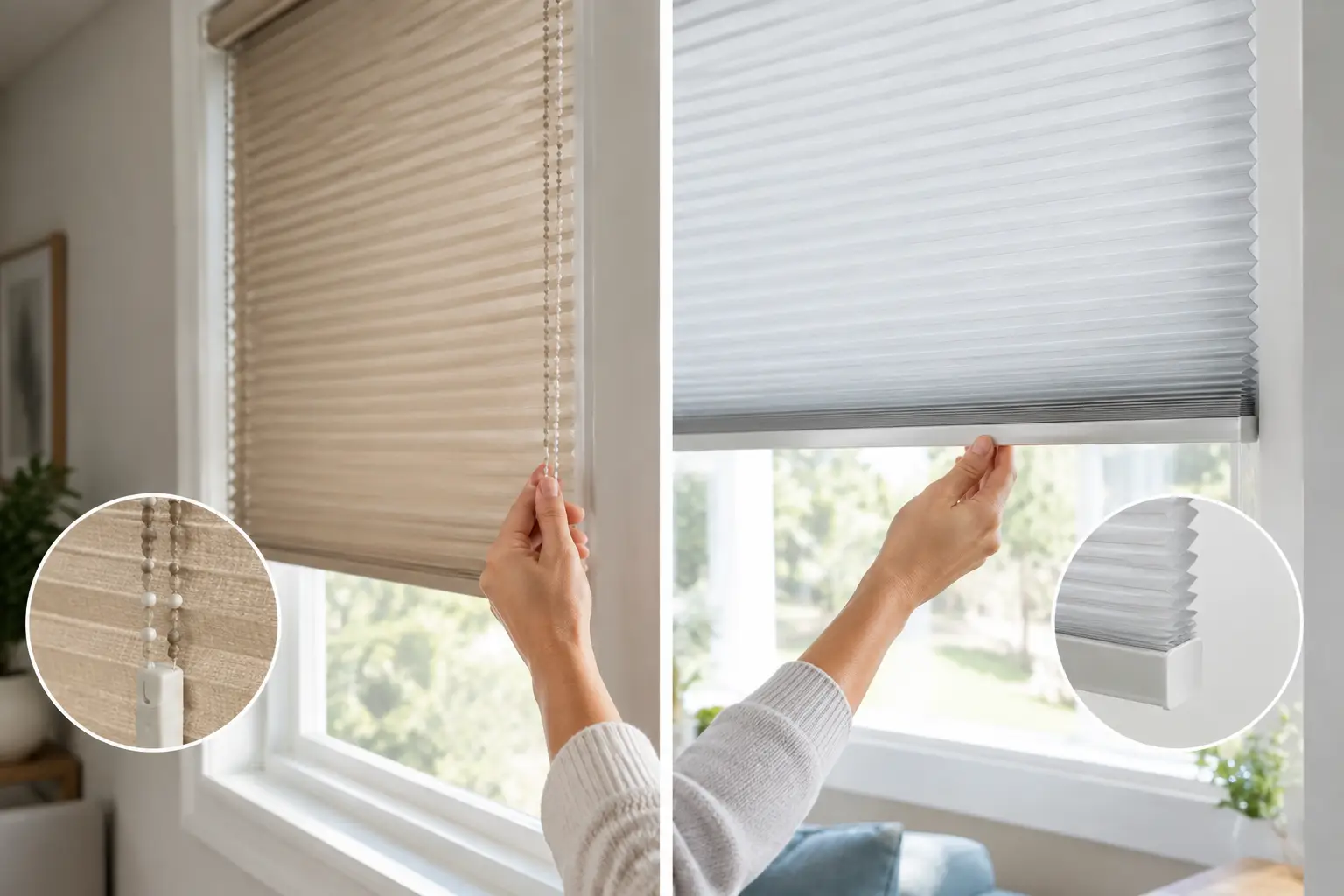
Corded blinds and shades use a visible pull cord or loop to raise, lower, or tilt the treatment. The mechanism offers direct control and can be a familiar option for people who prefer a traditional operating style. Depending on the product, a cord can make it easier to stop the covering at an exact height or manage a larger shade with a consistent pull.
Cordless systems are operated by gently lifting or lowering the bottom rail, or by using a built-in handle. With no loose cords hanging beside the window, the treatment has a more streamlined profile. This is especially appealing in contemporary condos, bedrooms, nurseries, and living spaces where clean lines matter as much as function.
Neither choice is automatically right for every window. A small bathroom window may work beautifully with a simple cordless roller shade, while a wide living-room opening may call for a more considered operating solution. Professional measurement helps determine what will operate smoothly and look properly proportioned once installed.
Why Cordless Is Often the Preferred Choice
Cordless window treatments have become a popular choice for good reason. They reduce visual clutter, support a more polished finish, and are designed with everyday safety in mind. In a family home, eliminating accessible dangling cords can offer welcome peace of mind. In a condo, cordless operation also keeps compact rooms from feeling visually busy.
The aesthetic benefit is immediate. A custom shade with a cordless lift presents an uninterrupted fabric surface, allowing the material, color, and texture to do the design work. This can be particularly effective with zebra blinds, roller shades, Roman shades, and sheer shades, where a clean installation enhances the tailored look.
Cordless operation also suits windows that are adjusted throughout the day. Raise the shade for morning light, lower it for afternoon privacy, then set it halfway in the evening without dealing with cords that may twist or rest unevenly against the wall. For bedrooms, cordless blackout options can make the daily routine feel simpler while maintaining a refined appearance.
That said, cordless does require a gentle, even hand. On wider treatments, it is best to lift and lower from the center of the bottom rail or handle to keep the fabric level. A properly specified, professionally installed product makes this easier, but the operating habit still matters.
When a Corded Option Can Make Sense
Corded designs should not be dismissed as outdated. In the right application, they can be practical, dependable, and easy to use. Some customers prefer the control of a corded system because it feels familiar and allows them to adjust the covering without touching the fabric or bottom rail.
A corded mechanism may also be considered for certain larger or harder-to-reach windows. When a window is located behind furniture, over a deep counter, or in a location where lifting the bottom rail is inconvenient, a corded control can offer a more accessible way to operate the shade. The specific recommendation will depend on the window treatment, mounting position, and room layout.
Safety remains part of the decision. If cords are present in a home with young children or pets, they should be properly secured and kept out of reach. This is not an area for improvised solutions. The operating system, installation method, and room use should all be reviewed together before making a final selection.
Match the Operation to the Room
The best choice often becomes clear when you consider how each room is used rather than evaluating the window covering in isolation.
Bedrooms and Nurseries
Privacy and safety tend to lead the conversation in bedrooms and nurseries. Cordless blackout roller shades or layered zebra blinds can help create a calmer sleep environment without visible hanging cords. They also suit a softer, more minimal bedroom design, whether the room is styled for a child, guest, or primary suite.
For rooms that receive intense early-morning sun, the material selection matters just as much as the lift style. A made-to-measure blackout shade can limit light leakage more effectively than an off-the-shelf option, especially when the window has unusual dimensions or is close to a wall.
Living Rooms and Open-Concept Spaces
Living rooms often need flexible light control rather than complete darkness. Cordless zebra blinds are a strong fit when you want to shift between filtered daylight and privacy while maintaining a contemporary look. Sheer shades can also soften bright sun and preserve a light, welcoming feel.
In open-concept condos, consistent cordless treatments across visible windows can make the entire space feel more intentional. This is a small detail with a noticeable effect, particularly when windows are a major architectural feature of the room.
Kitchens and Bathrooms
These rooms call for practical materials and simple operation. Moisture, frequent use, and easy cleaning should guide the selection. A cordless roller shade can be a sensible option for a kitchen window, while a privacy-focused shade may suit a bathroom where light is welcome but visibility is not.
If the window sits behind a sink or countertop, reach is essential. The best operating method is the one you can use comfortably every day without stretching over fixtures or moving items out of the way.
Offices and Commercial Settings
In offices, light management affects more than appearance. Solar shades can reduce glare on screens, help protect furnishings from UV exposure, and create a more comfortable environment for employees and clients. Cordless operation offers a tidy finish for meeting rooms and private offices, while motorized shades may be more appropriate for large windows, boardrooms, or spaces with multiple treatments adjusted at once.
For commercial properties, durability and consistent operation should carry as much weight as visual style. A consultation can identify the right fabric openness, control method, and mounting approach for the way the space actually functions.
Consider Motorization When Convenience Is the Priority
The corded-versus-cordless decision does not have to be limited to manual operation. Motorized and smart blinds provide another path for homeowners who value convenience, accessibility, and integrated control. With a remote, wall control, or compatible smart-home setup, you can adjust shades without approaching the window.
Motorization is especially useful for tall windows, difficult-to-reach areas, and rooms with several coverings. It can also support daily routines: lower shades for privacy at night, raise them in the morning, or manage sun exposure during the brightest part of the day. For condo owners with expansive glazing, this can turn a beautiful but demanding window wall into an easy-to-manage feature.
Motorized systems involve a higher initial investment, so they are not necessary for every room. But where accessibility, convenience, or frequent adjustments are priorities, they can deliver value well beyond the novelty of remote control.
Custom Fit Matters More Than the Mechanism Alone
Operation is only one part of a successful window treatment. Even the best cordless or corded system will underperform if the shade is incorrectly measured, poorly mounted, or not suited to the window’s shape and exposure. Light gaps, uneven alignment, obstructed handles, and awkward access are usually planning problems, not product problems.
A professional in-home consultation gives you the chance to assess fabric samples in your actual light, review privacy needs from different angles, and consider details such as trim depth, window cranks, furniture placement, and building requirements. This is particularly valuable in high-rise units, where window sizes, concrete walls, and condo guidelines can influence installation.
Canadian Blinds Pros approaches these decisions as part of one coordinated service, from measurement and design guidance through installation. The goal is not simply to select a shade, but to ensure it works naturally in your space from the first day.
Choose the operating style that you will enjoy using, then let the room, window, and lifestyle guide the details. The most satisfying window treatment is the one that brings in the right light, protects your privacy, and feels effortless every time you reach for it.