
How to Automate Roller Shades in Your Home
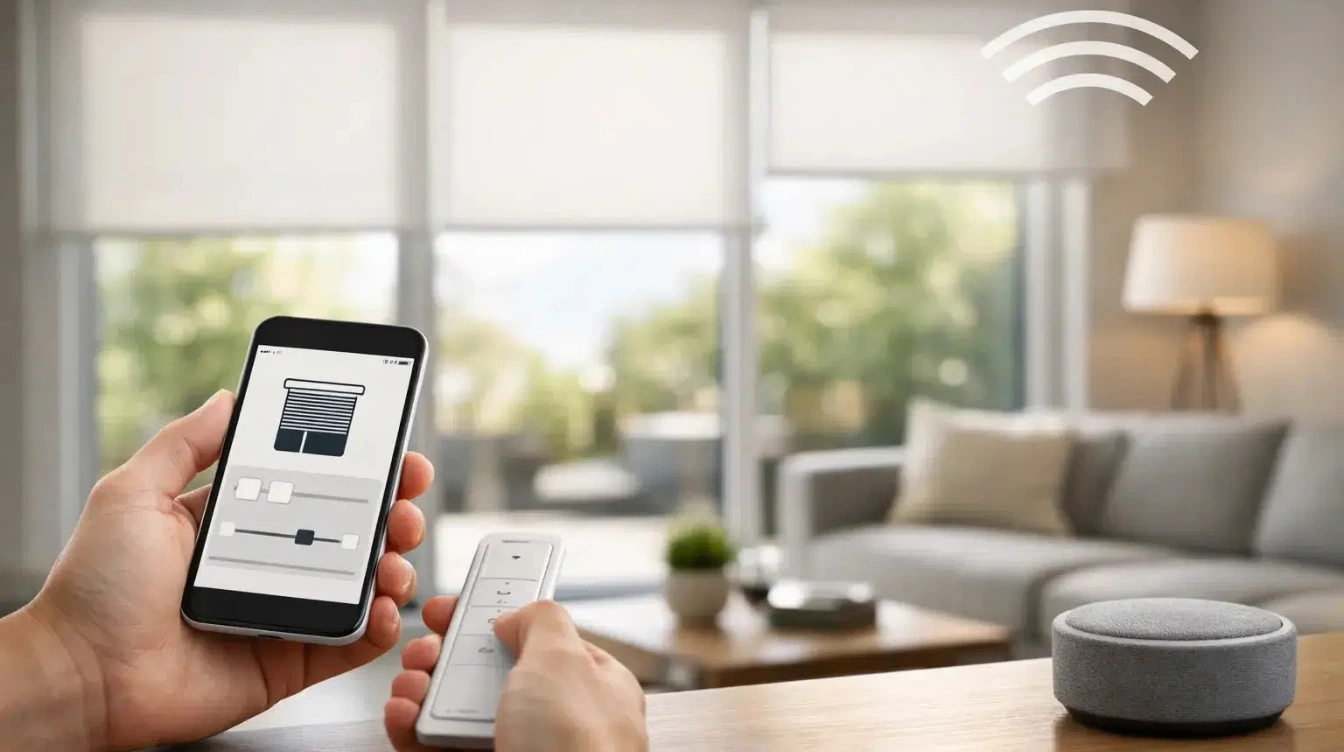

The afternoon sun hits a condo living room differently when you are working from home, watching a movie, or trying to keep a space cool. Learning how to automate roller shades gives you control over that changing light without interrupting your routine. With the right custom shade, motor, and control method, your window coverings can respond to your schedule, your comfort preferences, and the way each room is used.
Motorization is especially useful on out-of-reach glass. Our guide to skylight blinds in Toronto shows how motorized shades handle high roof windows you cannot reach by hand.
Motorized roller shades are not just a convenience upgrade. They can make tall windows easier to manage, improve privacy in high-rise homes, reduce glare in offices, and eliminate loose operating cords in family spaces. The best approach depends on your windows, available power, preferred smart-home system, and the performance you expect from the fabric itself.
How to Automate Roller Shades: Start With the Right Shade
Automation works best when it is planned with the shade, not added as an afterthought. A roller shade must be properly sized, balanced, and mounted before a motor can deliver smooth, quiet movement. Custom measurement is especially valuable for wide living room windows, narrow condo openings, and windows with limited mounting depth.
First, choose the fabric based on what the room needs. Solar roller shades can soften glare and filter UV exposure while maintaining an outward view during the day. Blackout roller shades are a stronger choice for bedrooms, media rooms, and spaces where privacy and darkness matter most. Light-filtering fabrics create a softer effect for kitchens, living areas, and professional offices.
Fabric choice affects more than appearance. Heavier blackout materials, large shade widths, and unusually tall windows require the correct motor capacity. A properly specified system should lift and lower the shade evenly without straining, stopping short, or creating excess noise.
The mounting style matters as well. Inside-mounted roller shades offer a clean, built-in look when the window frame has sufficient depth and is square. Outside-mounted shades can provide more complete light coverage and are often practical for windows with shallow frames. In either case, accurate measurement makes the difference between a polished result and visible gaps that compromise privacy or blackout performance.
Choose a Power Source That Fits Your Space
There are three common ways to power automated roller shades: rechargeable battery motors, hardwired motors, and solar-assisted battery options. Each has a place, but the right choice depends on access, window location, and how often the shades will be used.
Rechargeable battery motors
Rechargeable battery-powered shades are a popular option for finished homes and condos because they avoid opening walls or adding electrical wiring. The motor is concealed within the roller tube, creating a clean appearance with no dangling cords. Depending on shade size, fabric weight, and daily use, charging may only be needed periodically.
This option is well suited to bedrooms, living rooms, and condominium units where electrical access near every window is not realistic. A rechargeable motor also allows for a tidy installation in spaces where maintaining a refined design is a priority.
The trade-off is simple: batteries need recharging. That is rarely difficult when the system is planned properly, but it is worth considering for windows that are exceptionally high, behind furniture, or hard to reach. For those locations, ask about accessible charging solutions or a different power option.
Hardwired motors
Hardwired roller shades draw power from a dedicated electrical connection. They are often the preferred choice for new construction, major renovations, large commercial projects, and windows that will be operated frequently throughout the day.
Because the motor has a continuous power source, there is no charging routine to manage. Hardwiring can also be a strong option for grouped shades across a large wall of windows, where coordinated movement and reliable daily performance are essential.
However, hardwired systems need to be planned early. Electrical work, wall access, and coordination with other trades can add time and cost if the space is already complete. In a renovation, the cleanest result usually comes from discussing motorized shades before drywall, paint, or millwork is finalized.
Solar-assisted charging
For bright windows, a discreet solar panel can help maintain the charge of a compatible battery-powered motor. This can be useful for high windows and sun-facing rooms where frequent access is inconvenient. It is not the right answer for every window, particularly if the glass receives limited direct light, but it can reduce maintenance in the right setting.
Pick the Control Method You Will Actually Use
A remote control is the simplest way to automate roller shades. You can operate one shade, a group of shades, or an entire room from a single handheld remote. For many homeowners, this provides all the convenience they need without adding smart-home equipment.
Wall-mounted controls offer another polished option. They keep operation intuitive for guests, children, tenants, and employees, while preserving the uncluttered appearance that makes roller shades so effective in contemporary interiors.
Smart controls take automation further. Depending on the selected motor system, shades may be controlled through an app, voice assistant, or home automation platform. This allows you to close bedroom shades from bed, lower glare-control shades before a video meeting, or check that privacy shades are down while you are away.
The useful feature is not simply controlling shades from a phone. It is creating routines that reflect your day. A morning scene might raise kitchen and living room shades gradually. A workday scene can lower solar shades on bright exposures. An evening scene can close all bedroom and street-facing shades at once.
Automation should remain easy when technology is unavailable. A well-designed setup includes straightforward manual controls, remotes, or wall switches so the shades are always practical for everyone in the home or workplace.
Plan Shade Groups by Room and Exposure
The most satisfying motorized shade systems are designed around how a space functions. A single remote command for every window may be convenient, but it is not always the most comfortable choice. East-facing bedroom windows, west-facing living rooms, and street-facing condo windows often need different schedules.
In a living room, grouping shades by exposure can help manage afternoon glare while preserving daylight elsewhere. In a bedroom, room-darkening shades can be scheduled to close before bedtime and rise gently in the morning. In an office, automated solar shades can reduce screen glare while still allowing natural light to support a bright, productive environment.
For large open-concept spaces, consider whether all shades should move together or whether smaller groups make more sense. Separate zones give you more flexibility, especially when one part of the room receives direct sun and another does not. They also allow privacy adjustments without turning the entire room dark.
Do Not Overlook Installation Details
Motorized shades have a refined look because much of the technology is hidden. That also means installation details deserve attention. The brackets must be secure, the shade must be level, and the motor limits must be set precisely so the fabric stops at the correct height every time.
Professional installation is particularly helpful for wide shades, high ceilings, clustered windows, and properties with concrete or metal framing. Toronto-area condo buildings may also have specific construction conditions that affect mounting and electrical planning. A site assessment can identify these details before the product is ordered, rather than after an installer arrives.
During consultation, it helps to discuss window access, furniture placement, nearby outlets, Wi-Fi coverage for smart controls, and the location of existing window trim. These practical considerations influence both the motor recommendation and the finished appearance.
Canadian Blinds Pros approaches motorized window coverings as a made-to-measure system, pairing design guidance with professional measurement and installation. That process helps ensure the fabric, hardware, power option, and controls work together rather than feeling like separate decisions.
Consider the Long-Term Value
Automated roller shades cost more than manually operated shades, so it is reasonable to decide where automation will have the greatest impact. Bedrooms, high windows, large multi-shade walls, home offices, and sun-exposed rooms are often the strongest starting points. You do not need to motorize every window at once to see a meaningful improvement in comfort and daily convenience.
The value also comes from consistent use. Shades that are difficult to reach or tedious to adjust are often left in one position all day. Automation makes it easier to use them as intended – for privacy after dark, glare control during work hours, and added insulation when the sun is intense or temperatures drop.
A thoughtfully designed motorized roller shade system should feel quiet, natural, and almost unnoticed. When the fabric, controls, and installation are chosen for your actual space, adjusting the light becomes one less task on your day and one more way your home works comfortably around you.