
No-Drill Blinds in Toronto: A Renter and Condo Guide to Damage-Free Window Coverings

No-drill blinds let you cover a window without putting a single hole in the frame or wall, which is exactly what most Toronto renters and condo owners are looking for. You get privacy and light control, then take everything down cleanly when you move or redecorate. The trade-off is that these systems have real limits, and the wrong pick can sag, slip, or leave light gaps. This guide walks through how no-drill mounting works, which blinds and shades come in a no-drill version, where they shine, where they struggle, and how to choose a set that actually stays put in a GTA home. Slim aluminum Venetian blinds are a classic rental pick, so it helps to know how the slat materials differ.
Outfitting a bathroom or kitchen? Our bathroom and kitchen blinds guide explains which moisture-resistant materials to choose.
Outfitting a bathroom or kitchen? Our bathroom and kitchen blinds guide explains which moisture-resistant materials to choose.
Renters and condo owners who want a natural look often pair damage-free hardware with bamboo blinds and woven wood shades for warmth and filtered light.

What Are No-Drill Blinds?
No-drill blinds are window coverings that install without screws, anchors, or holes. Instead of drilling brackets into the frame or wall, they hold in place with spring tension, damage-free adhesive brackets, clips that grip the window frame, magnets, or suction cups. The look and function match regular blinds, but the mounting is reversible, which is why they suit rentals, condos, and any window you would rather not drill into.
The category has grown fast because so many people in Toronto live in units they do not own, or in buildings where drilling into a window frame is discouraged. A no-drill shade solves that. You get the same fabrics, opacities, and colours you would expect from a standard blind, just with hardware designed to grip rather than bite into the surface.
How No-Drill Mounting Actually Works
Every no-drill system does the same basic job, which is transferring the weight of the shade to the window without a screw. Tension systems push outward against the inside faces of the frame. Adhesive brackets bond to a clean, smooth surface and hold the headrail the way a drilled bracket would. Clip-on headrails hook over the lip of the frame. Magnetic mounts stick to a steel door or frame. Each approach has a weight and width range it can handle well, and pushing past that range is where problems start.
Because the hardware is doing the holding, surface prep matters more than it does with drilled blinds. A dusty or textured frame weakens adhesive. A frame that is out of square makes tension fit uneven. A little attention to the surface at install time is the difference between a shade that lasts for years and one that drops in a month.
The Main No-Drill Mounting Systems
There is no single no-drill mechanism. There are several, and each one fits a different window and shade. The table below sums up the common systems, then the sections that follow explain when to reach for each.
| System | How it holds | Best window | Watch out for |
|---|---|---|---|
| Spring tension | Pushes outward against the inside of the frame | Deep, square inside mounts | Shallow frames and wide spans |
| Damage-free adhesive brackets | Strong tape bonds the bracket to a smooth surface | Clean vinyl, painted, or laminate frames | Textured, dusty, or freshly painted surfaces |
| Clip-on no-drill headrail | Clips grip the top lip of the window frame | Frames with a usable lip or flange | Frameless or flush windows |
| Magnetic mount | Magnets attach to a steel surface | Metal doors and steel frames | Wood, vinyl, or aluminum that is not magnetic |
| Suction cup | Vacuum grip on glass | Small, light shades on glass | Weight limits and grip loss over time |
Spring and Tension Fit
Tension systems are the most common no-drill option for inside-mount shades. A sprung headrail or a tension rod presses against the two inside faces of the window frame and stays put through friction. This works beautifully in a deep, square frame, which many older Toronto homes have. It struggles in shallow frames, and it struggles as windows get wider, because a long span flexes and the grip weakens toward the middle.
Damage-Free Adhesive Brackets
Adhesive brackets use a strong bonding tape to hold a mounting bracket on a smooth surface, and the shade then clips into that bracket. Done right, it feels almost as solid as a drilled bracket. The catch is the surface. The tape needs clean, dry, smooth vinyl, painted wood, or laminate to reach full strength, and it needs time to cure before you load it. Fresh paint is a common failure point, since the bond can pull the paint off rather than hold to the wall.
Clip-On No-Drill Headrails
Some custom and stock shades ship with a headrail that clips directly over the top lip of the window frame. There is no tape and no tension rod, just a bracket that hooks the frame. This is a clean, sturdy option when your window has a defined lip to grab. It does nothing for a frameless or flush window where there is no edge to clip onto.
Magnetic Mounts for Metal
Magnetic mounts are a niche but useful option for steel entry doors and metal window frames. The magnets hold a light shade against the metal with no hardware at all. They are popular for the small windows on or beside doors. On any surface that is not magnetic, which includes most wood, vinyl, and aluminum frames, they are a non-starter.
Suction Cups and Self-Adhesive Shades
At the lightest end are suction cups and peel-and-stick paper or fabric shades that bond straight to the glass or the frame. They are cheap and genuinely temporary, which makes them handy for a short lease, a nursery blackout fix, or a room you are about to renovate. They are not built to last, and suction grip in particular tends to loosen as temperatures swing, which happens a lot on a Toronto window through the seasons.
Which Blinds and Shades Come No-Drill
No-drill is a mounting method, not a product type, so the more useful question is which shade styles you can actually get with a no-drill headrail. Most soft shades adapt well. Heavier hard blinds are harder to hold without screws. Here is how the common styles line up.
| Style | No-drill availability | Typical hold | Best for |
|---|---|---|---|
| Roller shades | Very common | Tension or adhesive brackets | Clean modern look, most rooms |
| Cellular and pleated | Very common | Tension brackets, light weight | Insulation and energy savings |
| Zebra and dual shades | Common | Tension or adhesive brackets | Adjustable light and privacy |
| Roman shades | Available | Tension or clip headrail | Soft, tailored fabric look |
| Aluminum mini blinds | Available | Tension or clip headrail | Budget and small windows |
| Faux and real wood blinds | Limited | Usually needs screws | Wide or tall windows, better drilled |
Roller Shades
Roller shades are the easiest style to find in a no-drill version, and they are a natural match because the fabric rolls onto a light tube. The minimal look sits well in condos and modern rentals. If you want a deeper read on picking a roller, our guide on how to choose roller blinds for every room covers fabric and opacity choices that apply whether you drill or not.
Cellular and Pleated Shades
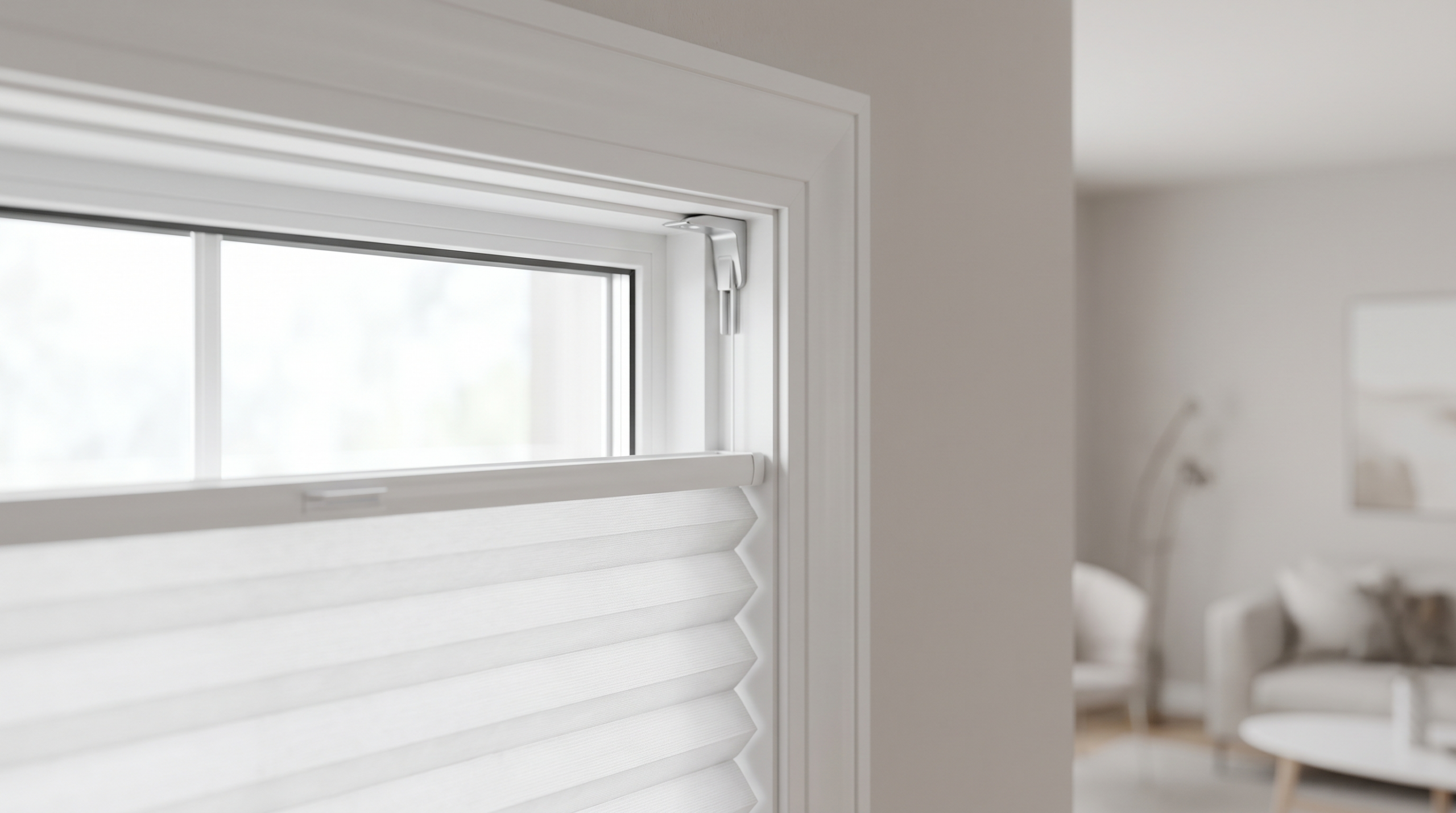
Cellular shades, also called honeycomb shades, are light and stack tightly, so they hold well on tension brackets. They also trap air in their cells, which helps with Toronto’s cold winters and hot summers. If energy performance is the reason you are shopping, the details in our complete guide to cellular shades and energy savings are worth a read before you commit to a fabric.
Zebra and Dual Shades
Zebra shades layer sheer and solid bands so you can shift from a clear view to privacy by nudging the fabric. They are one of the most popular styles in Toronto condos, and many come with no-drill headrails. If you are weighing them against a plain roller, the comparison in zebra blinds versus roller blinds lays out the differences that matter.
Roman and Mini Blinds
Roman shades bring a soft, upholstered look and are available with tension or clip headrails, though the heavier fabric versions are close to the weight where drilling makes more sense. Aluminum mini blinds are the classic cheap no-drill choice for a small window or a quick fix, and they clip in easily. Neither is a fit for a wide picture window without extra support.
No-Drill Blinds for Renters
Renting is the single biggest reason people search for no-drill blinds, and Toronto has one of the largest renter populations in the country. A drilled bracket can mean a patched hole, a paint touch-up, or a deposit conversation at the end of a lease. A no-drill shade sidesteps all of that. You put it up in minutes, take it down in minutes, and the frame looks untouched.
For a rental, the smart move is to prioritize systems you can remove without a mark. Tension shades leave nothing behind. Quality damage-free brackets are designed to release cleanly if you warm the tape and pull slowly, though a cheap adhesive can lift paint, so test in a low-visibility spot first. If you want a broader look at what works in a unit you do not own, our roundup of the best blinds for a rental property pairs well with this guide. And when you are ready to hang them, the step-by-step on installing window blinds without drilling covers the actual fitting.
No-Drill Blinds in Condos and High-Rises
Condos add their own wrinkle. Many Toronto towers have rules about what you can attach to window frames and what the covering must look like from the street, since the building wants a consistent exterior. Boards sometimes ask for a white or neutral backing on anything facing out. A no-drill shade keeps you flexible, because you are not committing hardware to the frame and you can swap the covering if the rules or your taste change.
Floor-to-ceiling glass, which is common in newer condos, is the harder case. Those windows are wide, and the mullions are often shallow aluminum that gives tension systems little to grip. For that kind of glass, a no-drill shade can still work on a per-panel basis, but a professionally measured set often performs better. Our notes on window coverings for condos with floor-to-ceiling glass and on condo blind selection for light and privacy get into the specifics room by room.
Pros and Cons of No-Drill Blinds
No-drill shades are a genuinely good fit for a lot of homes, but they are not free of compromise. Weighing the two sides honestly saves you from buying the wrong thing.
| Strengths | Limitations |
|---|---|
| No holes in the frame or wall | Weight and width limits are real |
| Fast to install and remove | Adhesive can fail on the wrong surface |
| Ideal for renters and condos | Tension can loosen on wide spans |
| No tools or wall repair needed | Fewer options for heavy wood blinds |
| Easy to reposition or move with you | Inside mount can leave small light gaps |
Where No-Drill Falls Short
Three situations push no-drill past its comfort zone. Heavy shades come first. Real wood blinds and dense blackout romans weigh more than tension or tape wants to carry, and they are the products most likely to sag or drop. Wide windows come second. A tension fit that grips fine at 30 inches can bow in the middle at 60, and adhesive brackets spaced across a long headrail share a load that a single drilled bracket would not. Deep blackout is third. Any inside-mount shade, drilled or not, leaves a thin light gap at the edges, and no-drill mounts rarely support the side channels that a true blackout setup needs.
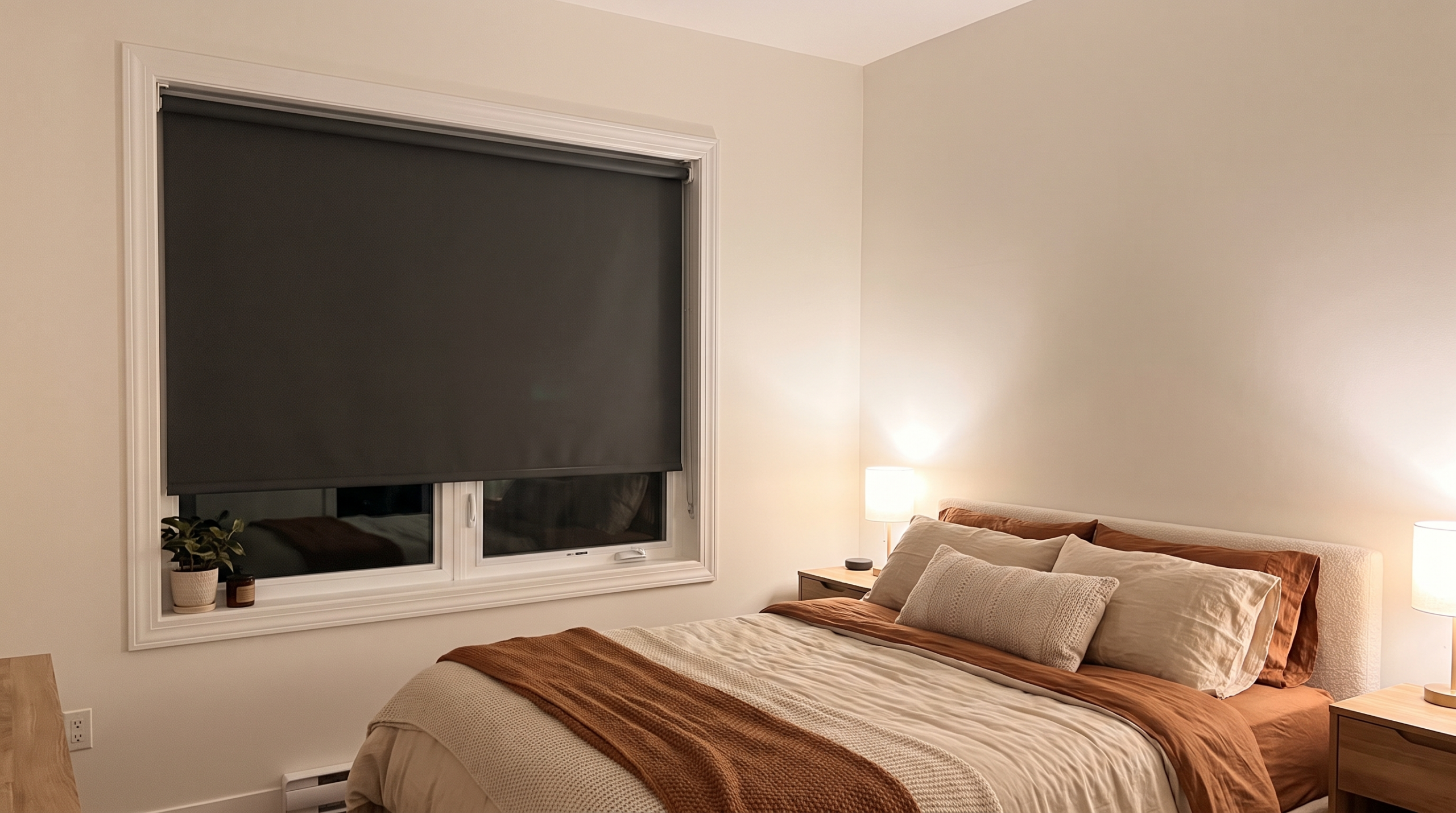
None of that rules out no-drill. It just means matching the product to the window. For a bedroom where you want the room genuinely dark, read whether blackout roller shades are see-through at night before you assume a light no-drill shade will do the job, and consider an outside mount, which the piece on inside mount versus outside mount explains in full.
How to Choose No-Drill Blinds
Picking a no-drill shade is mostly about honest measurement and honest weight math. Get those right and the rest follows.
Measure the Frame First
Measure the width in three places and the height in three places, and note the frame depth, since tension and inside-mount systems need a minimum depth to sit properly. A frame that is too shallow rules out most tension fits before you even shop. Our step-by-step guide to measuring windows covers the method, and the shorter how to measure windows for shades is a quick refresher.
Check Weight and Width Limits
Every no-drill system has a manufacturer weight and width rating. Stay inside it. If your window is wide or your fabric is heavy, that is the signal to either split the window into two narrower shades or accept that drilling is the better path. Do not assume a system that held a small shade will hold a big one.
Match the System to Your Surface
Adhesive needs a smooth, clean, cured surface. Tension needs a deep, square frame. Clips need a lip. Magnets need steel. Look at your actual window and choose the mechanism it can support, rather than choosing a shade first and hoping the mount cooperates.
Choose Cordless for Safety
Almost every no-drill shade sold today is cordless or motorized, which is good news for homes with young kids or pets. Canada’s Corded Window Coverings Regulations, in force since 2021, limit the length of accessible cords on window coverings, and the industry has largely shifted to cord-free operation as a result. If child safety is a priority, our guide to child-safe window coverings is worth reading alongside this one.
No-Drill Versus Drilled: When to Commit to Screws
No-drill is the right call for a lot of windows, but drilling still wins in specific cases. The table sorts out which is which.
| Situation | Better choice | Why |
|---|---|---|
| Rental or short lease | No-drill | Removes cleanly, protects the deposit |
| Condo with frame rules | No-drill | No permanent hardware on the frame |
| Light shade, deep square frame | No-drill | Tension grips well and looks clean |
| Wide or floor-to-ceiling window | Drilled | Long spans need bracket support |
| Heavy wood or blackout shade | Drilled | Weight exceeds no-drill ratings |
| Forever home, permanent fit | Drilled | Most durable long-term hold |
Cost Factors for No-Drill Blinds
No-drill blinds run the full range, from a few dollars for a temporary paper shade to a custom cordless shade that costs the same as a drilled one, since the fabric and mechanism are what drive most of the price. A few things move the number. Custom sizing costs more than a stock size but fits far better, which matters more with no-drill because a loose fit undermines the hold. Fabric and opacity change the price, with blackout and specialty weaves sitting above basic light-filtering cloth. Motorization adds cost but pairs naturally with cordless no-drill shades. Rather than quote a figure that may be out of date, we prefer to measure your windows and give you a real number for your space. For context on what shapes pricing across the board, our overview of what custom window coverings cost is a useful starting point, and why made-to-measure blinds are worth it explains the value of a proper fit.
Getting a Custom Fit Without the Guesswork
Ready-made no-drill shades work well when your window matches a stock size and a stock system. When it does not, and a lot of Toronto windows do not, a custom no-drill or clip-mount shade removes the guesswork and holds better because it is built to your exact opening. That is where a measured consultation earns its keep. We can look at your frame depth, surface, and window width, tell you honestly whether no-drill will hold or whether a light drilled bracket is the wiser call, and match you to a cordless shade that fits the room. If you would like that, book a free in-home consultation and we will bring samples to your place. You can also browse the window blinds gallery for ideas, or read about our professional blind measurement service to see how the fitting works.
Frequently Asked Questions About No-Drill Blinds
What are no-drill blinds?
No-drill blinds are window coverings that install without screws or holes. They hold in place with spring tension, damage-free adhesive brackets, clip-on headrails, magnets, or suction cups, so the frame and wall stay untouched. The fabrics and styles match regular blinds, only the mounting is different.
Do no-drill blinds really stay up?
Yes, when the system matches the window and the shade stays inside its weight and width limits. Tension fits hold well in deep, square frames, and quality adhesive brackets grip smooth, clean surfaces firmly. Most failures come from an overloaded shade, a wide span, or a dusty or freshly painted surface.
What are the cons of no-drill blinds?
The main drawbacks are weight and width limits, weaker performance on very wide windows, adhesive that can fail on textured or fresh-painted surfaces, fewer options for heavy wood blinds, and small light gaps on inside mounts. For light to medium shades on a good frame, none of these is a dealbreaker.
Can you get no-drill blinds in Canada?
Yes. No-drill blinds are widely sold across Canada, including throughout Toronto and the GTA, in both stock sizes and custom made-to-measure options. Most are cordless, which fits current cord-safety expectations, and many popular styles like roller, cellular, and zebra shades offer a no-drill headrail.
Are no-drill blinds good for renters?
They are one of the best options for renters. You install them without tools, remove them without patching holes, and take them with you when you move. For a rental, tension systems that leave nothing behind are the safest choice, with quality damage-free brackets a close second.
What is the best no-drill blind for a large window?
Wide windows are the hardest case for no-drill. A single tension shade can bow in the middle, so the better approach is often two narrower shades sharing the opening, or a clip-mount system on a frame with a solid lip. For very wide or floor-to-ceiling glass, a professionally measured set holds up better than a stock kit.
Do no-drill blinds damage window frames or walls?
Tension systems leave no mark at all. Damage-free adhesive brackets are designed to release cleanly if you warm the tape and pull slowly, but a cheap or overloaded adhesive can lift paint. Testing in a low-visibility spot and staying inside the weight rating keeps surfaces safe.
How much weight can tension and adhesive systems hold?
It varies by product, so always follow the manufacturer’s rating rather than guessing. In general, tension and adhesive systems are built for light to medium shades such as roller, cellular, pleated, and zebra styles. Heavy wood blinds and dense blackout romans usually exceed what no-drill mounts can safely carry.
Can no-drill blinds be blackout?
Yes, blackout fabrics are available on many no-drill shades, and they block the light coming through the fabric well. The limit is edge light. Any inside-mount shade leaves a thin gap at the sides, so for a truly dark room an outside mount or a shade with side channels does better than a standard inside-mount no-drill shade.
Are no-drill blinds cordless and child safe?
Almost all of them are cordless or motorized, which removes the reachable cords that pose a strangulation risk to children and pets. Canada’s Corded Window Coverings Regulations limit accessible cord lengths, and the shift to cord-free operation is part of why no-drill shades are now overwhelmingly cordless.
Do no-drill blinds work on metal or vinyl window frames?
Tension and clip systems work on vinyl, wood, and aluminum frames as long as the depth and lip suit the mount. Adhesive brackets bond well to clean, smooth vinyl. Magnetic mounts only work on steel or other magnetic metal, so they suit metal doors rather than typical vinyl windows.
Can you put no-drill blinds on sliding doors or French doors?
Yes, with the right style. Cordless cellular and pleated shades with clip or tension mounts suit French door windows, and magnetic mounts work on steel doors. Full sliding-glass-door coverage is heavier and wider, so it often benefits from a mounted track, which usually means drilling for a durable result.
Will my condo rules allow no-drill blinds?
Most condo rules are fine with no-drill shades, and they can actually be easier to approve because you are not attaching permanent hardware to the frame. Check whether your board requires a neutral or white street-facing backing, since that rule applies to the covering regardless of how it mounts.
How do I remove no-drill blinds when I move?
Tension shades come out by releasing the spring pressure and lifting the headrail free. Adhesive brackets release best when you warm the tape gently with a hair dryer and peel slowly at an angle. Work carefully near painted surfaces, and keep any original brackets in case you reinstall the shade in your next place.
Are custom no-drill blinds worth it over ready-made?
If your window matches a stock size, ready-made is fine and cheaper. If it does not, custom is worth it, because a snug fit is what makes a no-drill mount hold securely and look clean. A loose stock shade in an odd-sized frame is more likely to slip or leave gaps than a made-to-measure one.
Can no-drill blinds be motorized?
Yes. Motorized no-drill shades are a common pairing, since both features suit renters and condo owners who want a clean, tool-free setup. Battery-powered motors keep it fully wireless, so you get remote or app control without drilling and without running any wiring.
How do I measure for no-drill inside-mount blinds?
Measure the width at the top, middle, and bottom of the frame and use the narrowest number, then measure the height in three places. Check the frame depth too, because tension and inside mounts need a minimum depth to sit properly. Record everything to the nearest eighth of an inch and note any obstructions like handles or cranks.
Do no-drill blinds fall off in humidity or heat?
Suction cups and cheap adhesives are the most affected, since grip can loosen as temperatures and humidity swing, which happens across Toronto’s seasons. Quality tension systems and cured, properly rated adhesive brackets are far more stable. Choosing a system suited to the surface and staying inside its ratings is the best defence.
Editor note (images): three Higgsfield-generated images accompany this post. Cover, no-drill-blinds-toronto-condo-living-room.png, 16:9, hero and featured image, showing a no-drill roller shade inside a condo window. Inline one, no-drill-cellular-shade-tension-bracket.png, 16:9, close detail of a cordless cellular shade on a tension bracket. Inline two, no-drill-blackout-roller-shade-rental-bedroom.png, 16:9, a cordless blackout roller shade in a rental bedroom. A qualified designer could add a labelled diagram of the five mounting systems and a frame-depth measuring guide, which AI image tools do not render reliably.