
Motorized Blinds Versus Manual Blinds for Your Home
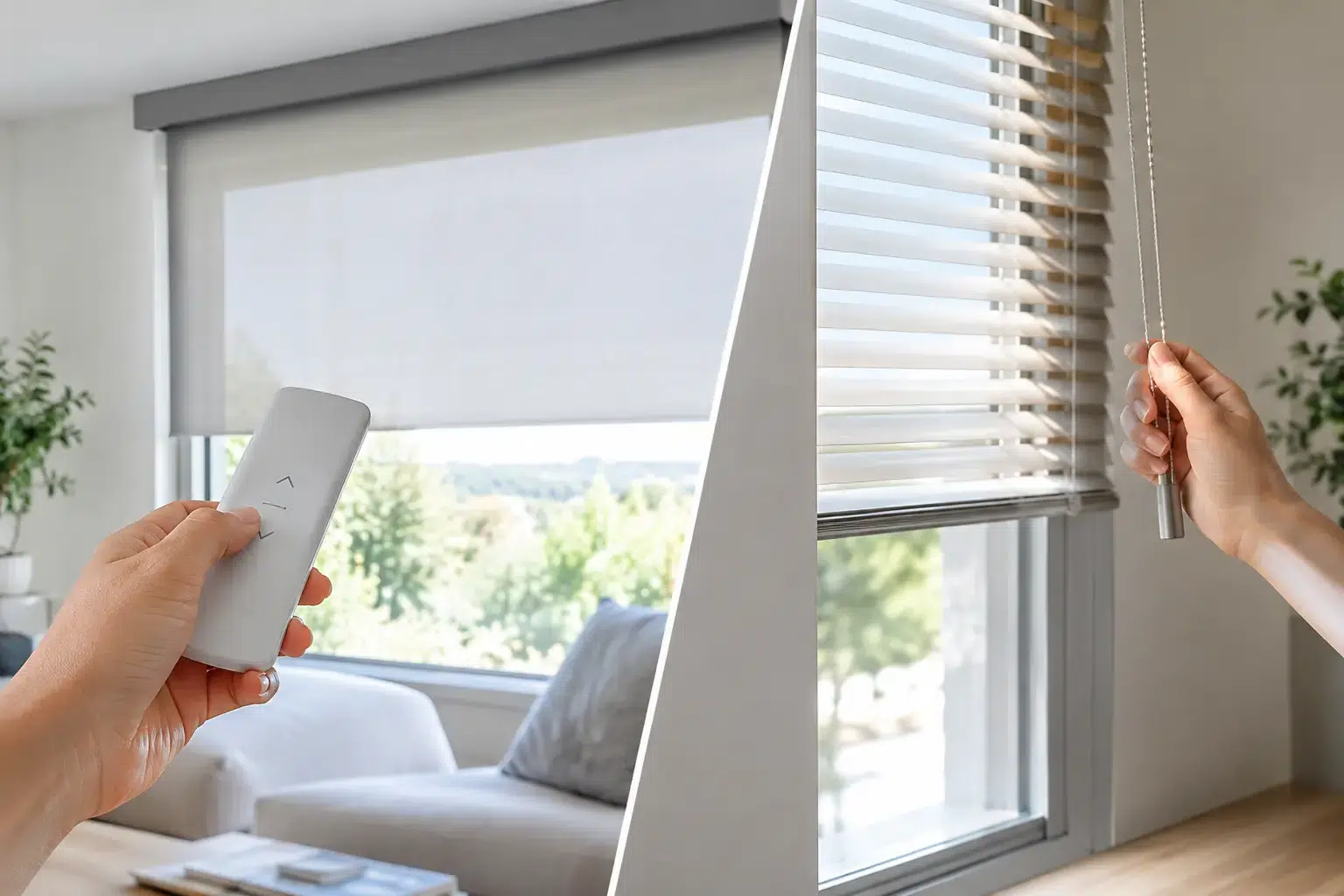

A window treatment can look perfect during a showroom visit and still become frustrating when it is hard to reach, awkward to operate, or never adjusted because it takes too much effort. That is the practical question behind motorized blinds versus manual blinds: not simply which option is more modern, but which one will make your rooms more comfortable and functional every day.
For a street-facing bedroom, convenience may mean closing every shade at bedtime without walking room to room. In a high-rise condo, it may mean controlling a wide bank of windows behind a sofa. For an office, it can mean reducing glare before a presentation with one command. The right answer depends on your windows, routines, budget, and the level of control you want.
Motorized Blinds Versus Manual Blinds: The Main Difference
Manual blinds are adjusted by hand, typically using a cordless lift system, a wand, or another simple control mechanism. They are familiar, dependable, and well suited to windows that are easy to access. With a custom fit, manual roller shades, zebra blinds, Roman shades, and other options can provide excellent privacy and light management without adding electrical components.
Motorized blinds use a motor to raise, lower, open, or close the treatment. Depending on the system, they can be operated with a remote, wall control, app, or compatible smart-home voice control. Some use rechargeable battery motors, while others are hardwired during construction or renovation.
The difference is not just the way the blind moves. Motorization changes how likely you are to use your window coverings throughout the day. When adjustments take seconds, people tend to close shades during intense afternoon sun, lower them for privacy at dusk, and open them in the morning for natural light.
When Manual Blinds Are the Better Fit
Manual blinds remain an excellent choice for many Toronto homes and commercial spaces. They offer direct control, a clean appearance, and a lower initial investment. For a single accessible bedroom window, a kitchen window above a counter, or a room where shades are only adjusted occasionally, manual operation may be all you need.
They are also a practical choice when you want to prioritize fabric, opacity, or design details within a defined budget. You can select a room-darkening roller shade for a nursery, a light-filtering zebra blind for a living room, or a solar shade for a bright workspace without allocating part of the budget to motors and controls.
Manual blinds work especially well when access is easy
The key consideration is reach. A manual treatment is most satisfying when the window can be operated comfortably and safely. If furniture blocks the window, the treatment sits above a staircase, or the glass extends high toward the ceiling, the simplicity of manual operation can quickly become an inconvenience.
Cordless manual systems are often preferred in family homes because they create a cleaner look and remove loose operating cords. They still require a person to be at the window, however, which matters in rooms with multiple large openings or daily privacy needs.
Where Motorized Blinds Earn Their Value
Motorized blinds are designed for spaces where access, frequency of use, or coordinated control matters. They are particularly useful for tall windows, wide window walls, patio doors, and windows located behind furniture. Instead of leaning over a sectional or using a step stool, you can adjust the shade from where you are sitting.
In condos, motorization can be especially appealing because large glazing areas are common and sunlight can shift dramatically through the day. A single remote can control multiple shades, helping you manage heat, glare, and privacy without interrupting work or relaxation.
For bedrooms, programmed schedules can support a more comfortable routine. Shades can lower at night for privacy and rise gradually in the morning. In media rooms, motorized room-darkening shades can be lowered before a movie without leaving your seat. In commercial settings, staff can adjust several window coverings at once to limit screen glare while maintaining a polished, consistent appearance.
Smart controls are useful, but not required
Not every motorized system needs to become part of a fully connected home. A remote control alone can be a major improvement for difficult windows. Smart controls are most valuable when automation solves a real daily issue, such as setting a schedule for strong west-facing sun or managing shades in several rooms from one app.
It helps to be realistic about automation. Smart features add convenience, but they do not replace thoughtful product selection. A shade still needs the right opacity, fabric, size, and mounting approach for the room. A professionally measured blackout-style shade will do more for sleep than an automated light-filtering fabric used in the wrong setting.
Cost: Initial Price Versus Everyday Convenience
Manual blinds usually cost less than motorized blinds because the product does not include a motor, power source, charging system, or control equipment. This can make manual operation the better value for a home with many standard, easy-to-reach windows.
Motorization raises the initial price, especially when multiple treatments are grouped together or hardwiring is required. Yet cost should be evaluated alongside the way you use the room. A motorized solution may feel worthwhile in one primary bedroom, living area, or difficult-to-access space, while manual blinds make perfect sense elsewhere.
Many homeowners choose a mixed approach. They motorize the windows they adjust often or cannot reach comfortably, then select manual treatments for secondary rooms. This keeps the investment focused on the areas where automation has a visible everyday benefit.
Battery-powered motors can reduce the need for electrical work and are often well suited to finished spaces. They do need periodic recharging, though the schedule varies by product use and window size. Hardwired motors avoid charging but are easiest to plan during a renovation or new build. A consultation should cover these details before the order is finalized, not after installation day.
Privacy, Light Control, and Energy Comfort
Both manual and motorized blinds can improve privacy, filter harsh sunlight, and help make a room feel more comfortable. The fabric and style have a greater effect on these outcomes than the operating method alone. Solar shades can soften glare while preserving an outward view, while room-darkening options provide stronger light blockage for bedrooms and media spaces.
Motorization can make those benefits easier to use consistently. If your south- or west-facing windows bring in intense afternoon sun, scheduled shade adjustments can reduce direct light before the room overheats or screens become difficult to see. During winter, opening treatments during daylight hours and closing them at night may also support a more comfortable interior environment.
Manual treatments can deliver the same performance when they are regularly adjusted. The question is whether the household will actually make those adjustments. For some people, that is no issue. For others, motorization turns an ignored feature into an active part of how the home works.
Safety, Appearance, and Reliability
For homes with children or pets, cordless operation is an important consideration. Motorized blinds remove the need for accessible cords and offer a clean, minimal finish that suits contemporary interiors. Manual cordless systems can provide a similarly tidy look, making them a strong alternative where automation is not necessary.
Reliability depends on choosing quality components, correct sizing, and professional installation. Motorized systems have more parts than manual ones, so selecting an appropriate motor and power method matters. Manual systems have fewer technical components, but they still benefit from precise measurement and secure mounting. A shade that is poorly sized or installed out of level will not perform as intended, regardless of how it is operated.
This is why custom measurement is particularly valuable for condo windows, oversized openings, and rooms with uneven trim or limited mounting depth. The goal is not to add complexity. It is to ensure the finished treatment moves properly, fits cleanly, and complements the room.
How to Choose Between Motorized and Manual Blinds
Start with the windows that create the most friction in your day. If you avoid adjusting them because they are high, wide, behind furniture, or part of a large group, motorization is likely worth considering. If the window is within easy reach and only needs occasional adjustment, manual operation can be a practical, attractive choice.
Next, consider what the room needs most. Bedrooms may benefit from scheduled privacy and light control. Living rooms with expansive glass may benefit from coordinated operation. A home office may need quick glare management. In a guest room or secondary space, a simple manual shade may be the more sensible investment.
A tailored consultation can help match the control method with the right fabric, mounting style, and room use. Canadian Blinds Pros can assess window access, privacy needs, light direction, and design preferences before recommending a custom solution and handling installation.
The best choice is the one you will enjoy using. Choose manual blinds when simplicity and accessible operation meet your needs. Choose motorized blinds when convenience helps you control light, privacy, and comfort more consistently – especially in the rooms where you spend the most time.