
Best Shades for Home Offices That Work Harder
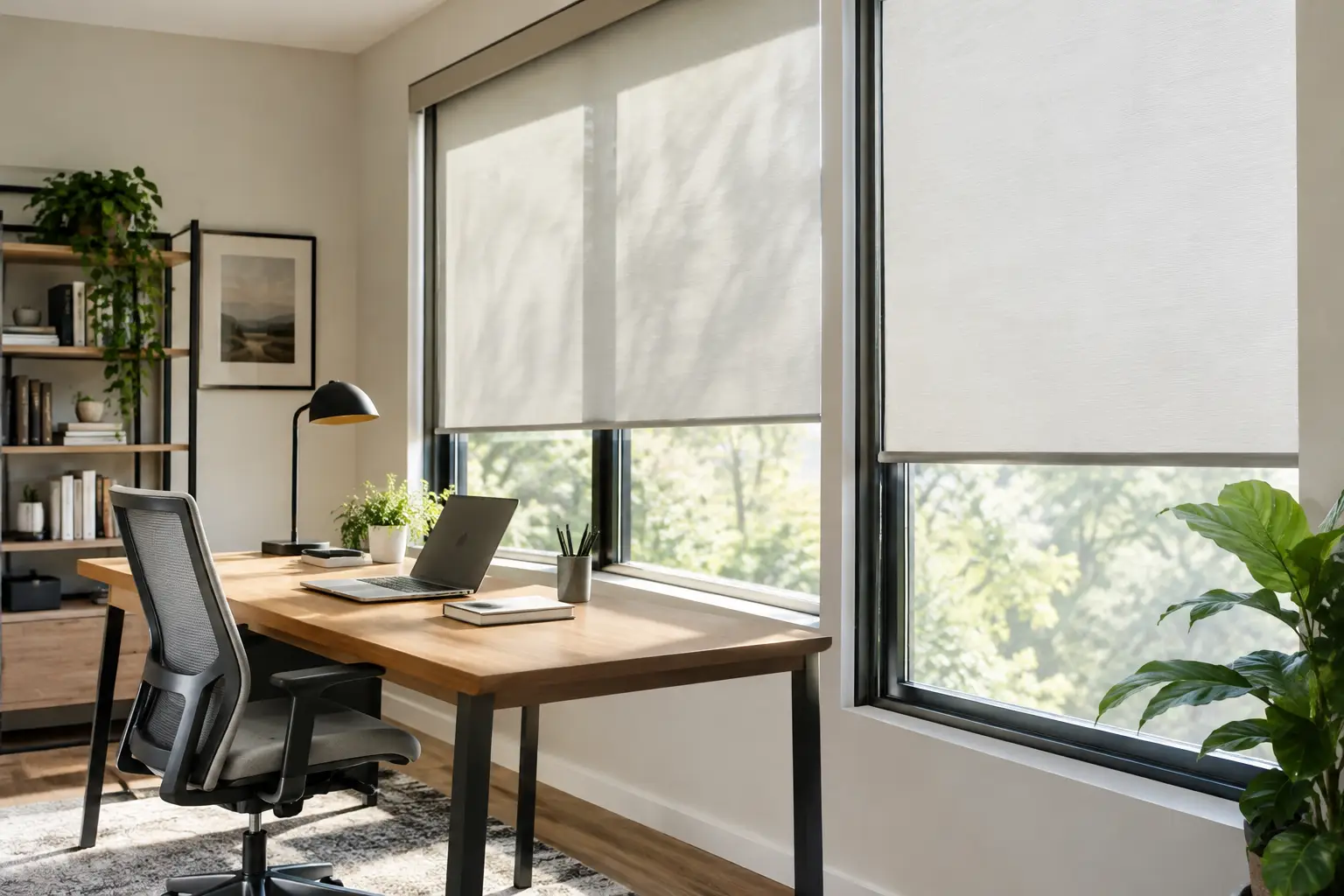

A home office can look beautifully finished and still be difficult to work in if daylight is landing directly on a monitor at 2 p.m. The best shades for home offices do more than decorate a window. They control glare, protect screens and furnishings from UV exposure, preserve privacy during video calls, and make the room more comfortable through every season.
The right choice depends on how you use the space, which direction the windows face, and how much natural light you want to keep. A bright south-facing office needs a different solution than a compact condo workspace with neighboring windows only a few feet away. The goal is not to block daylight by default. It is to shape it into light that supports focused work.
Start With the Problem at Your Window
Before choosing a fabric or color, look at what happens in the room during a normal workday. Does the sun create glare on your laptop in the morning? Does your office feel exposed after dark? Does afternoon heat make the room uncomfortable? Those details should lead the decision.
Screen glare is often the biggest concern. Even indirect glare can cause eye strain, encourage awkward screen positioning, and make video calls less flattering. Privacy matters just as much in ground-floor homes and high-rise condos, where nearby buildings can create a direct sightline into a work area.
Window size and operation also matter. A wide picture window may benefit from a single, clean shade, while a group of narrow windows can call for individually controlled treatments. For offices used by more than one person, flexible light control becomes especially valuable because one person may prefer a brighter room while another needs the screen-facing wall dimmed.
Solar Shades for Bright, Screen-Focused Offices
Solar shades are among the best shades for home offices with strong daylight and a view worth preserving. Their performance fabric filters sunlight before it reaches the room, reducing glare and UV exposure while maintaining an outward view during the day.
The key decision is openness factor, which affects how much light and visibility pass through the fabric. A lower openness level provides more sun control and daytime privacy, making it a strong option for offices with intense direct exposure. A higher openness level keeps the view clearer and allows more natural light, but it offers less glare reduction. There is no universal right answer. It depends on the window orientation, the placement of your desk, and how often you work on a screen.
Solar shades suit contemporary interiors particularly well because they sit close to the window and have a tailored, minimal profile. In a condo office, that clean fit can make a small room feel less crowded. They are also a practical choice for people who want daytime brightness without the harshness of unfiltered sun.
The trade-off is nighttime privacy. When interior lights are on, solar fabrics do not provide the same level of privacy as more opaque materials. If your office faces another building or a busy street, consider a dual-shade arrangement or pair solar performance with a separate privacy layer.
Roller Shades for Flexible Light and Privacy
Roller shades offer one of the most versatile solutions for a home office. Available in light-filtering, room-darkening, and blackout fabrics, they can be selected around a specific work habit rather than a one-size-fits-all look.
Light-filtering roller shades soften direct sun and reduce the contrast that makes screens hard to read. They work well for offices that need pleasant daylight but do not face severe afternoon sun. Room-darkening fabrics provide stronger privacy and noticeably cut brightness without making the space feel completely closed off.
Blackout roller shades are a smart choice for multipurpose offices that also serve as guest rooms, spaces used for presentations, or rooms with extremely intense sun. They are also useful for early-morning video meetings when sunlight hits the desk at an unhelpful angle. Keep in mind that blackout fabric performs best when the shade is custom measured and properly installed. Light can still enter around the edges, particularly with an outside mount, so the installation approach matters as much as the fabric.
For a polished result, choose a color that works with the room after the shade is lowered, not only when it is raised. Soft whites, warm grays, and textured neutrals keep an office bright and composed. Darker fabrics can feel more dramatic and deliver stronger visual contrast, but may make a compact room feel smaller.
Zebra Shades for Daytime Control Without Constant Adjusting
Zebra shades are designed for offices where the light changes throughout the day. Their alternating sheer and opaque bands can be aligned to filter daylight, create privacy, or open up for a clearer view. That built-in adjustability is useful when one window shifts from gentle morning light to strong afternoon glare.
They offer a more layered appearance than a standard roller shade while remaining clean and modern. This makes them a popular fit for home offices that are visible from a living area or are part of an open-concept condo layout. During the day, the sheer bands allow softened light into the room. When more privacy is needed, the opaque bands can be aligned for greater coverage.
The main consideration is that zebra shades are best selected and measured precisely. Their band alignment and overall appearance depend on proper sizing, level installation, and the right mounting choice. On wide windows or windows with uneven trim, professional guidance helps ensure the finished result looks intentional.
Sheer and Roman Shades for Design-Led Workspaces
If your office is also a client-facing room, a library, or a space where décor carries equal weight with function, sheer shades and Roman shades can bring a more refined finish.
Sheer shades diffuse strong daylight and create a soft, welcoming atmosphere. They are well suited to offices that do not require complete privacy or severe light blocking. They can also be an elegant choice for windows that receive gentle indirect light, where the priority is reducing visual harshness rather than darkening the room.
Roman shades add texture, depth, and a tailored residential feel. Fabric selection makes a major difference: a lined Roman shade can improve privacy and light control, while a lighter fabric offers a more decorative, airy result. They are often a strong choice for a dedicated office with a traditional or transitional design direction.
Both options ask for a little more consideration than simple performance shades. Pleated fabric styles can create a softer look, but may not be the first choice for a workstation that receives intense direct sun every afternoon. In that case, a more technical solar or roller fabric usually delivers better screen comfort.
Motorized and Smart Shades Make Light Control Easier
The best shade is only effective when it is used. Motorized and smart shades remove the small inconvenience that often leaves window coverings in the same position all day, even when the light has changed.
With motorized operation, you can lower shades before a video call, reduce glare without leaving your desk, or raise them when you want more natural light. Smart controls can support scheduled routines, such as lowering shades during the sunniest part of the afternoon and opening them after work. This is particularly useful for hard-to-reach windows, wide banks of windows, and busy households where the office doubles as a shared space.
For homeowners and condo residents, cordless motorized options also create a cleaner appearance and eliminate hanging cords. That is a practical benefit in family homes, as well as a design advantage in compact rooms where every visual detail counts.
Details That Make a Custom Shade Perform Better
Fabric choice gets the attention, but several smaller decisions shape the final result. An inside mount creates a crisp, built-in look when the window has enough depth and square, usable trim. An outside mount can offer broader coverage and help reduce edge light, especially when privacy or room darkening is the priority.
Consider where the desk sits before finalizing the shade direction and control placement. If a desk is directly in front of a window, you may want the ability to lower the shade from the top area while preserving some daylight below, depending on the product selected. If the desk faces the window, stronger glare control will likely matter more than a perfectly open view.
Professional measurement is especially valuable in Toronto-area condos, where windows may be oversized, recessed, irregularly framed, or subject to building requirements. A made-to-measure solution accounts for those details before installation day, rather than asking an off-the-shelf product to fit a window it was never designed for.
Choose for the Way You Actually Work
A well-designed home office should not force you to choose between a bright room and a usable screen. Solar shades are excellent for view-preserving glare control, roller shades offer dependable flexibility, zebra shades adapt to changing daylight, and fabric-forward options can bring warmth to more design-led spaces.
The most successful choice is the one matched to your windows, work habits, and privacy needs. With a custom consultation and professional installation, Canadian Blinds Pros can help turn a difficult window into a more comfortable, focused, and finished part of the workday.