
Roller Blinds vs Roman Shades for Your Home
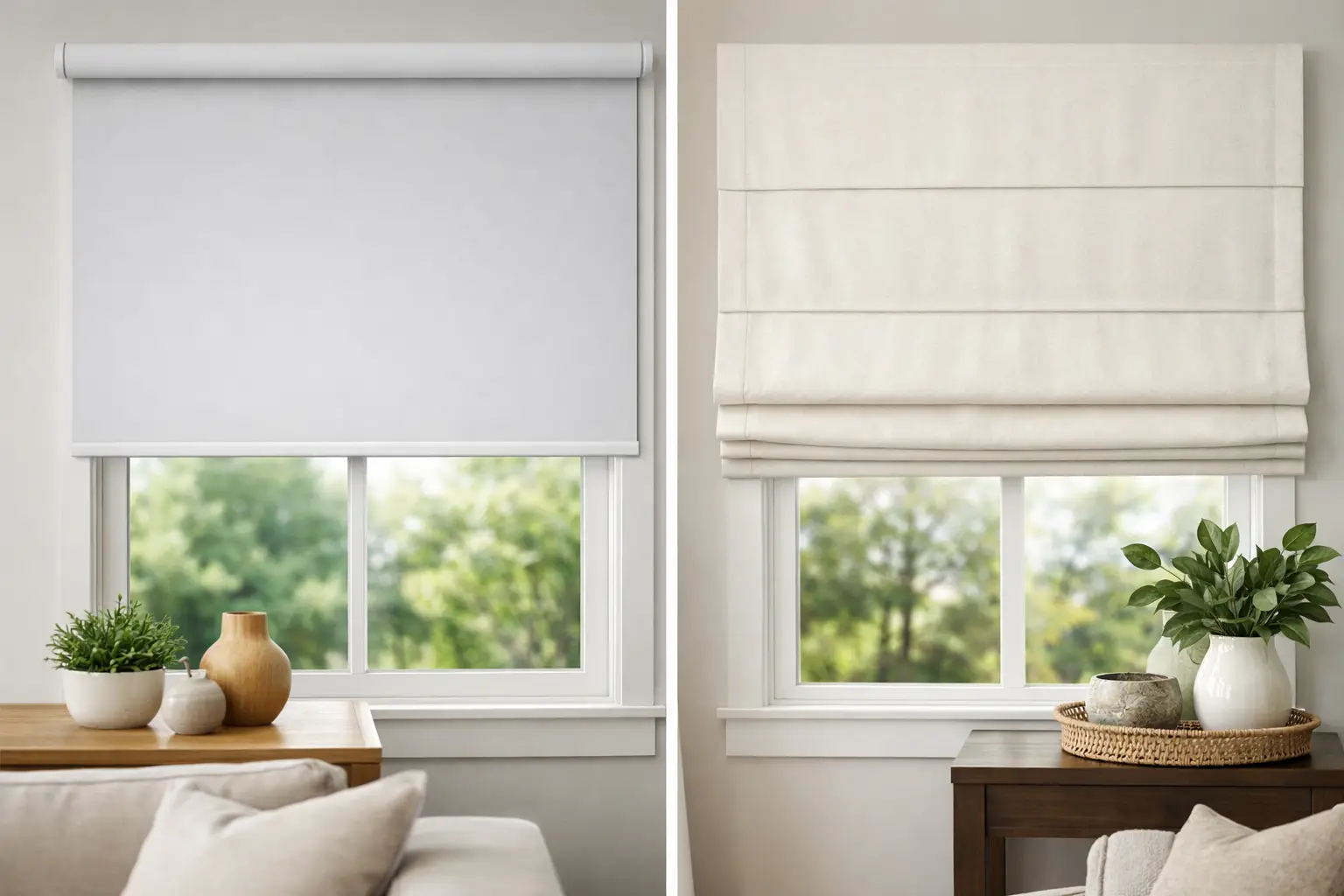

A window covering can make a room feel deliberately finished or slightly unresolved. That is why the choice between roller blinds vs roman shades is about more than covering glass. One delivers crisp, compact function; the other adds softness and a more decorative presence. The right option depends on how you use the room, how much privacy you need, and whether your space calls for clean-lined simplicity or visible texture.
\n\n
If you want to dig deeper into the fabric, fold, and mounting choices, our in-depth Roman shades buyer’s guide walks through every decision.
\n
If you have already settled on rollers, our Toronto roller shades buyer’s guide walks through every fabric and control option.
Roman shades can also be built as top down bottom up shades for two-way light and privacy control.
For homeowners, condo residents, and business owners, both can be customized for better light control, privacy, and a polished fit. The differences show up in the details: how they stack, how they filter daylight, how much visual weight they bring to a room, and how much maintenance they require.
Roller Blinds vs Roman Shades: The Main Difference
Roller blinds use a single, flat panel of fabric that rolls neatly into a compact tube at the top of the window. Their profile is streamlined, making them a natural match for contemporary interiors, wide windows, and rooms where every inch matters.
Roman shades are fabric window treatments that raise into soft horizontal folds. They provide privacy and light control, but their defining feature is their tailored, layered look. Where roller blinds tend to recede into the background, Roman shades are often chosen to become part of the room’s decor.
Neither option is automatically better. A roller blind may be the stronger choice for a sun-filled condo living room with limited wall space, while a Roman shade can give a bedroom, dining room, or formal sitting area more warmth and character.
Why Choose Roller Blinds?
Roller blinds are designed for clean performance. When lowered, the fabric sits flat against the window, creating an uncluttered appearance. When raised, it rolls into a small, tidy profile that preserves views and lets in more daylight.
This makes roller blinds especially useful in modern condos and homes with large windows. Their minimal stack is valuable where a bulkier treatment could visually crowd the glass or interfere with a narrow window recess. They are also a practical choice for offices, where a consistent, professional look and easy day-to-day operation matter.
Fabric selection changes how a roller blind performs. Light-filtering fabrics soften glare while maintaining a bright atmosphere. Solar fabrics can reduce harsh sunlight and help protect furnishings from UV exposure while preserving an outward view during the day. Blackout fabrics offer a stronger option for bedrooms, media rooms, and spaces where outside light needs to be minimized.
Roller blinds are generally easier to clean than fabric shades with folds. A light dusting or gentle wipe is often enough for regular care, depending on the fabric. Their simple construction also suits motorized and smart control, particularly on tall, hard-to-reach, or multiple windows.
The trade-off is aesthetic. A roller blind can look refined, but it does not bring the same textile richness as a Roman shade. In a room built around layered fabrics, traditional millwork, or a more classic design scheme, its sleekness may feel too restrained unless the fabric and hardware are selected carefully.
Roller blinds are often best for
Roller blinds work particularly well in kitchens, bathrooms, home offices, media rooms, and high-rise living spaces. They also suit windows that need a low-profile treatment, frequent adjustment, or reliable glare control throughout the day.
Why Choose Roman Shades?
Roman shades offer the functionality of a shade with the visual appeal of drapery. Their fabric folds create depth at the window, helping a room feel more furnished without the width or fullness of side panels.
They are an appealing choice when the window treatment should contribute color, pattern, or texture. A neutral linen-look fabric can soften a contemporary bedroom. A structured weave can add dimension to a dining area. A carefully selected pattern can become a focal point in a smaller room that otherwise has simple finishes.
Like roller blinds, Roman shades can be made with light-filtering or blackout linings. A blackout-lined Roman shade is a strong bedroom option when the goal is a darker, more restful space without giving up a tailored look. Privacy linings also make them practical for street-facing rooms and neighboring condo buildings.
Their main consideration is bulk. When raised, Roman shades stack in folds at the top of the window, so they take up more visual and physical space than roller blinds. On a short window or one with a view you want completely open during the day, that stack may be noticeable.
Care also requires more attention. The folds can collect dust, and fabric treatments may need gentle vacuuming with an upholstery attachment or professional cleaning based on the material. This is manageable, but it is worth considering in busy family spaces, kitchens, or homes with pets.
Roman shades are often best for
Roman shades are well suited to bedrooms, dining rooms, nurseries, sitting rooms, and other spaces where softness is as important as light control. They can also elevate a home office or living room that needs a more residential, design-forward finish.
Comparing Light Control, Privacy, and Insulation
Light control comes down to fabric and fit as much as product style. Both roller blinds and Roman shades can filter daylight, provide privacy, or block substantial light with blackout materials. However, a custom-made treatment will usually perform better than an off-the-shelf option because the dimensions and mounting approach are tailored to the window.
Roller blinds tend to sit closer to the glass, which can make them an efficient choice for glare reduction and privacy. With an appropriate fabric, they can offer a clean, controlled look across a bank of windows. Side light gaps can still occur, particularly with inside-mounted shades, so professional measuring helps determine whether an outside mount or a wider shade is the better approach.
Roman shades offer good coverage but may allow light around the sides or through the top folds, depending on their construction and installation. For many rooms, that softer effect is part of their appeal. If true room darkening is the priority, discuss blackout lining, mounting position, and the window’s surrounding trim before finalizing the design.
Both products can contribute to comfort by reducing direct sun exposure. In Toronto-area homes and condos with strong afternoon sun, the right fabric can reduce glare and help rooms feel more comfortable. The degree of energy efficiency varies by fabric, lining, window orientation, and how closely the treatment fits the opening.
Which Style Fits Your Room?
Choose roller blinds when the room benefits from a minimal profile. They complement modern kitchens, clean-lined living rooms, workspaces, and compact condos where open views and visual simplicity are priorities. They are also the practical front-runner when you want easy cleaning, frequent adjustments, or motorized operation.
Choose Roman shades when the room needs a softer finish. They are especially effective where furniture, rugs, and bedding already create a layered look, or where the window needs to feel like a design feature rather than a purely functional element. A Roman shade can make a standard-sized window feel more intentional without overwhelming the room.
For open-concept homes, consistency matters. You may use roller blinds in the kitchen and main living area for a cohesive, contemporary look, then bring Roman shades into bedrooms or a formal dining space. Matching color families or fabrics with similar undertones can make different treatments feel coordinated rather than disconnected.
The Value of Custom Measurement and Installation
The most attractive fabric will not compensate for an incorrect measurement, uneven mounting, or a shade that conflicts with window handles, trim, or condo regulations. Custom window coverings are about resolving those details before installation day.
A professional consultation helps identify the appropriate mounting method, fabric opacity, control type, and stack position for each room. It is particularly useful for oversized windows, narrow recesses, paired windows, and high-rise units where privacy, sun exposure, and building requirements can affect the best choice.
Canadian Blinds Pros approaches this process as a complete service, from in-home guidance and precise measurement to installation. That support helps ensure the finished treatment looks proportionate, operates properly, and suits the way the space is actually used.
The best choice is the one you will enjoy seeing and using every day. Start with the room’s light, privacy needs, and design direction, then let the window itself guide the final decision. A well-fitted roller blind or Roman shade should make the room feel calmer, more comfortable, and distinctly yours.