
Bamboo Blinds and Woven Wood Shades in Toronto: A Complete Buyer’s Guide
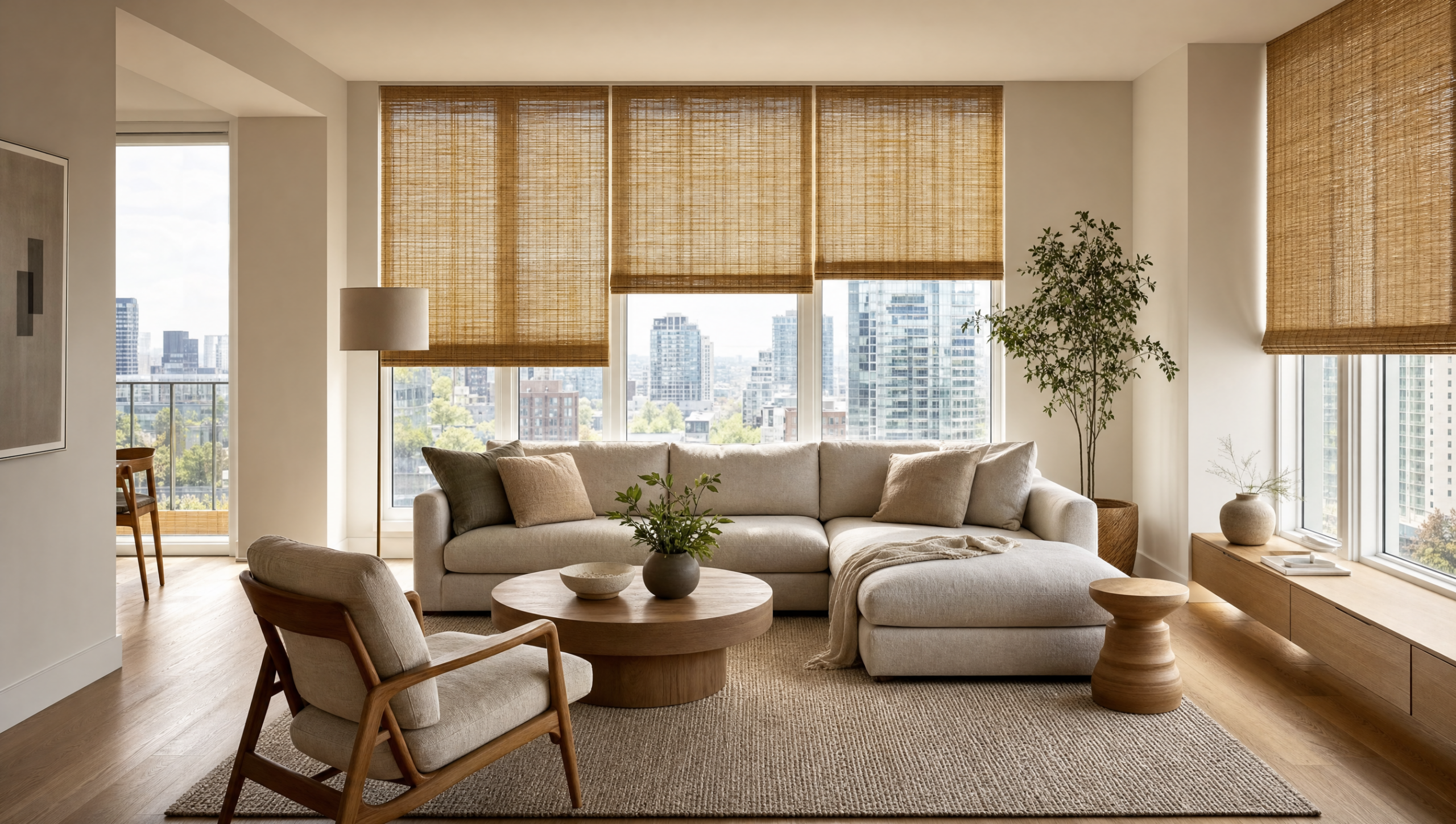

Natural texture has quietly become one of the most requested looks in Toronto homes, and bamboo blinds sit right at the centre of that trend. They bring warmth, a bit of pattern, and a soft filtered light that painted slats and flat fabric rarely match. If you have been scrolling through condo tours or design accounts and keep noticing those woven, earthy shades framing a window, you have already seen them at work.
Bamboo blinds go by several names, and that can make shopping confusing. You will see them listed as bamboo shades, woven wood shades, natural shades, and matchstick blinds. These terms mostly describe the same family of window covering: a shade woven from natural plant materials rather than made from vinyl, aluminum, or fabric. The weave, the fibre, and the way the shade folds are what set one option apart from the next.
This guide walks through what these shades actually are, how they handle light and privacy, the styles you can choose, where they work well in a Toronto or GTA home, and the practical details around safety, cleaning, and cost. The goal is to help you decide whether woven wood is the right fit before you book a measure, so you spend your consultation asking sharper questions instead of starting from scratch.
What Are Bamboo Blinds and Woven Wood Shades?
Bamboo blinds are window shades woven from natural plant fibres, most often bamboo, but frequently blended with reeds, jute, grasses, and rattan. The strands are woven together, sometimes with fine cords or thread holding the pattern, then finished into a shade that raises and lowers over the window. Because the raw material is a natural grass, no two shades look exactly alike, and small colour and grain variations are part of the character rather than a defect.
The industry term for the broader category is woven wood shades. Bamboo is the most common and best known fibre in that category, which is why the two names get used as if they mean the same thing. When a retailer says woven wood, they are usually including bamboo along with reed and grass weaves. When someone says bamboo blinds, they often mean any natural woven shade. For the rest of this guide we treat them as one family and point out differences where they matter.
Why the names get used interchangeably
The overlap comes down to marketing more than material science. Bamboo has the strongest recognition with shoppers, so it tends to headline the product name even when the weave includes several plant fibres. If you are comparing quotes, look past the label and ask what the shade is actually woven from, how tight the weave is, and whether it comes with any lining. Those three answers tell you far more than the name on the tag.
What bamboo shades are made from
Different fibres give different looks, from tidy and uniform to loose and organic. Here is how the common materials compare.
| Material | Look and feel | Typical use |
|---|---|---|
| Bamboo slats | Flat, even strips with a clean grain; ranges from pale natural to carbonised brown | Living rooms and offices where you want a tidy, structured weave |
| Matchstick bamboo | Thin round reeds with visible gaps; casual, cottage feel | Budget roll-up shades, sunrooms, relaxed spaces |
| Reed and grass | Slimmer, more textured strands; warmer, more rustic pattern | Layered, organic interiors and coastal looks |
| Jute and grass blends | Soft, irregular weave with more visible texture and depth | Designer rooms where texture is the point |
| Rattan accents | Adds a tighter, basket-like pattern within the weave | Statement windows and feature walls |
If a natural weave appeals to you but you also want the option of harder light control, it helps to see how woven wood sits next to other custom window shades before you commit. Many Toronto homes end up mixing a couple of shade types across different rooms.
How Bamboo Shades Control Light and Privacy
Light and privacy are where woven wood shades surprise people, in both directions. The natural weave has small gaps between the fibres, so on their own these shades filter light rather than block it. That soft, dappled glow is the reason people love them, and it is also the reason a bare bamboo shade is not the right pick for a room that needs true darkness.
Light filtering by nature
Do bamboo blinds block light? On their own, bamboo blinds filter light rather than block it. The gaps in the natural weave let a warm, diffused glow through even when the shade is fully lowered, which softens harsh sun and cuts glare without making a room feel closed off. For full darkness you need to add a liner behind the shade.
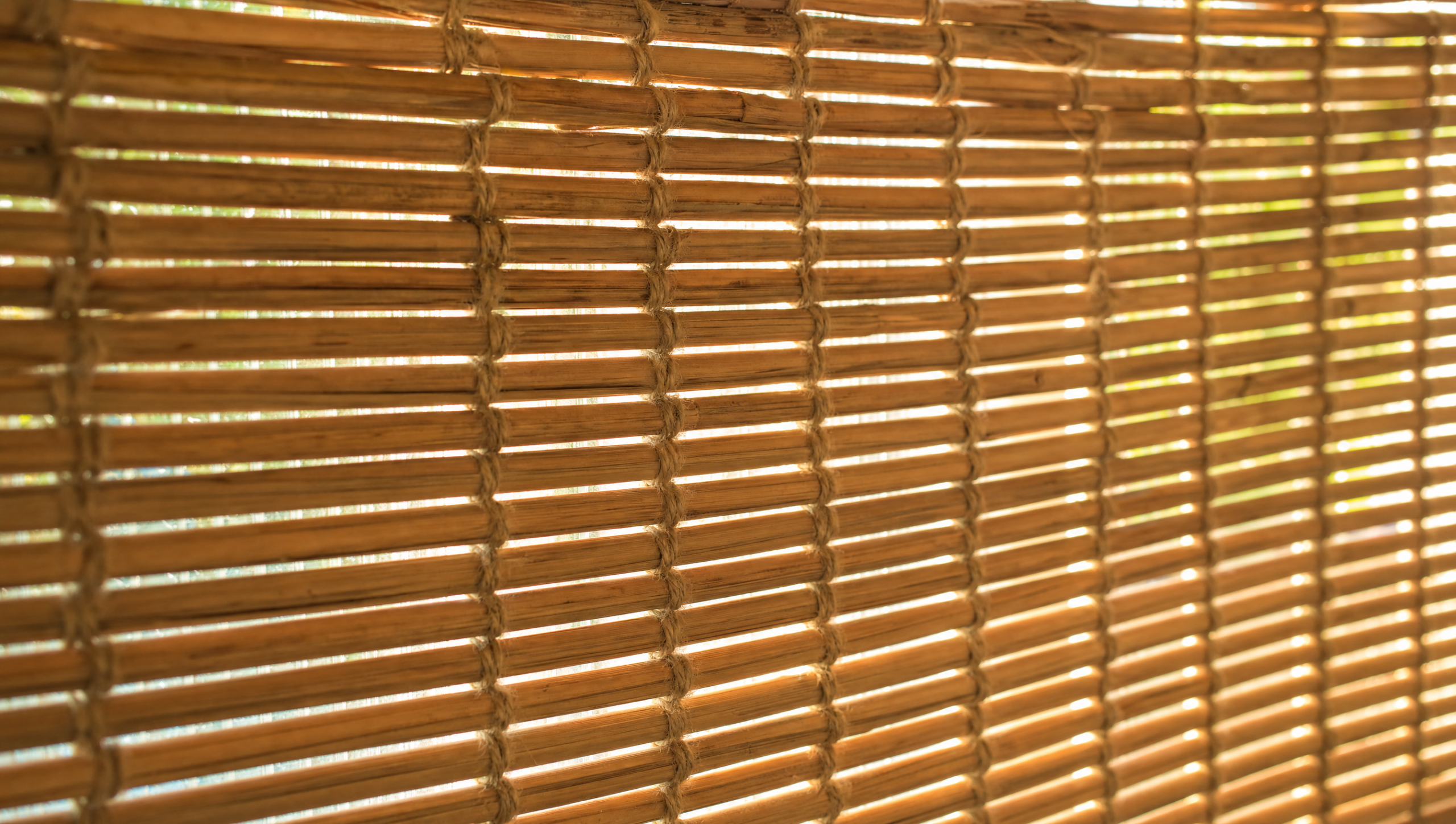
That filtered quality makes bamboo a strong choice for reducing glare on screens and taking the edge off strong afternoon sun. If glare is your main concern in a bright room, it is worth reading how to block window glare without darkening the room, since the right approach depends on how much daylight you actually want to keep.
Adding a privacy or blackout liner
The fix for both privacy and darkness is a liner, a backing fabric attached behind the woven shade. Liners come in a few strengths, and choosing the right one is the single most important decision for how the shade performs.
| Option | Light control | Privacy | Best for |
|---|---|---|---|
| Unlined weave | Filters light, keeps the view of the weave from both sides | Low, especially with lights on at night | Living rooms, sunrooms, layered looks |
| Privacy liner | Still filters light but stops silhouettes | Good daytime and evening privacy | Street-facing windows, main floors |
| Blackout liner | Blocks nearly all light through the shade body | Full privacy day and night | Bedrooms, nurseries, media rooms |
One thing to keep in mind: even a blackout liner cannot control the light that sneaks around the edges of the shade, since the liner sits inside the woven panel. If total darkness is the goal in a bedroom, some people pair a lined bamboo shade with side channels or layer it with drapery. If sleep is the priority and the natural look is secondary, a dedicated blackout shade may serve you better, and our guide to blackout roller shades covers that route. A top down bottom up lift is another way to get privacy at eye level while still letting light in above.
Styles of Bamboo and Woven Wood Shades
Bamboo shades are not one shape. The way the shade stacks and folds changes both the look and how it operates, so it is worth knowing the main styles before you shop.
| Style | How it works | Look |
|---|---|---|
| Roman fold | Gathers into soft horizontal folds as it lifts | Tailored and traditional; the most popular custom style |
| Flat weave | Stacks flat at the top with minimal folds | Clean and modern, shows off the weave pattern |
| Waterfall | Rolls forward and drapes rather than folding sharply | Softer, relaxed drape for casual rooms |
| Roll-up matchstick | Rolls up from the bottom on a simple cord or lift | Casual and budget friendly, common in ready-made sizes |
The Roman fold is what most people picture when they imagine a custom bamboo shade, and it reads as the most finished. Roll-up matchstick shades are the ones you find inexpensively at big-box stores, and they suit a cottage or a rental where you want the look without the investment. If you like the folded profile but want to compare it against fabric, our overview of Roman shades and the differences between roller blinds and Roman shades is a useful next read.
Indoor and Outdoor Bamboo Blinds
Bamboo shades sold for indoor use and those built for patios, porches, and pergolas are not interchangeable, and mixing them up is a common mistake. Outdoor bamboo blinds are treated or carbonised to stand up to sun and moisture, and they are usually simple roll-up designs meant to knock down heat and give a screened-porch feel. Indoor shades are finished for interior light and are not built to sit in the weather.
| Factor | Indoor bamboo shades | Outdoor bamboo blinds |
|---|---|---|
| Construction | Finished for interior use, liner options available | Treated or carbonised reed, weather resistant |
| Main job | Light filtering, privacy, warmth, style | Sun and heat reduction, screening, shade |
| Lifespan outdoors | Not suitable for exposed conditions | Holds up to weather but still ages faster than indoor |
| Style range | Roman, flat, waterfall, roll-up, custom sizes | Mostly roll-up screens in standard sizes |
In the GTA, exposed outdoor bamboo tends to grey and weather over a few seasons, especially with our freeze-and-thaw winters, so treat outdoor shades as a warm-season upgrade rather than a permanent fixture. For a covered balcony or a three-season sunroom, an indoor-rated shade often makes more sense.
Bamboo Blinds Compared to Wood and Faux Wood Blinds
People shopping for a natural look usually cross-shop bamboo against real wood blinds and faux wood. All three lean into a warm, organic feel, but they behave differently day to day.
| Feature | Bamboo / woven wood | Real wood blinds | Faux wood blinds |
|---|---|---|---|
| Look | Woven, textured, organic | Smooth slats, classic and refined | Slats that mimic wood at lower cost |
| Light control | Filters light, needs a liner for darkness | Tilts closed for strong light control | Tilts closed, good light control |
| Moisture tolerance | Low, natural fibre can warp if soaked | Low, can warp in damp rooms | High, handles humidity well |
| Weight | Light | Moderate | Heavier |
| Sustainability | Fast-growing renewable grass | Renewable but slower-growing timber | Synthetic materials |
The short version: bamboo wins on texture and sustainability, faux wood wins in damp rooms, and real wood sits in between with the cleanest tilt-and-close light control. If moisture tolerance is driving your decision, the trade-offs in our comparison of wooden versus faux wood blinds apply here too. Bamboo behaves a lot like real wood when it comes to humidity, which brings us to where these shades belong.
Best Rooms for Bamboo Shades in a Toronto Home
Because bamboo is a natural fibre that filters light and dislikes moisture, some rooms suit it beautifully and others fight it. Here is a room-by-room read.
| Room | Fit | Notes |
|---|---|---|
| Living room | Excellent | Texture and filtered light show at their best; add a privacy liner for street-facing windows |
| Bedroom | Good with a liner | Add a blackout liner for sleep; pair with drapery if you need full darkness |
| Home office | Very good | Softens screen glare while keeping a warm backdrop for calls |
| Sunroom or three-season room | Very good | Made for filtered daylight and an indoor-outdoor feel |
| Kitchen | Situational | Fine away from the sink and stove; steam and grease are hard on natural fibre |
| Bathroom | Poor | High humidity can warp and stain the weave; faux wood is the safer pick |
Bamboo also flatters larger openings, where the weave gives a wide expanse of glass some visual texture. If you are shading a tall or wide window, our notes on the best blinds for large windows are worth a look, and for a balcony slider the same fibre concerns apply as with any covering for a sliding door. Downtown condos with lots of glass often mix bamboo in living areas with something more functional in the bedroom, an approach we cover in our Toronto condo window covering guide.
Cordless Options and Child Safety
Safety is not a footnote with any corded shade, and it shapes how bamboo blinds are sold in Canada today. In 2021, new federal rules for corded window coverings came into force, and according to Health Canada, the country now has some of the strictest window covering safety requirements in the world. The concern is strangulation risk to young children from accessible cords and loops.
Under the Corded Window Coverings Regulations, a reachable cord with a free end must not exceed 22 cm, and any loop it can form is limited as well. In practice this is why most new custom shades, bamboo included, are sold cordless or with child-safe lift systems rather than long pull cords. Cordless lift, a continuous-loop chain mounted tight to the wall, or motorization all satisfy the intent of keeping hazardous cords out of reach.
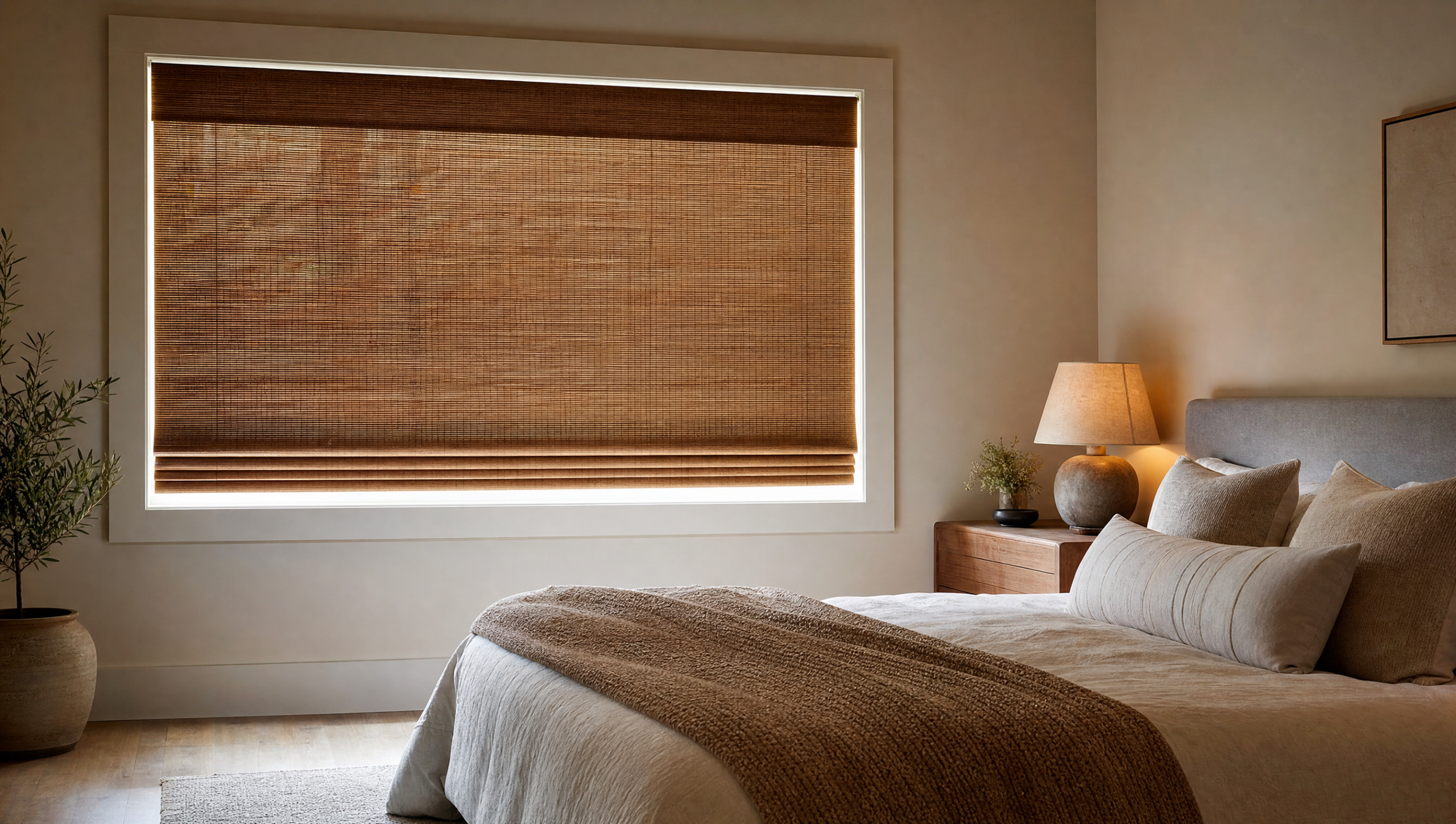
If you have young kids or pets, cordless is the simple answer, and the same logic drives our broader advice on cordless blinds for safer, cleaner windows. Bamboo shades take well to motorization too, so a hard-to-reach sunroom window can lift on a remote or a schedule; our guide to automating shades explains how the power and control options work.
Measuring and Mounting Bamboo Shades
Bamboo shades can hang inside the window frame for a clean, built-in look or outside the frame to cover more glass and add height. The right choice depends on your window depth and what you want the shade to hide.
| Mount | Best when | Trade-off |
|---|---|---|
| Inside mount | The frame is deep enough and you want a tidy, recessed look | Leaves small light gaps at the edges of the weave |
| Outside mount | The frame is shallow, or you want to block more light and make a window look larger | Projects further into the room and covers the trim |
Because natural weaves have a little variation from panel to panel, custom sizing matters more here than with a rigid product. A shade cut a bit narrow leaves visible light gaps that a fabric shade would hide, so accurate measurements pay off. If you would rather not measure yourself, our walkthrough on how to prepare for a blind installation covers what to expect, and a professional measure removes the guesswork entirely.
Cleaning and Maintaining Bamboo Blinds
Bamboo shades are low fuss, but they are not fabric, so the cleaning routine is a little different. The fibres do not like water, which means the goal is regular dusting and gentle spot care rather than washing.
For everyday upkeep, run a vacuum with a brush attachment across the weave every couple of weeks, or wipe it down with a dry microfibre cloth. For a mark, use a barely damp cloth on the spot and dry it right away instead of soaking the area. Keep the shades out of steamy rooms, and if a shade does get damp, raise it and let it air dry fully before lowering it again. Treated well, a quality woven wood shade holds up for years, and the natural fibre often mellows into a slightly deeper tone over time.
One honest caveat: bamboo can fade in strong, direct sun over the long run, the same way any natural material does. In a south or west window that bakes all afternoon, expect some softening of the colour over the years. That is worth weighing against how much you love the look.
What Bamboo Blinds Cost in Toronto
Price ranges widely because bamboo covers everything from a ready-made roll-up shade at a big-box store to a fully custom, lined Roman shade. Rather than quote a figure that goes stale, it helps to understand what actually moves the price.
| Cost driver | Effect on price |
|---|---|
| Ready-made vs custom | Standard-size roll-ups are cheapest; custom sizes and folds cost more |
| Liner choice | Adding a privacy or blackout liner raises the price over an unlined weave |
| Fibre and weave quality | Tighter, higher-grade weaves and designer blends cost more than basic matchstick |
| Window size | Larger and taller windows use more material and heavier hardware |
| Lift system | Cordless and motorized lifts add cost over a basic operation |
| Installation | Professional measure and install adds cost but avoids fit problems |
The biggest single swing is usually the jump from a ready-made shade to a custom, lined one. If you are furnishing a whole home, a common approach is to invest in custom lined shades where they show most, then use simpler options elsewhere. A free consultation is the fastest way to get real numbers for your windows, since so much rides on size and liner.
Are Bamboo Blinds Still in Style in 2026?
Yes. Natural materials and warm, tactile interiors have been gaining ground for several years, and woven wood shades sit squarely in that movement. The pull toward organic texture, softer palettes, and rooms that feel grounded rather than glossy has kept bamboo firmly in the conversation for 2026, especially in Toronto condos and renovated homes where designers use it to break up hard surfaces.
What has changed is the finish. The dated, orange-toned matchstick look of years past has given way to cleaner weaves in natural, greige, and carbonised tones that read as intentional rather than budget. Paired with a good liner and a cordless lift, a bamboo Roman shade looks current and considered. If you want a natural, sustainable window covering that also flatters a space, this is a look with staying power, not a passing fad.
How to Choose Bamboo Shades for Your Home
Bringing it together, a few questions settle most decisions. Start with the room: does it need darkness, or is filtered light fine? That answer tells you whether you need a liner and how strong it should be. Next, think about who uses the room, since kids and pets push you toward a cordless or motorized lift. Then consider moisture, which rules bamboo out of full bathrooms and busy kitchen windows. Finally, match the style to the room, with Roman folds for a finished look and roll-ups for a casual, budget-friendly one.
From there it comes down to accurate measurements and a weave you love. If you are weighing bamboo against other options for a specific room, it can help to see how the materials behind custom shades stack up, or to browse a gallery of finished window blinds to see the textures in real rooms. Homeowners across the GTA, from Mississauga to Vaughan, use the same checklist to narrow things down.
Frequently Asked Questions
What are bamboo blinds?
Bamboo blinds are window shades woven from natural plant fibres, usually bamboo along with reeds, jute, and grasses. They filter light through the natural gaps in the weave, add warmth and texture to a room, and are also sold under the names bamboo shades, woven wood shades, and natural shades.
What is the difference between bamboo blinds and woven wood shades?
There is no real difference in most cases. Woven wood is the broad category for shades made from natural fibres, and bamboo is the most common material in it. Retailers use the terms interchangeably, so always check what a specific shade is actually woven from rather than relying on the name.
Do bamboo blinds provide privacy?
On their own, not much, especially at night when interior lights turn the weave translucent and show silhouettes. To get real privacy you add a privacy or blackout liner behind the shade, which keeps the natural look on the window while blocking the view in.
Do bamboo blinds block light?
An unlined bamboo shade filters light rather than blocking it, letting a soft glow through even when lowered. For darkness, choose a blackout liner. Keep in mind that light can still enter around the edges of the shade, so bedrooms sometimes need side channels or drapery for full darkness.
Are bamboo blinds good?
They are a strong choice when you want natural texture, filtered light, and a sustainable material. They are less ideal where you need moisture resistance or complete darkness without extra layers. For living rooms, offices, and sunrooms they are hard to beat on looks.
What are the disadvantages of bamboo blinds?
The main drawbacks are limited privacy without a liner, poor moisture tolerance that rules out bathrooms, some colour variation from panel to panel, and gradual fading in strong direct sun. None of these are dealbreakers in the right room, but they matter when you match the shade to the space.
Are bamboo blinds in style in 2026?
Yes. The move toward natural materials and warm, textured interiors keeps woven wood shades popular in 2026, particularly in cleaner natural and carbonised tones. Paired with a liner and a cordless lift, they look current rather than dated.
Bamboo blinds vs wood blinds, which is better?
It depends on the room. Bamboo gives a woven, organic look and filters light, while wood blinds tilt closed for stronger light control and a more classic profile. Both dislike humidity. Bamboo is the more sustainable and textured option; wood offers cleaner light control.
Can bamboo blinds be used in bathrooms or kitchens?
Bathrooms are a poor fit because the humidity can warp and stain natural fibre. Kitchens can work away from the sink and stove, but steam and grease are hard on the weave. In damp rooms, faux wood blinds are the safer choice.
Can bamboo blinds go outdoors?
Only shades built for it. Outdoor bamboo blinds are treated or carbonised to resist sun and moisture and are usually simple roll-up screens for patios and porches. Indoor shades are not made for the weather and will deteriorate quickly if hung outside.
Are bamboo blinds cordless and child safe?
Most new bamboo shades sold in Canada are cordless or use child-safe lift systems, in line with the federal Corded Window Coverings Regulations that came into force in 2021. Cordless lift, wall-anchored chains, and motorization all keep hazardous cords out of reach of children.
How do you clean bamboo blinds?
Dust them every couple of weeks with a vacuum brush attachment or a dry microfibre cloth. For marks, wipe gently with a barely damp cloth and dry the spot right away. Avoid soaking the fibres, since water can warp and stain natural weaves.
Do bamboo blinds fade in the sun?
They can fade slowly in strong, direct sunlight over the years, as most natural materials do. In a south or west window that gets intense afternoon sun, expect some gradual softening of the colour. A liner and occasional rotation of the shade position help.
How long do bamboo blinds last?
A good-quality woven wood shade can last many years indoors with regular dusting and gentle care. Lifespan drops in humid rooms and harsh direct sun, and inexpensive matchstick roll-ups wear faster than custom lined shades.
Can bamboo blinds be motorized?
Yes. Woven wood shades take motorization well, which is handy for tall, wide, or hard-to-reach windows. A motor lets you raise and lower the shade by remote, app, or schedule, and it also removes any cords for added safety.
Should bamboo shades be inside or outside mount?
Inside mount gives a clean, recessed look when the window frame is deep enough, though it leaves small light gaps at the edges. Outside mount covers more glass, blocks more light, and makes a window look larger, at the cost of projecting into the room.
Are bamboo blinds eco-friendly?
Bamboo is a fast-growing renewable grass, which makes woven wood shades one of the more sustainable window covering choices compared with synthetic materials. Natural reed and grass blends share that advantage.
How much do bamboo blinds cost in Toronto?
Cost depends on whether the shade is ready-made or custom, the liner you choose, the fibre quality, the window size, and the lift system. Ready-made roll-ups are inexpensive, while custom lined Roman shades cost more. A free consultation gives you accurate numbers for your specific windows.
Bring the Natural Look Home
Bamboo blinds and woven wood shades give a Toronto home warmth and texture that few other window coverings match, as long as you pair them with the right liner and lift for each room. If you love the look but are not sure how it will perform in your space, that is exactly what a measure and consultation are for. The team at Canadian Blinds Pros can walk your windows with you, show you weaves and liner options side by side, and help you choose shades that fit both your light and your style. Contact us to book a free in-home consultation, and take a look at our custom window shades to start narrowing down the right fit.
n