
Blinds in Toronto: A Complete Buyer’s Guide to Choosing the Right Window Coverings
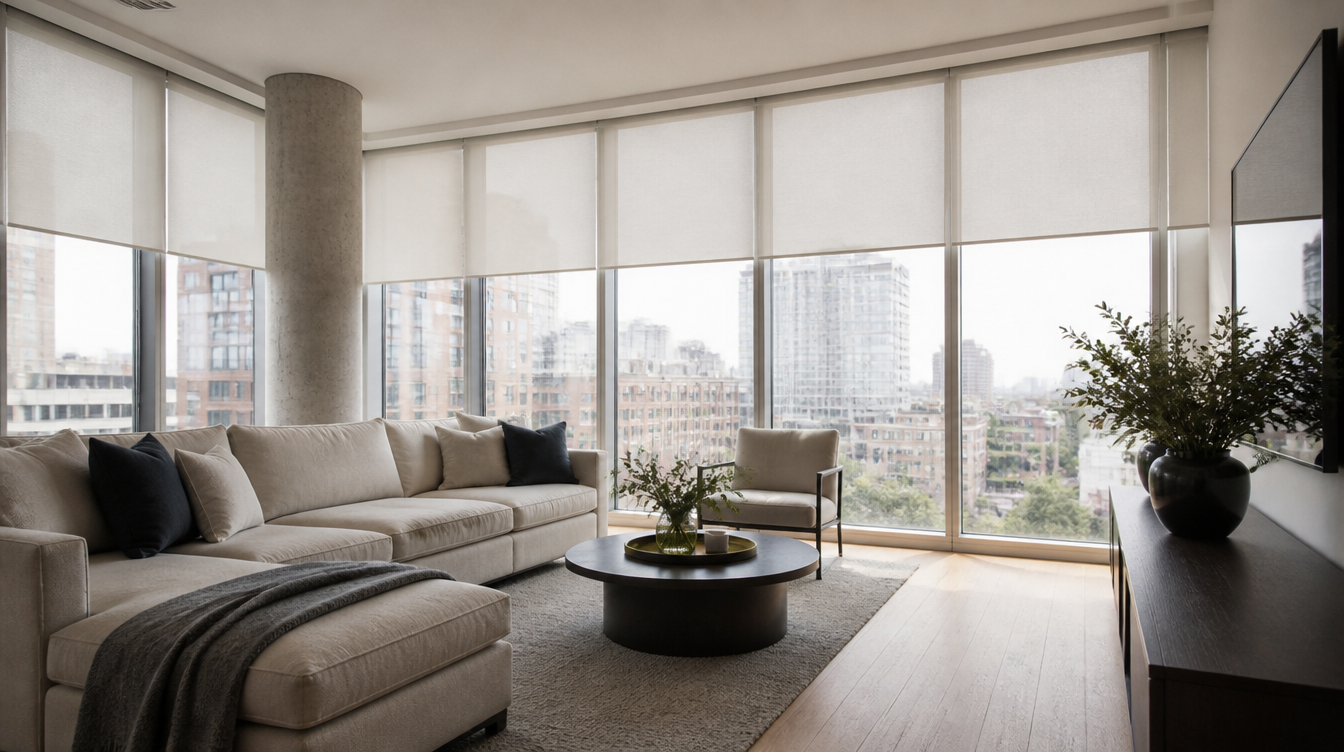

Buying blinds in Toronto sounds simple until you start looking. One window faces a busy street, another bakes in afternoon sun, the bedroom needs real darkness for shift work, and the condo board has rules about what shows from outside. Add a long winter that frosts the glass and a summer that turns a west-facing room into an oven, and the right window covering becomes a decision worth getting right the first time.
This guide walks through how to choose blinds and shades for a Toronto home or condo: the main product types, how they handle light and privacy, what drives the price, how custom work compares to big-box and online options, and the questions worth asking before you order. It pulls together the detailed buyer guides we publish for each product so you can start here and go deeper wherever you need to.
Why Choosing Blinds in Toronto Takes a Bit More Thought
Generic advice treats every window the same. Toronto windows are not the same. The climate swings hard across the year, the housing stock ranges from century homes to glass towers, and a large share of residents rent or live under condo rules. All of that shapes which window covering actually works.
Cold Winters and Window Condensation
Toronto winters are long, and single or older double-pane windows lose heat fast. Rooms near large windows feel colder, and condensation collects on the glass when warm indoor air meets a cold surface. Insulating window coverings such as cellular honeycomb shades trap a layer of air at the window and soften that heat loss. Fabric that can be wiped down, and a mount that lets air move a little behind the shade, both help where condensation is a recurring problem.
Summer Heat and UV Through the Glass
West and south-facing rooms take a lot of direct sun from late spring through early fall. That sun fades floors and furniture and pushes cooling costs up. Solar and light-filtering fabrics cut glare and block a meaningful share of UV while keeping some view, which is why so many Toronto homeowners pair a daytime solar or sheer shade with something more private for the evening. Our guide to energy efficient window coverings covers how fabric openness and cell structure affect heat gain.
Condos, High-Rises, and Board Rules
Many Toronto condos require a neutral or white backing on anything that faces the exterior so the building looks uniform from the street. Floor-to-ceiling windows, limited drilling into concrete, and tilt-and-turn frames all change what fits. If you are in a tower, read our Toronto condo window covering guide before you choose, and check your declaration for any colour or type restrictions first.
Older Homes and Out-of-Square Windows
Homes in neighbourhoods like Leslieville, the Annex, and much of the old city have settled over decades, so window openings are rarely perfectly square. A frame that measures wider at the top than the bottom will show light gaps on a stock blind cut to a single width. Custom window coverings are measured at several points and built to the real opening, which matters more in an older home than almost anywhere else.
The Main Types of Blinds and Shades
Most Toronto projects come down to a handful of product families. Here is how they compare at a glance, followed by a short note on each.
| Type | Light control | Best rooms | Relative price | Toronto note |
|---|---|---|---|---|
| Roller shades | Sheer to blackout by fabric | Any room, condos | Budget to mid | Clean look for modern towers |
| Zebra / dual shades | Adjustable sheer and solid bands | Living rooms, offices | Mid | Very popular across the GTA |
| Cellular / honeycomb | Light-filtering to blackout | Bedrooms, cold rooms | Mid | Best insulation for winter |
| Roman shades | Light-filtering to room-darkening | Living and dining rooms | Mid to premium | Soft, tailored fabric look |
| Venetian / wood / faux wood | Tilt slats for precise control | Living rooms, kitchens | Budget to premium | Faux wood suits humid rooms |
| Vertical / panel track | Rotate and slide open | Patio doors, wide windows | Mid | Made for sliding doors |
| Sheer shades | Soft diffused daylight | Living rooms with a view | Mid to premium | Keeps the skyline visible |
| Shutters | Tilt louvres, very precise | Whole-home, resale | Premium | Adds a built-in, lasting feel |
Roller Shades
Roller shades are the default choice in a lot of Toronto condos and newer homes because the look is clean and the fabric range is huge. A single fabric choice sets how much light passes, from an open solar weave to a full blackout. They motorize easily and sit tidily in a tight reveal. The full breakdown of fabrics, opacity, and mounting lives in our roller shades buyer guide.
Zebra and Dual Shades
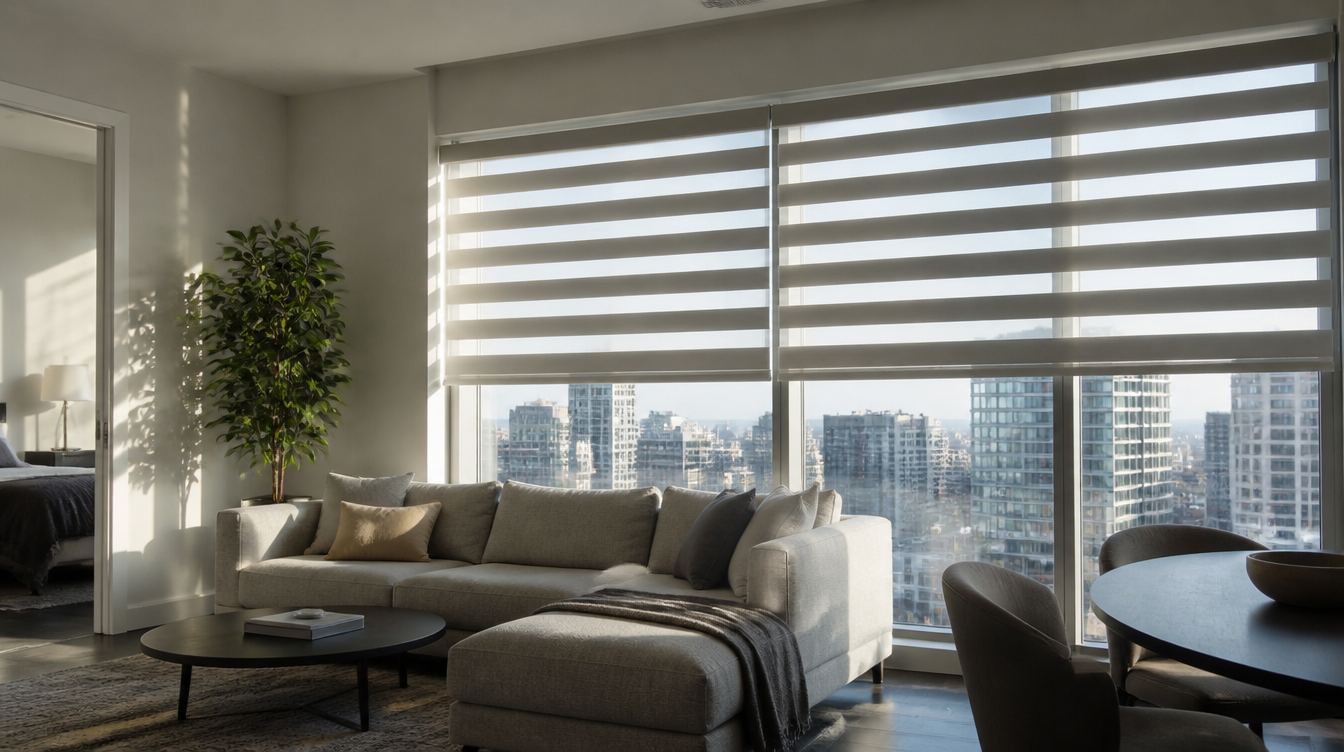
Zebra shades layer sheer and solid horizontal bands. Line the bands up and you get privacy; offset them and soft light comes through. That flexibility is why they are one of the most requested styles across the GTA. They work well in living rooms and home offices where light needs change through the day. See what makes them tick in our guide to zebra blinds, or browse the zebra blinds options we carry.
Cellular and Honeycomb Shades
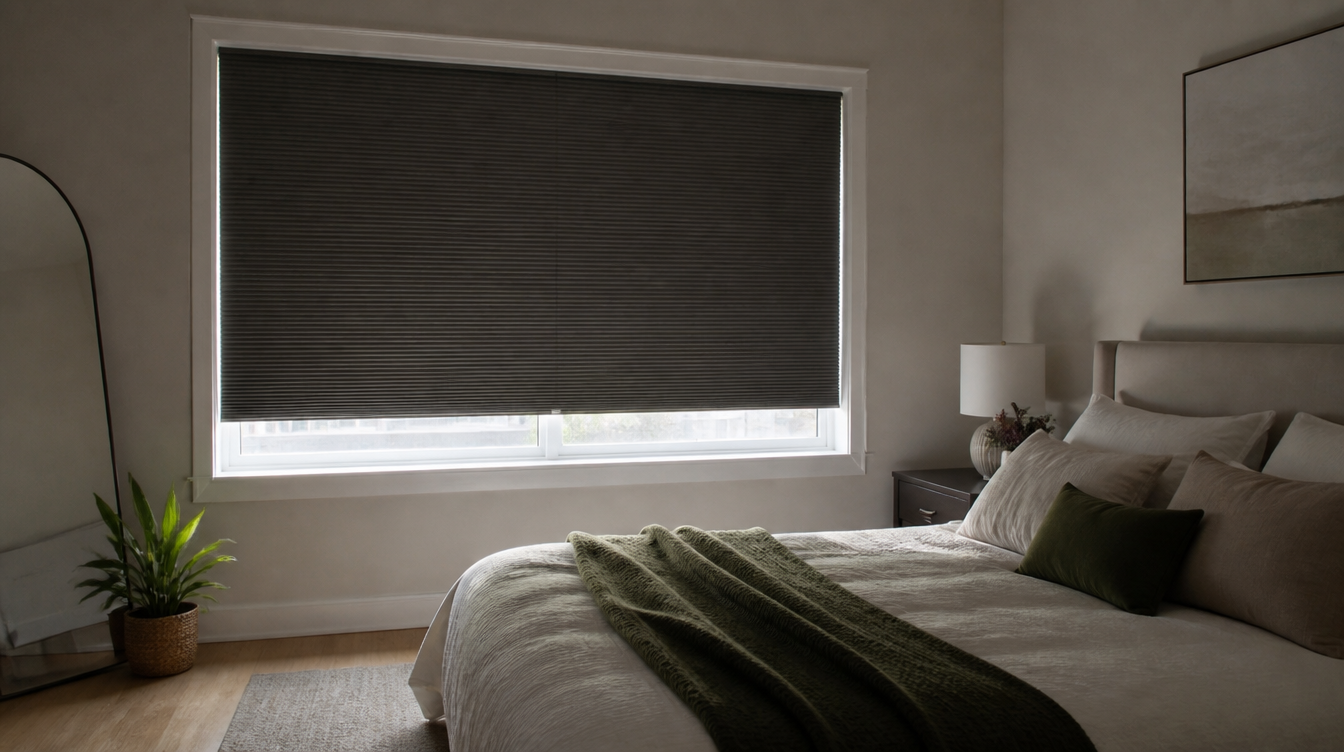
Cellular shades fold into honeycomb-shaped pockets that hold air against the glass, so they insulate better than any other soft shade. In a Toronto winter that translates to a warmer room near the window and a bit less heat lost through it. They come in light-filtering and blackout fabrics and in a slim profile that fits tight condo reveals. Details are in the cellular shades guide.
Roman Shades
Roman shades bring fabric and softness that hard blinds cannot. They stack into neat folds as they raise and lie flat when lowered, which suits living and dining rooms where you want a decorated, tailored look. Add a blackout lining and they work in a bedroom too. Our roman shades buyer guide covers fold styles and lining choices.
Venetian, Wood, and Faux Wood Blinds
Horizontal slat blinds let you tilt for exact light and privacy without raising the whole blind. Real wood brings warmth to a living room, while faux wood shrugs off the humidity in a kitchen or bathroom and costs less. The trade-offs between aluminum, wood, and faux wood are laid out in our venetian blinds guide.
Vertical Blinds and Panel Tracks
Wide windows and sliding patio doors need a covering that moves sideways. Vertical blinds rotate and slide, and panel track blinds glide broad fabric panels across the opening for a more modern take. Both suit the large glass doors common in Toronto townhomes and condos. The vertical blinds buyer guide explains vane and track options.
Sheer Shades, Shutters, Curtains, and Natural Shades
Beyond the staples there are softer and more architectural options. Sheer shades diffuse daylight while keeping a view, which is lovely in a high floor with a skyline. California shutters add a permanent, built-in look that buyers notice at resale. Custom curtains and drapery bring height and softness, often layered over a blind. And bamboo and woven wood shades add natural texture for a warmer room.
Matching Blinds to the Room
The same window covering rarely suits every room in a house. Light needs, moisture, and privacy change from space to space, so it helps to think room by room.
| Room | Main priority | Good fits |
|---|---|---|
| Bedroom | Real darkness, quiet | Blackout roller, blackout cellular, lined roman |
| Living room | Flexible light, view | Zebra, sheer, roller, layered drapery |
| Kitchen and bath | Moisture resistance | Faux wood, solar roller, PVC vertical |
| Home office | Glare control on screens | Solar roller, zebra, cellular |
| Nursery | Darkness and cord safety | Cordless blackout cellular or roller |
| Patio and sliding doors | Wide, sideways access | Vertical blinds, panel track |
For sleep, a bedroom blind with a blackout fabric or lining makes the real difference, especially for anyone working nights. In a living room, people usually want to move between an open view and evening privacy, which is where zebra and sheer shades shine. Kitchens and bathrooms call for moisture-resistant coverings, and a home office lives or dies on glare control so screens stay readable.
Light Control, Privacy, and Energy in a Toronto Climate
Most buying mistakes come from mixing up two things that feel similar: how much light a fabric lets through, and how much privacy it gives. They are related, but they are not the same.
Opacity Levels, From Sheer to Blackout
Fabric opacity is the single biggest driver of how a shade performs. The table below sets out the common levels and where each one fits.
| Opacity | Light | Privacy | Where it fits |
|---|---|---|---|
| Sheer | Most daylight passes | Daytime only | Living rooms with a view |
| Solar | Cuts glare and UV, keeps view | Daytime only | Sunny offices, west windows |
| Light-filtering | Soft, diffused glow | Good day and night | Most living spaces |
| Room-darkening | Blocks most light, small edge gaps | Full | Media rooms, bedrooms |
| Blackout | Blocks light through the fabric | Full | Bedrooms, nurseries, shift work |
One point trips people up. A blackout fabric blocks light through the material, but a little light still sneaks around the edges on an inside mount. For true cave-like darkness you either go outside mount with generous overlap, or you add side channels. Our blackout blinds page covers the options.
Daytime Versus Nighttime Privacy
Here is the catch with light fabrics. A sheer or light-filtering shade that gives privacy during the day can become see-through at night, when the room is lit and it is dark outside. Street-facing rooms and ground floors feel this most. If evening privacy matters, choose a light-filtering or room-darkening fabric, or layer a sheer for the day with something opaque for the night. We go deeper on this in our guide to the best blinds for privacy.
Insulation and Energy Savings
Window coverings are a modest but real lever on comfort and energy use. Cellular shades insulate best because of their trapped-air cells, and any shade that reduces summer solar gain lightens the load on your cooling. Natural Resources Canada explains how windows and coverings affect home energy in its ENERGY STAR Canada material. For product-level detail, see our energy efficient window coverings guide.
Motorized and Smart Blinds
Motorization has moved from luxury to mainstream, and for some Toronto windows it is the practical answer rather than a splurge.
When Motorization Earns Its Keep
Tall windows above a stairwell, wide banks of glass in a condo, and anything behind a sofa or a kitchen sink are awkward to reach by hand. A motor removes the daily reach and the dangling cords at the same time. It also lets you put several shades on one remote or a schedule, so a row of windows moves together. The motorized blinds page shows what we fit.
Battery Versus Hardwired Power
Rechargeable battery motors are the usual pick in a finished home or a rental because nothing needs to be wired into the wall, and recharging comes around every several months to a year depending on use and shade size. Hardwired power suits new builds and major renovations where a wire can be run before the drywall closes. In a condo, battery is almost always the simpler route.
Smart Home and Voice Control
Many motor systems connect to a hub that works with common smart-home apps and voice assistants, so shades can follow a schedule or respond to a command. If you are building a connected home, look at our smart blinds options and confirm compatibility with the system you already use before ordering.
Custom, Ready-Made, or Big-Box: Where to Buy
The Toronto market offers everything from a nine-dollar pleated shade to a fully custom motorized installation. They are not really competing for the same job, so it helps to see what each one does well.
| Option | Strengths | Trade-offs | Best for |
|---|---|---|---|
| Ready-made and online | Low cost, quick | Stock sizes, you measure and install, gaps likely | Rentals, standard windows, short stays |
| Big-box in store | Familiar brands, some service | Limited fabrics, upsells, varying install quality | Buyers who want a known name |
| Custom local company | Measured to fit, full fabric range, installed | Higher price, lead time for fabrication | Owners, odd windows, whole-home projects |
Ready-Made and Online Shades
Stock shades are cheap and fast, and for a standard rental window they can be fine. The catch is that you measure and install yourself, and stock widths rarely match a real opening, so you live with light gaps or a blind cut down awkwardly. If you rent and cannot drill, our no-drill blinds guide walks through damage-free options.
Custom Local Window Coverings
Custom means the shade is built to your exact opening after a measure, in the fabric and opacity you chose, and installed for you. For older Toronto homes with out-of-square windows, odd shapes, or a whole-home order you want to match, that fit and consistency is the main reason to go custom. We explain when it pays off in are custom blinds worth it.
What a Free In-Home Consultation Includes
A proper consultation brings fabric and material samples to your home so you see colours in your own light, takes precise measurements of every window, and talks through light, privacy, and motorization room by room. Seeing a sample against your wall at the actual time of day beats guessing from a screen. You can book a free consultation whenever you are ready to compare options in your own space.
What Blinds Cost in Toronto
Price is the first question most people ask, and the honest answer is that it depends on the window and the product. Rather than quote numbers that would be wrong for your home, here are the factors that actually move the total, so you can see where your budget goes.
| Cost driver | Effect on price |
|---|---|
| Product type | Rollers sit lower, shutters and specialty shapes sit higher |
| Window size and count | Larger and more numerous windows raise material and labour |
| Fabric and material | Designer fabrics, real wood, and blackout linings cost more |
| Motorization | Motors and hubs add per-shade cost over manual |
| Custom versus stock | Made-to-measure and installation add cost over ready-made |
| Specialty shapes | Arched, angled, and skylight windows need custom builds |
Because those factors stack differently for every home, the only number that means anything is a measured quote. Motorized blinds are a good example of how much the specification matters; our piece on motorized blind costs in Toronto shows how size, motor type, and quantity change the figure. A free in-home consultation turns these drivers into a real price for your windows.
Measuring and Installing Toronto Windows
Whether a blind looks custom or clearly off-the-shelf usually comes down to the mount and the measurement. There are two ways to mount.
An inside mount sits the blind within the window frame for a clean, built-in look, and it needs enough depth in the reveal to clear the glass and any handles. An outside mount fixes the blind to the wall or trim above the opening, covers more of the window, and blocks more edge light, which is the better pick for blackout and for shallow frames. The full method, including why you measure the width in three places on an older window, is in our guide to measuring windows for blinds.
Precise measuring is also where a professional measure pays for itself. A reputable installer takes responsibility for the numbers, so if a custom shade does not fit, remaking it is on them, not you. That accountability is a quiet but real reason many Toronto owners hand the measuring to the same company that fabricates and installs.
Child and Pet Safety
Corded blinds are a known strangulation hazard for young children and pets, and Canada now regulates corded window coverings to limit that risk. Health Canada and the federal government set out requirements under the corded window coverings regulations, which you can read in the official Corded Window Coverings Regulations (SOR/2019-97). The practical takeaway for a home with kids or pets is simple: choose cordless or motorized operation wherever you can. Our guide to cordless blinds covers how the lift systems work and why they are also cleaner to use.
Cleaning and Keeping Blinds Looking New
Toronto homes collect city dust, and kitchens add a bit of grease to the air, so a light routine keeps shades looking right. Dust most blinds with a soft cloth or a vacuum brush attachment every couple of weeks. Faux wood, aluminum, and PVC wipe down with a damp cloth, which is why they suit kitchens and bathrooms. Fabric rollers and cellular shades prefer gentle spot-cleaning over soaking. Matching the material to the room at purchase, moisture-resistant where there is steam, saves you cleaning trouble later.
How to Choose a Blinds Company in Toronto
The product matters, but so does who measures, builds, and installs it. A good local company is the difference between a shade that fits and one you fight with. Use this checklist when you compare.
| What to check | Why it matters |
|---|---|
| In-home measure and quote | Accurate fit and a real price for your windows |
| Fabric samples brought to you | You see colours in your own light |
| Local reviews and photos | Evidence of real GTA installs |
| Clear warranty terms | Coverage on fabric and mechanisms |
| Professional installation | Proper mounting and accountability for fit |
| Condo experience | Knows board rules and concrete mounting |
Reviews from real Toronto neighbourhoods, a willingness to come measure, and straight answers about warranty and lead time tell you more than any single showroom visit. You can also browse our window blinds gallery to see finished installs before you decide.
Serving Toronto and the Greater Toronto Area
Window covering needs shift a little across the region, from downtown condos to detached homes in the suburbs, so local service helps. We work across the city and the wider GTA, including downtown Toronto, Scarborough, Etobicoke, Mississauga, Vaughan, Markham, and Richmond Hill. If you are not sure where to start, the blog collects our full set of product guides in one place.
Frequently Asked Questions
How much should I expect to pay for blinds in Toronto?
There is no single figure, because the total depends on product type, window size and count, fabric, whether you motorize, and whether the blinds are custom or stock. Basic ready-made shades are inexpensive, while custom and motorized installations cost more. A free in-home measure gives you an accurate quote for your own windows.
What is the best type of blind for a Toronto condo?
Roller shades and zebra shades are the most common choices in condos because they look clean, fit tight reveals, and motorize easily. Check your building’s declaration first, since many towers require a neutral or white exterior-facing backing for a uniform look from the street.
Which blinds are best for keeping a room warm in winter?
Cellular honeycomb shades insulate best, because their honeycomb cells trap a layer of air against the cold glass. In a Toronto winter that keeps the area near the window warmer and reduces heat loss. A snug fit or an outside mount with overlap improves the effect.
What blinds give the most privacy at night?
Light-filtering, room-darkening, and blackout fabrics keep privacy after dark. Sheer and light solar fabrics can turn see-through at night when the room is lit and it is dark outside, so street-facing and ground-floor rooms usually need an opaque fabric or a layered sheer-plus-blackout setup.
Are custom blinds worth it over ready-made?
For older Toronto homes with out-of-square windows, odd shapes, or a whole-home order, custom is worth it because the shade is measured and built to the real opening and installed for you. For a standard rental window on a short stay, a good ready-made shade can do the job for less.
What is the difference between an inside and outside mount?
An inside mount sits within the window frame for a clean, built-in look and needs enough reveal depth. An outside mount fixes above the opening on the wall or trim, covers more of the window, and blocks more edge light, which makes it the better choice for blackout and for shallow frames.
Do blackout blinds block all light?
A blackout fabric blocks light through the material itself, but on an inside mount a little light still slips around the edges. For near-total darkness, use an outside mount with generous overlap or add side channels that seal the gaps along the window frame.
Are motorized blinds worth it for a home?
They are worth it for hard-to-reach windows, wide banks of glass, and homes with children or pets where cords are a hazard. Motors also let several shades run on one remote or a schedule. For easy-to-reach standard windows, manual cordless operation is often enough.
Should blinds be lighter or darker than the walls?
Most Toronto homes look best with blinds a shade lighter than or matched to the wall, which keeps the window feeling open and the trim clean. Darker shades make a stronger statement and frame a view, but they can draw the eye to the window, so it comes down to the look you want.
What blinds are safest for children and pets?
Cordless and motorized blinds are the safest, since they remove the pull cords that pose a strangulation risk. Canada regulates corded window coverings to limit that hazard, and choosing cordless operation sidesteps it entirely in bedrooms, nurseries, and play areas.
What are the best blinds for large windows and patio doors?
Wide windows and sliding patio doors suit coverings that move sideways, such as vertical blinds and panel track shades. Both open to the side so you can still use the door, and panel tracks give a more modern, broad-panel look for large glass.
How long do custom blinds take to arrive in Toronto?
Lead time depends on the product, the fabric, and whether the shades are motorized, since custom pieces are built to order after the measure. A consultation is the place to get an accurate timeline for your specific selection rather than a general estimate.
Can I get blinds if I rent and cannot drill?
Yes. Tension-mounted and adhesive-bracket shades install without screws and leave the frame undamaged, which suits rentals and some condos. Our no-drill guide covers the damage-free options and where each one works best.
What blinds work best in a kitchen or bathroom?
Faux wood blinds, solar and vinyl roller shades, and PVC verticals handle the steam and splashes in kitchens and bathrooms and wipe clean easily. Avoid natural wood and delicate fabrics in those rooms, since moisture warps and stains them over time.
Do window coverings really lower energy bills?
They help at the margin rather than transforming a bill. Cellular shades slow heat loss in winter, and fabrics that cut summer solar gain ease the cooling load. Paired with good windows, the right coverings make rooms more comfortable and trim energy use through the year.
What is the most popular blind style in the GTA right now?
Zebra and roller shades are the most requested across the Greater Toronto Area, thanks to their clean modern look, wide fabric range, and easy motorization. Cellular shades follow close behind in bedrooms and colder rooms for their insulation.
Finding the Right Blinds for Your Toronto Home
The best window covering is the one that matches your room, your light, and the way you live, not the one that happened to be on sale. Start with the problem you are solving, darkness for sleep, glare on a screen, a cold window, a see-through evening, then pick the fabric and type that answer it, and let the fit be handled properly. When you want samples in your own light and a real price for your windows, reach out for a free in-home consultation and we will help you narrow it down.