
Blinds in Markham: A Complete Local Buyer’s Guide to Window Coverings
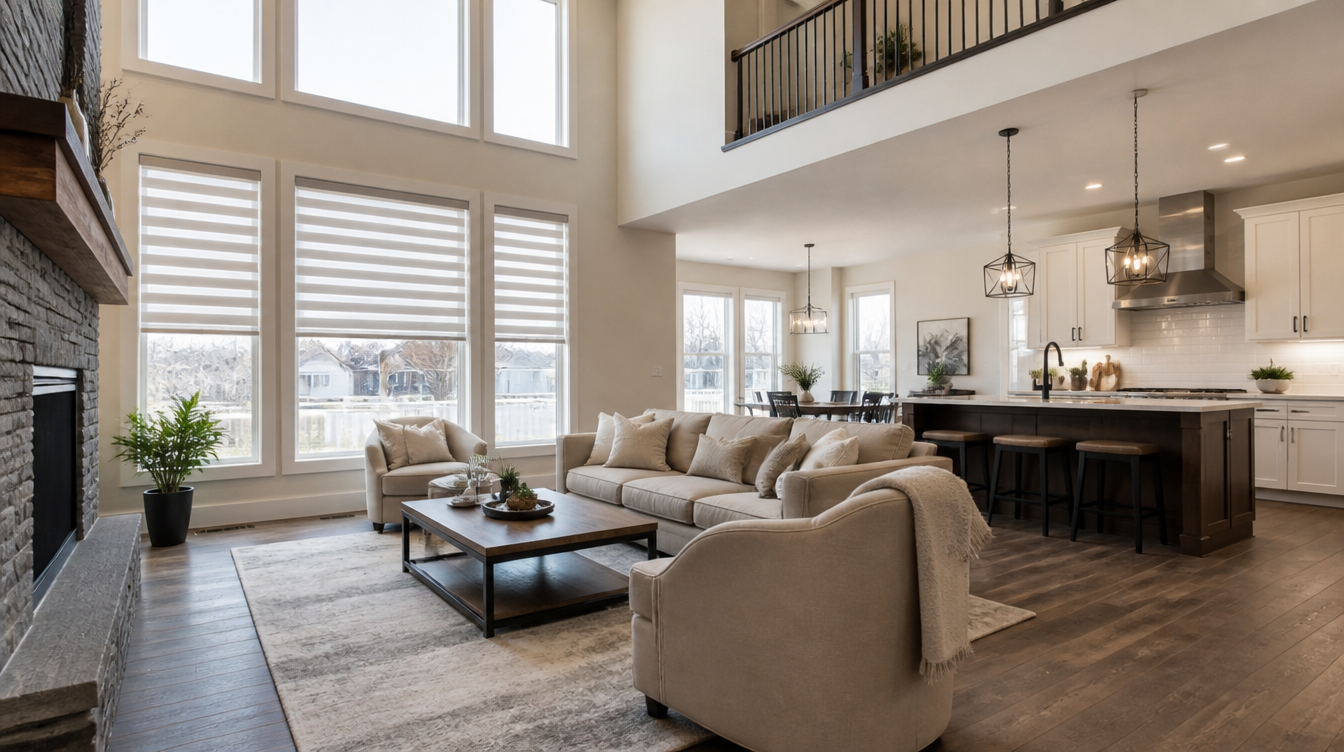

Markham homes come in more shapes than most people expect. A new great room in Cornell or Wismer has two-storey windows that pour light across an open-concept kitchen. A century house on Main Street Unionville has smaller, out-of-square sashes that no stock blind ever fits cleanly. A glass-walled condo at Downtown Markham near Birchmount and Highway 7 has floor-to-ceiling glazing and almost nowhere to drill. One window-covering answer does not stretch across all three, and that is really what this guide is about.
We put together this local buyer’s guide for Markham homeowners, condo residents, renters, and anyone furnishing a new build in York Region. It walks through the covering types that suit Markham’s housing, how to match them to each room, how light control and mounting actually work, what motorized options are worth, and the questions worth asking before you order. If you want the wider regional picture first, our complete Toronto blinds buyer’s guide covers the fundamentals, and this page zooms in on Markham.
Why Markham Homes Have Their Own Window Covering Needs
Markham spreads across a lot of building eras, and the windows tell the story. The planned communities on the east and north sides, places like Cornell, Greensborough, Berczy, Wismer, Cathedraltown, and Angus Glen, are full of detached and semi-detached homes built from the late 1990s onward. These have big manufactured windows, tall foyer glass, and great-room walls that face open lots or parks, so glare and winter heat loss are both real.
Then there are the older pockets. Unionville and Markham Village keep heritage and century homes with wood sashes, shallow casings, and frames that have shifted over decades. Thornhill, shared with Vaughan along the south edge, mixes mid-century bungalows and side-splits with newer infill. Measuring matters more in these homes because almost nothing is perfectly square.
Markham also has a growing vertical side. Condos and mid-rise buildings around Markham Centre, Downtown Markham, Commerce Valley, and the Highway 7 corridor bring floor-to-ceiling glass, shared-wall noise, and condo rules about what you can mount and what the street sees. Our Toronto condo window covering guide goes deep on high-rise glazing, and most of it applies to a Downtown Markham unit too.
Many Markham households are multigenerational, which changes what rooms get used and when. A main-floor bedroom used by a grandparent needs easy, cordless operation and good blackout. A home office used through the day needs glare control without going dark. Keeping those uses in mind up front saves you from reordering later.
Window Covering Types That Suit Markham Homes
Before matching coverings to rooms, it helps to know the main families and where each one earns its place. Here is the short version, with a link to the full guide on each type if you want to go deeper.
Zebra blinds, also called dual or banded shades, alternate sheer and solid fabric bands so you can shift from a clear view to privacy by rolling the fabric a few centimetres. They are a strong fit for Markham’s newer open-concept main floors because they give daytime light with privacy and look clean on large windows. The matching city page for zebra blinds in Markham has local examples.
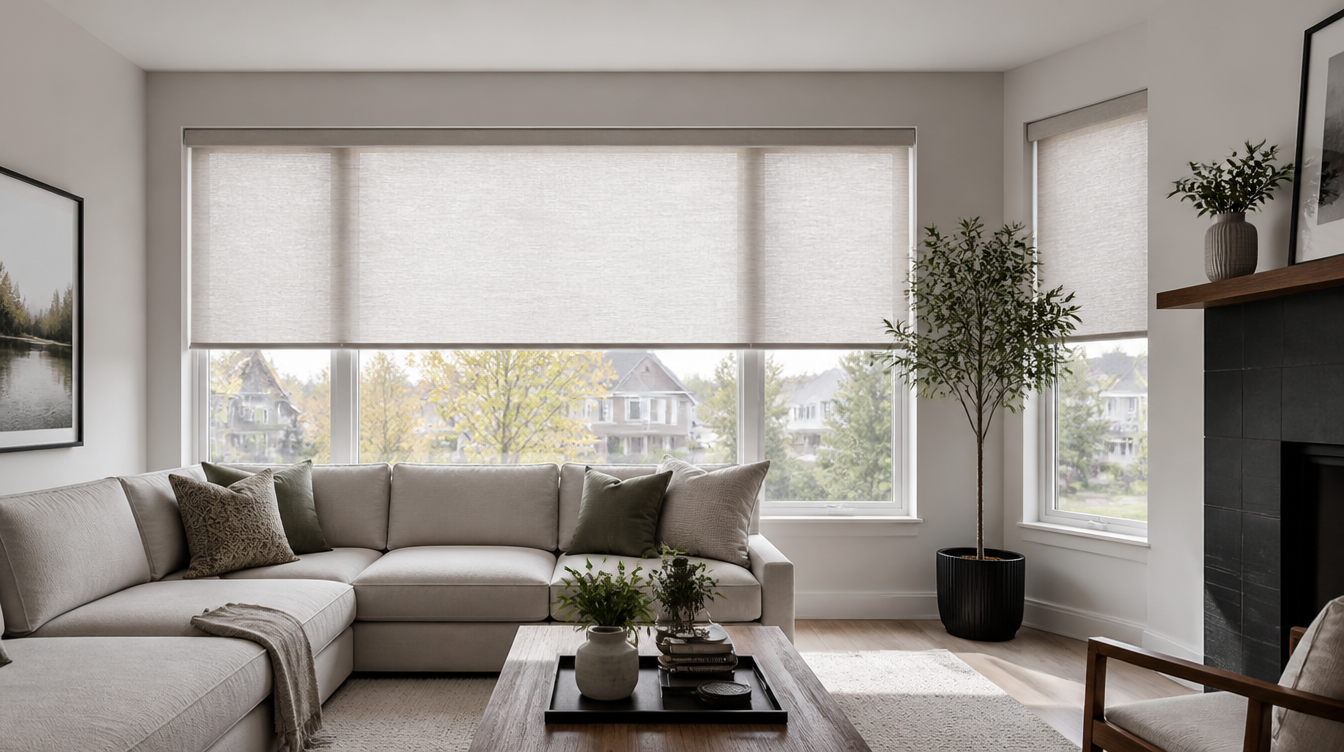
Roller shades are a single fabric that rolls up into a tidy headrail. Pick the opacity and you control exactly how much light gets through, from a light-filtering weave to full blackout. They suit almost every Markham room and work well motorized on hard-to-reach great-room windows. See our roller blinds page for fabric options.
Cellular shades, or honeycomb shades, trap air in their pleats, which adds real insulation at the glass. In a Markham winter that matters, especially on north and east windows and in rooms over an unheated garage. They are the go-to when energy efficiency is the priority.
Roman shades fold up in soft horizontal pleats and read as a fabric treatment, so they warm up a formal living or dining room in an Unionville or Angus Glen home. Add a blackout lining and they work in bedrooms too.
Vertical blinds and panel track blinds cover wide spans and patio doors without a heavy stack. Markham has a lot of sliding glass doors onto decks and backyards, and these two handle that span better than almost anything else.
Venetian blinds in aluminum, wood, or faux wood give you tilt control over light and a classic slat look. Faux wood holds up in humid rooms where real wood can warp. For a plantation-style look, California shutters add value and suit both heritage and new builds.
Sheer shades and custom curtains and drapery soften a room and layer over blinds for depth, insulation, and a finished look. Pairing a roller or cellular shade with drapery is common in Markham’s larger formal rooms.
This table lines up the main types against the Markham homes and rooms where they tend to make the most sense.
| Covering type | Best Markham use | Main strength |
|---|---|---|
| Zebra / dual shades | New open-concept main floors, living rooms | View plus privacy in one shade |
| Roller shades | Almost any room, great-room windows | Pick any opacity, clean look, easy to motorize |
| Cellular / honeycomb | North and east windows, rooms over garages | Added insulation at the glass |
| Roman shades | Formal living and dining, heritage homes | Soft fabric look, warmth |
| Vertical / panel track | Patio doors, wide basement and great-room spans | Covers wide openings, slides aside |
| Faux wood / wood venetian | Kitchens, bathrooms, traditional rooms | Tilt control, moisture resistance in faux |
| California shutters | Front-facing windows, resale appeal | Permanent, adds value |
| Sheers and drapery | Layering, large formal rooms | Softness, depth, extra insulation |
Choosing Window Coverings Room by Room
The fastest way to shortlist is to work room by room, because each one has a different job. What suits a bright Berczy great room is wrong for a street-facing bedroom in Markham Village.
Living Rooms and Great Rooms
Markham’s newer homes lean on big living and great-room windows, often two storeys tall. You usually want daytime light and a view, with privacy once the sun drops. Zebra shades and light-filtering roller shades both do this well. If the room faces west and bakes in the afternoon, a solar or light-filtering fabric cuts glare without blacking out the space. Our living room blinds options show the range.
Bedrooms
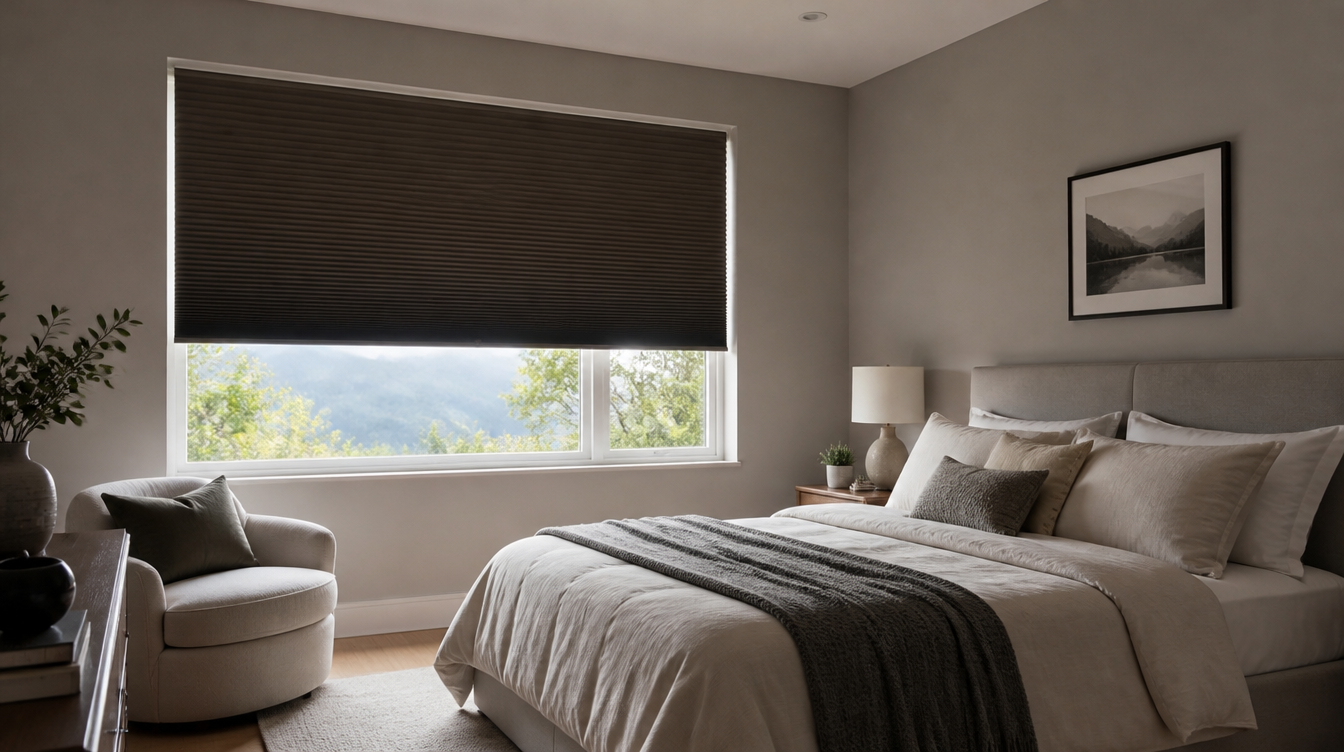
Bedrooms are where blackout earns its keep. A blackout roller or cellular shade, or a Roman shade with blackout lining, keeps summer sunrises and streetlight out. In Markham’s shift-work and multigenerational households, a main-floor bedroom that doubles as a guest or elder room benefits from cordless, quiet operation. See our bedroom blinds page, and if a nursery is involved, cordless is the safe default.
Kitchens and Bathrooms
Moisture and grease rule out some fabrics here. Faux wood blinds, moisture-tolerant roller fabrics, and easy-wipe materials last longer. Our bathroom and kitchen blinds guide covers the materials that hold up near sinks, stoves, and showers.
Home Offices
With so many Markham residents working from home, glare on a screen is the complaint we hear most. A solar shade or light-filtering roller tames it while keeping the room usable. If the office faces a bright backyard or park, pair a solar shade with a blackout layer for video calls. Our office blinds page has more.
Patio Doors and Sliders
Backyard sliding doors are everywhere in Markham’s detached homes. Vertical blinds and panel tracks slide cleanly aside and cover the full span. Motorized roller shades on a wide valance are another tidy option when you want a modern look.
Basements and Lower Levels
Finished basements, common in Markham’s two-storey builds, usually have small, high windows. Light-filtering rollers or cellular shades handle the odd sizes, and blackout suits a lower-level media room. The table below sums up the room-by-room picks.
| Room | Recommended covering | Why it fits |
|---|---|---|
| Living / great room | Zebra or light-filtering roller | View by day, privacy at night |
| Bedroom | Blackout roller, cellular, or lined Roman | Darkness and quiet for sleep |
| Kitchen / bathroom | Faux wood or moisture-tolerant roller | Resists humidity and wipes clean |
| Home office | Solar or light-filtering roller | Cuts screen glare, keeps the view |
| Patio door | Vertical blinds or panel track | Covers wide spans, slides aside |
| Basement | Cellular or blackout roller | Fits small, high windows |
Light Control and Privacy: Reading the Opacity Labels
Opacity is the single most important spec, and it is where people most often guess wrong. Fabrics fall into four broad bands, and the same window can feel completely different depending on which you pick.
Sheer fabrics glow with light and give you a soft daytime view, with little nighttime privacy on their own. Light-filtering fabrics soften and spread light while blocking direct sightlines by day. Room-darkening fabrics cut most light but let a little leak at the edges. Blackout fabrics stop light through the material itself, though some always escapes around the sides unless you mount outside or add side channels.
A common Markham mistake is buying blackout for a living room, then finding it dark and cave-like during the day. Match the band to the job: light-filtering or zebra for living spaces, blackout for bedrooms and media rooms. The blackout blinds for Markham page shows where full darkness is worth it.
| Opacity | Daytime privacy | Light blocked | Best for |
|---|---|---|---|
| Sheer | Low | Minimal | Soft light, layering |
| Light filtering | Moderate by day | Some | Living rooms, kitchens |
| Room darkening | High | Most | Media rooms, offices |
| Blackout | Full | Nearly all through fabric | Bedrooms, nurseries |
Inside Mount Versus Outside Mount
Where the covering sits changes both the look and how well it blocks light. An inside mount sits inside the window frame for a clean, built-in look that shows off the casing. It needs enough depth and a reasonably square opening, which is exactly where Markham’s older Unionville and Thornhill windows can cause trouble.
An outside mount fixes to the wall or trim above the window and overlaps the opening. It hides an out-of-square frame, blocks more light at the edges, and makes a small window look larger. For heritage homes and for any room where you want maximum blackout, outside mount is often the smarter call. Our measuring guide walks through checking depth and squareness before you decide.
| Factor | Inside mount | Outside mount |
|---|---|---|
| Look | Clean, built-in | Covers trim, looks larger |
| Light gaps | Small gaps at edges | Blocks edge light better |
| Needs depth | Yes | No |
| Out-of-square frames | Shows gaps | Hides them |
| Best for | New square windows | Heritage homes, full blackout |
Motorized and Smart Blinds in Markham Homes
Motorization has moved from luxury to practical, especially on the tall windows Markham builders love. If a great-room window sits two storeys up, a motor saves you a ladder and a pole. Motorized shades also help anyone who wants blinds that raise on a schedule or respond to a voice command.
The first decision is power. Battery or rechargeable motors need no wiring and suit most retrofits, including condos where you cannot run cable. Hardwired motors never need recharging and suit new builds where wiring can go in before drywall. Our motorized blinds and smart blinds pages explain the control and app options, and the city-specific details already covered in the Markham blinds page apply here too.
Smart integration lets shades work with a hub, timer, or assistant. Scheduling blinds to close on hot afternoons cuts cooling load, and raising them at sunrise is a gentle wake-up. One honest downside of motorized blinds is cost and the occasional battery recharge, so weigh them against where reach and convenience actually matter.
| Power type | Best for | Trade-off |
|---|---|---|
| Battery / rechargeable | Retrofits, condos, existing homes | Recharge every several months to a year |
| Hardwired | New builds, major renovations | Needs wiring planned in advance |
| Plug-in transformer | Near an outlet, single windows | Visible cord unless concealed |
Measuring Markham Windows Accurately
Custom window coverings are made to your exact opening, so the measurement is the product. In a new Cornell or Wismer home the openings are usually close to square, but you should still measure each one rather than assume they match. In older Unionville and Thornhill homes, measure the width at the top, middle, and bottom, and the height at left, centre, and right, because the numbers rarely agree.
For an inside mount, use the smallest width and check the frame depth against the covering’s minimum. For an outside mount, add overlap on each side and above for better coverage. If any of this feels fiddly, that is normal, and a free professional measure removes the guesswork. The full method is in our how to measure windows guide.
Installation: What to Expect
Most Markham installs are straightforward once the coverings are made correctly. Brackets go up, the headrail clips in, and the installer checks level, operation, and light gaps. The parts that need care are heritage window trim, which can be shallow or fragile, and condo walls, which sometimes have concrete or steel behind the drywall that changes the anchors used.
Professional installation matters most on tall great-room windows, wide patio doors, and motorized units where brackets and power have to line up. A free consultation and installation takes that off your plate and keeps the warranty clean. If you would rather handle a rental or condo yourself without drilling, our no-drill blinds guide covers damage-free options.
Child and Pet Safety
Corded blinds are a real hazard around young children and pets, and the rules have tightened. Health Canada’s corded window covering regulations set strict limits on accessible and reachable cords on products sold in Canada, which you can read in the official Corded Window Coverings Regulations (SOR/2019-97). The practical takeaway for Markham families is simple: choose cordless or motorized wherever children or pets spend time.
Cordless lift, motorized control, and retractable or tensioned systems remove the dangling loop entirely. Our cordless blinds guide explains the safe options, and many families go cordless throughout the home for peace of mind, not just in nurseries.
Energy Efficiency and Markham’s Climate
York Region winters are cold and summers are hot and humid, so windows are a weak point for comfort and energy bills. The right covering slows heat loss in winter and blocks solar heat gain in summer. Cellular shades lead here because their honeycomb pockets trap air, and layering a shade under drapery adds another insulating gap.
Natural Resources Canada treats windows and their coverings as part of a home’s overall efficiency, and its guidance through the ENERGY STAR Canada program is a good primer on reducing heating and cooling loss. For covering-specific strategies, our energy efficient window coverings guide goes room by room. A top-down bottom-up option, explained in our two-way light control guide, lets you drop the top for light while keeping the bottom closed for privacy and warmth.
What Window Coverings Cost in Markham
Price depends on more than the fabric. Window size, covering type, opacity, motorization, mount, and install all move the number. Rather than quote figures that go stale, here is what actually drives cost so you can plan a budget and know where to spend.
| Cost driver | Lower cost | Higher cost |
|---|---|---|
| Window size | Standard bedroom window | Two-storey great-room glass |
| Covering type | Basic roller or faux wood | Shutters, layered drapery |
| Operation | Cordless manual | Motorized and smart-integrated |
| Fabric and opacity | Standard light-filtering | Designer and blackout fabrics |
| Install complexity | Standard square windows | Heritage trim, high or wide spans |
The best way to get a real number for your home is a free in-home consultation, where someone measures and quotes against your actual windows. You can book that consultation here.
Cleaning and Maintenance
A little upkeep keeps coverings looking new. Dust blinds and shades regularly with a soft brush or vacuum attachment. Wipe faux wood and vinyl with a damp cloth. Spot-clean fabric shades, and follow the maker’s instructions before wetting anything, since some fabrics mark. Faux wood in a Markham kitchen or bathroom shrugs off humidity that would warp real wood over time.
Motorized units need almost nothing beyond the occasional recharge or battery change, and keeping the headrail dust-free helps the mechanism run smoothly for years.
Window Coverings Across Markham Neighbourhoods
We serve homes right across Markham and nearby York Region. The planned communities of Cornell, Wismer, Berczy, Greensborough, Cathedraltown, and Angus Glen tend to have new, large, square windows that suit zebra, roller, and motorized shades. Unionville, Markham Village, and Thornhill bring heritage and mid-century homes where careful measuring and outside mounts earn their place. Condos around Markham Centre, Downtown Markham, and the Highway 7 corridor call for condo-friendly, cordless, and no-drill solutions.
If you are comparing options with family or friends nearby, our neighbouring city guides may help too: the Scarborough buyer’s guide, the Brampton buyer’s guide, the Mississauga buyer’s guide, the Etobicoke buyer’s guide, and the city pages for Richmond Hill and Vaughan cover the rest of the area.
Questions to Ask Before You Order
A few minutes of questions saves a lot of regret. Ask whether the covering is truly custom-made to your measurements. Ask about the opacity in plain terms, meaning how dark or private it really gets. Ask whether cordless or motorized is available for safety and reach. Ask about the warranty, who installs it, and whether the measure and consultation are free. Ask how the fabric cleans. And ask to see samples in your own light, since Markham’s north-facing and west-facing rooms change how a colour reads.
Browsing finished projects helps too. Our window blinds gallery and our custom window shades page show how different coverings look once installed.
Frequently Asked Questions About Blinds in Markham
What are the best blinds for Markham homes?
There is no single best, because it depends on the room. Zebra and roller shades suit Markham’s new open-concept main floors, cellular shades win on energy efficiency, and blackout rollers or lined Roman shades are best for bedrooms. Matching the covering to each room’s light and privacy needs gives the best result.
How much do custom blinds cost in Markham?
Cost depends on window size, covering type, fabric, opacity, operation, and installation. A standard cordless roller costs far less than a motorized shade on a two-storey great-room window. A free in-home consultation gives you an accurate quote for your actual windows rather than a guess.
Do you offer a free in-home consultation in Markham?
Yes. A free in-home consultation lets a specialist measure your windows, show fabric and colour samples in your own light, and quote against your real openings. It is the most reliable way to avoid sizing and opacity mistakes.
What type of blinds are currently in style?
Zebra and dual shades, clean roller shades in natural tones, motorized shades, and layered looks pairing a shade with drapery are all popular in Markham right now. Cordless operation and understated, modern fabrics suit the open-concept homes being built across the city.
Are blinds out of style in 2026?
No. Blinds and shades remain the practical choice for light control, privacy, and energy savings. What has changed is the move toward cordless and motorized operation, cleaner profiles, and shades that pair with drapery rather than any decline in blinds themselves.
What type of blinds look most expensive?
Shutters, layered drapery over shades, and tailored Roman shades tend to read as the most high-end. A quality motorized roller in a designer fabric also looks refined because there are no cords and the lines stay clean.
Should blinds be lighter or darker than the walls?
Most designers suggest blinds a shade lighter than or matching the wall for a calm, cohesive look. A deliberate contrast can work as a feature, but in Markham’s open-concept rooms a tone close to the wall usually keeps large window walls from feeling heavy.
What are the downsides of motorized blinds?
The main downsides are higher upfront cost and, for battery models, the need to recharge or change batteries periodically. They are worth it on tall or hard-to-reach windows and for scheduling, but a simple cordless shade is fine on an easy-to-reach bedroom window.
What are people replacing old blinds with?
Many Markham homeowners are replacing dated vertical and aluminum blinds with zebra shades, roller shades, cellular shades, and shutters. Cordless and motorized versions are the usual upgrade, both for safety and for the cleaner look.
Which blinds are best for large great-room windows?
Motorized roller or zebra shades suit tall great-room windows because a motor removes the reach problem, and a single wide shade keeps the look clean. For very wide spans, panel tracks or linked shades cover the opening without a heavy stack.
What blinds work best for patio and sliding doors?
Vertical blinds and panel track blinds are the usual answer for sliding doors because they slide aside with the door and cover the full width. Motorized roller shades on a wide valance are a modern alternative when you prefer a horizontal look.
Are cordless blinds worth it for families?
Yes. Cordless blinds remove the dangling cord that poses a strangulation risk to children and pets, which is why Canadian regulations restrict accessible cords. They also look cleaner and operate easily, so many families choose cordless throughout the home.
What blinds help with winter heat loss in Markham?
Cellular or honeycomb shades insulate best because their pockets trap air at the glass. Pairing a shade with lined drapery adds another insulating layer, and a snug fit or outside mount reduces the cold draft that slips around the edges.
Can blinds reduce glare in a home office?
Yes. Solar shades and light-filtering roller shades cut screen glare while keeping a usable view. If the office faces a bright backyard or sits in a west-facing room, pairing a solar shade with a blackout layer handles both daytime glare and video calls.
How long do custom blinds take to arrive?
Lead time depends on the covering type, fabric, and whether the order is motorized, so it varies. Your consultant can give a current timeline when you order, since custom pieces are made to your measurements rather than pulled from stock.
Do you install blinds throughout Markham and York Region?
Yes. We serve Markham neighbourhoods including Unionville, Cornell, Wismer, Berczy, Greensborough, Thornhill, and Angus Glen, along with nearby Richmond Hill, Vaughan, and the wider GTA. Professional installation is available and keeps the fit and warranty clean.
Ready to Choose Window Coverings for Your Markham Home
The right window coverings make a Markham home more comfortable, more private, and easier to live in, whether you are finishing a new build in Cornell, updating a heritage home in Unionville, or furnishing a condo at Downtown Markham. Start by matching the covering and opacity to each room, think about cords and reach for safety, and lean on a free measure so the fit is right the first time.
When you are ready, contact our team to book a free in-home consultation across Markham and York Region. We will measure your windows, bring samples, and help you compare options for your rooms, light, and budget.
Leave a Reply
You must be logged in to post a comment.