
How to Choose Roller Blinds for Every Room
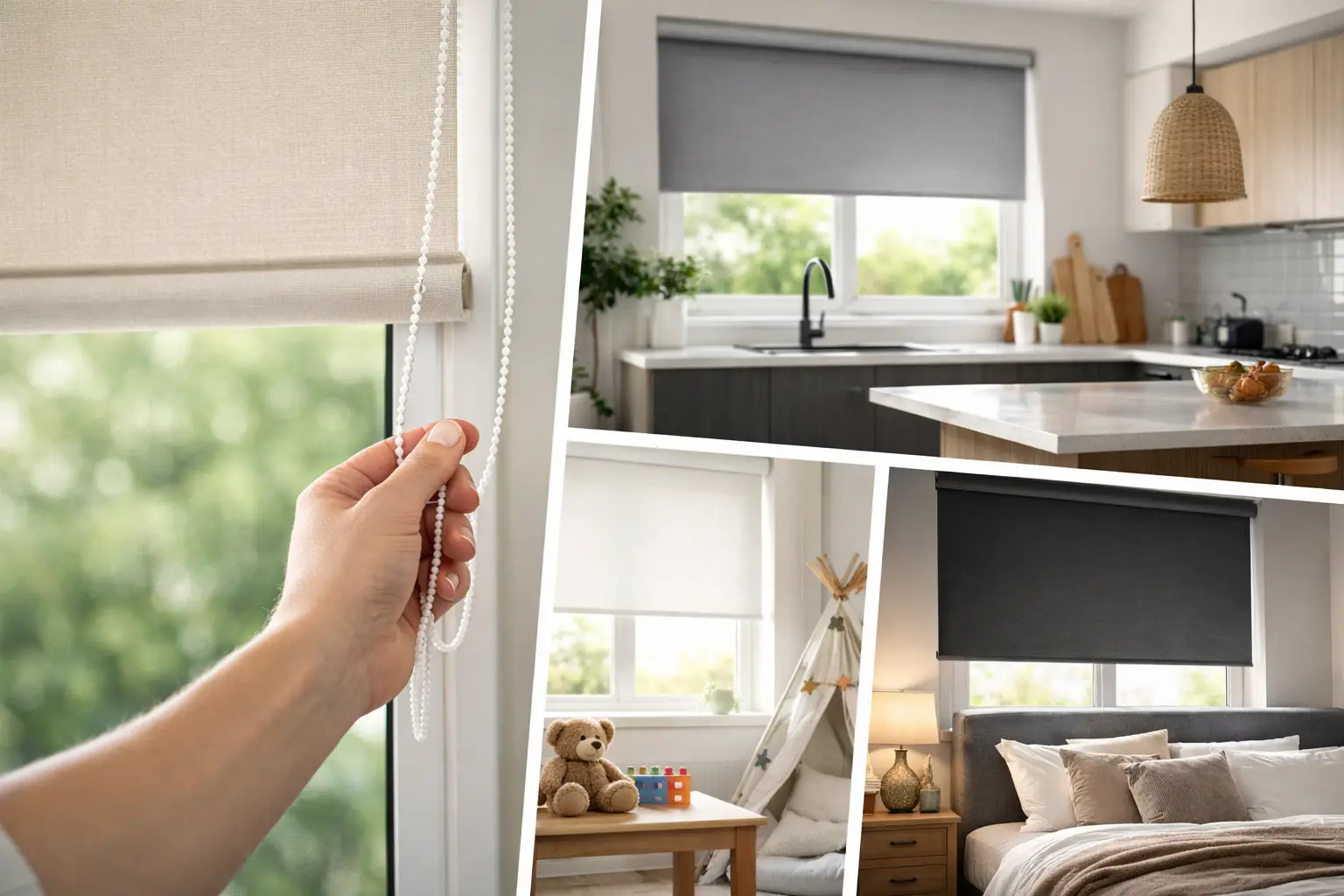

A roller blind can look beautifully simple, but the right choice depends on far more than selecting a fabric color. When considering how to choose roller blinds, start with the way each room is used: when you need privacy, how much sunlight enters, whether glare affects screens, and how the blind should sit within the window frame. A custom solution turns those daily details into a clean, polished finish. Open-weave sheer roller fabrics are covered in our sheer shades guide.
For the full picture across fabrics, hardware, controls, and mounting, see our complete roller shades buyer’s guide for Toronto.
Picking a roller shade for a wet room? See our guide to the best blinds for a kitchen or bathroom for moisture-resistant fabrics.
Picking a roller shade for a wet room? See our guide to the best blinds for a kitchen or bathroom for moisture-resistant fabrics.
If you prefer a natural, textured finish over plain fabric, take a look at woven wood bamboo shades as another option for the same rooms.
Roller shades are also one of the easiest styles to hang without tools, which we cover in our guide to no-drill blinds for renters and condos.
Roller blinds are a natural fit for modern Toronto homes, condos, and workspaces because their profile is streamlined and their operation is straightforward. The key is matching the fabric, opacity, fit, and controls to the window in front of you rather than choosing one style for every room.
On a wide patio door, a vertical blind often beats a single roller. See our vertical blinds guide.
How to Choose Roller Blinds Based on Light and Privacy
The first decision is usually fabric openness. This determines what you can see through the blind, how much daylight remains in the room, and how effectively the blind protects privacy.
Choose light-filtering fabric for soft daytime light
Light-filtering roller blinds diffuse direct sun without making a space feel closed off. They are well suited to living rooms, kitchens, and open-concept condo layouts where you want to soften bright light while maintaining a warm, airy atmosphere. They also help reduce UV exposure that can fade flooring, furniture, and artwork over time.
At night, however, light-filtering materials may show silhouettes when interior lights are on. They provide a level of privacy, but they are not the best choice for a street-facing bedroom or a closely neighboring condo window.
Choose solar fabric when glare is the problem
Solar roller shades are designed for rooms with a view and a lot of direct sun. Their woven construction filters light and cuts glare while preserving outward visibility during the day. This makes them especially practical for home offices, conference rooms, and living spaces with large windows.
The openness factor matters. A more open weave generally preserves more of the view and allows more light through; a tighter weave offers stronger glare reduction and more daytime privacy. Neither option gives complete nighttime privacy, so solar fabrics are often best in spaces where daytime performance is the priority or where another window covering is used after dark.
Choose blackout fabric for bedrooms and media spaces
Blackout roller blinds are the right choice when sleep, privacy, or screen visibility matters most. They are popular in bedrooms, nurseries, and media rooms because they block the light passing through the fabric itself. For shift workers, young families, and bright high-rise bedrooms, that difference can be meaningful.
A blackout fabric alone does not make every installation completely dark. Light can still appear around the edges of the blind, particularly with an inside-mounted treatment. For the darkest result, discuss an outside mount, a carefully selected overlap, or side channels where appropriate. Professional measuring helps identify what your window can accommodate before the order is placed.
Match the Roller Blind to the Room
A well-chosen roller blind should support the way the room functions, not just coordinate with the paint color.
In a living room, a light-filtering or solar fabric often creates the best balance of comfort, view preservation, and daytime glare control. Neutral tones keep the look timeless, while a textured fabric can add visual depth without competing with furniture or artwork.
For bedrooms, prioritize privacy and darkness first, then choose the color and finish. Blackout roller blinds in a soft neutral, deep charcoal, or a tone that complements the bedding can feel refined rather than purely functional. If the room needs flexibility throughout the day, zebra blinds are another option worth considering because they allow adjustable bands of filtered light and privacy.
In a kitchen, choose a fabric that suits a hardworking space. A smooth, easy-care material is often preferable near cooking areas, especially when windows are close to the sink or range. Avoid placing any window treatment where it could interfere with safe access to appliances or ventilation.
Home offices need focused light control. If sunlight hits a monitor at certain hours, a solar fabric can reduce reflections without cutting the room off from daylight. In an office where client privacy, presentation screens, or video calls are frequent, a more opaque fabric may be the better trade-off.
Decide Between an Inside Mount and Outside Mount
The mounting position has a major effect on appearance and performance. An inside mount sits within the window frame, creating a tailored, architectural look. It is often preferred in condos and contemporary homes because it keeps the window treatment visually contained and allows trim or window details to remain visible.
Inside mounting requires enough depth and a frame that is reasonably square. Even a custom blind needs clearance for its brackets and roller tube. Small measurement differences can affect how the fabric hangs, which is why measuring should never be treated as an afterthought.
An outside mount is installed above or beyond the frame. It can make a narrow window appear larger, cover shallow or uneven frames, and improve light control by extending beyond the glass area. It is also a smart option when privacy is more important than showing off the trim. The trade-off is a more prominent visual presence, so proportion and placement matter.
Select a Fabric Color That Works in Changing Light
Fabric samples can look different at noon, on an overcast day, and after sunset with interior lighting on. Before committing, view the material against the wall, flooring, and major furnishings whenever possible. A crisp white blind may feel bright and clean in a sun-filled room but can create sharper contrast against warm walls at night. A soft beige, gray, or greige often blends more easily across changing conditions.
Darker fabrics can add definition and may improve glare control, but they can feel heavy on a small window or in a compact condo. Lighter fabrics help preserve an open feeling, though they may offer less visual contrast. The right answer depends on whether you want the blind to quietly recede or become part of the room’s design.
Texture is equally valuable. A subtle linen-look fabric can soften a minimalist interior, while a smooth finish suits a more streamlined, modern setting. Custom roller blinds allow you to choose a material that supports the overall design instead of settling for a generic look.
Consider Manual, Motorized, or Smart Controls
Manual chain control remains a practical, reliable choice for easily reached windows. It is a sensible option for many standard installations, provided the chain is properly secured for child safety.
Motorized roller blinds make more sense for tall windows, wide glass walls, hard-to-reach windows, or rooms where you adjust coverings throughout the day. With a remote, wall control, or app-based system, you can lower blinds during intense afternoon sun and raise them when you want natural light back in the room.
Smart controls add scheduling and integration capabilities. They can be useful in bedrooms, home offices, and commercial spaces where consistent light management supports comfort and energy efficiency. They are an investment, so consider how often you will actually use automation. For a single accessible bathroom window, manual operation may be all you need. For a sun-exposed condo with multiple windows, motorization can make the space noticeably easier to live in.
Do Not Overlook Window Size, Hardware, and Installation
Large roller blinds place different demands on the roller tube and brackets than smaller windows. The width, drop, fabric weight, and mounting surface all affect the final result. A blind that looks proportional in a showroom may need a different tube size or bracket placement for a wide living-room window.
Hardware should complement the room without distracting from it. Exposed brackets can suit a modern, intentional look, while a cassette or valance can conceal the roller for a cleaner finish. In rental properties, condos, and commercial spaces, installation requirements may also affect the best mounting method.
This is where a professional consultation provides real value. Accurate measurement accounts for frame depth, obstructions, handles, ceiling clearances, and the practical details that determine whether the blind operates smoothly. Canadian Blinds Pros combines made-to-measure guidance with installation, so the design choice and final fit are handled as one coordinated process.
A Better Way to Make the Final Choice
Bring the decision back to one question: what should this window do for the room? If the priority is a view with less glare, choose solar fabric. If you want gentle daylight, choose light-filtering material. If rest and privacy are essential, choose blackout. Then refine the decision with the mount, color, and control system that fit your home and routine.
The most satisfying roller blinds do not call attention to their mechanics. They simply make the room more comfortable when the morning sun arrives, when work begins, or when it is time to settle in for the evening.