
Cellular Shades in Toronto: A Complete Guide to Honeycomb Blinds and Energy Savings
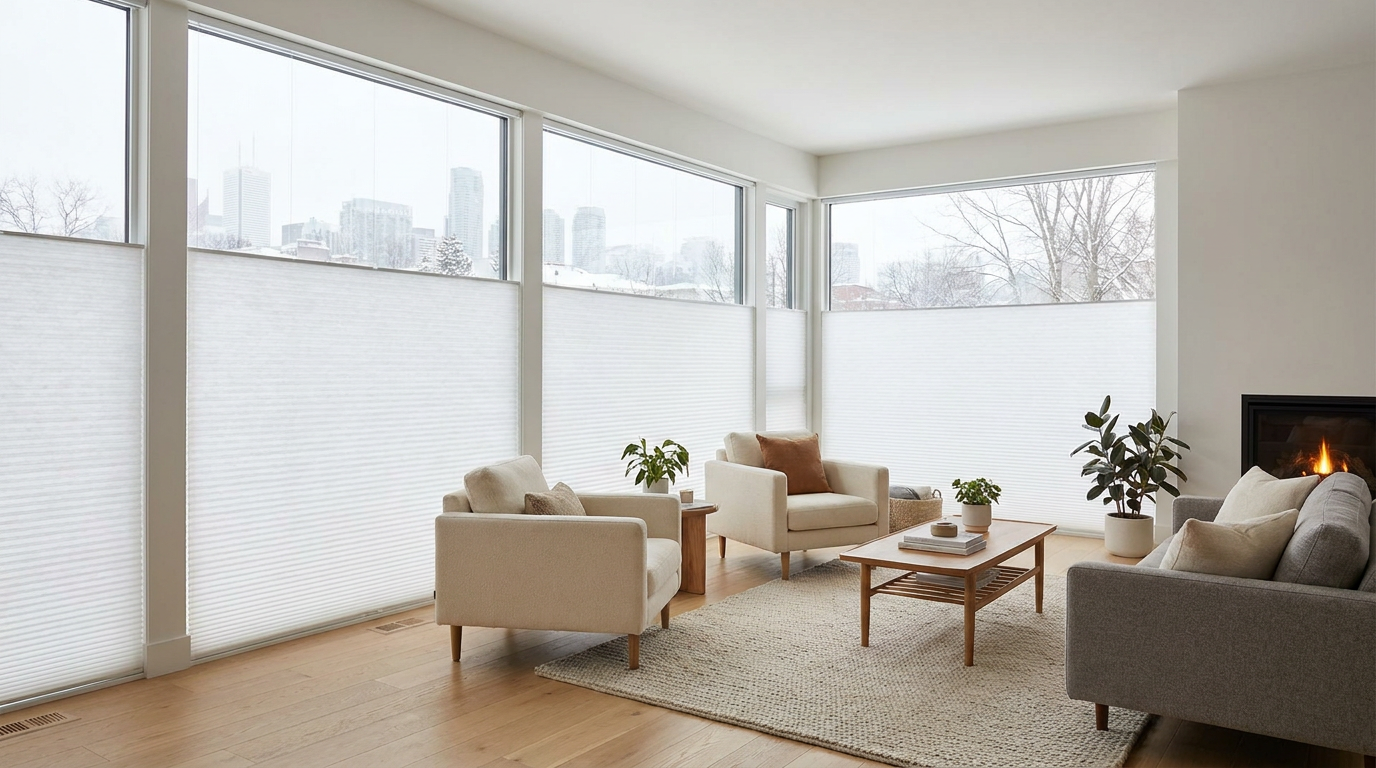

Cellular shades, often sold under the name honeycomb blinds, have quietly become one of the most practical window coverings for Toronto homes and condos. The reason is simple. Their pleated fabric folds into rows of hollow pockets that trap a layer of air against the glass, and in a city that swings from humid July afternoons to hard January cold, that trapped air does real work. This guide walks through how these shades perform, the choices that matter when you order them, and where they fit best across a home, a condo, or a workplace. If you prefer a slat blind with a tilt instead of a soft fabric shade, our Venetian blinds guide is a good companion read.
If you are weighing cellular shades against other options, our Toronto window covering buyer’s guide walks through the whole decision.
\n\n
For a softer, more decorative fabric shade, compare notes with our Roman shades buyer’s guide.
\n
If you are comparing options for winter warmth and lower bills, our full guide to energy efficient window coverings in Toronto ranks every style from most to least insulating.
Fitting a steamy room? Our guide to the best moisture-resistant blinds for bathrooms and kitchens covers which fabrics and materials hold up near a shower or sink.
Fitting a steamy room? Our guide to the best moisture-resistant blinds for bathrooms and kitchens covers which fabrics and materials hold up near a shower or sink.
For a warmer, more textured alternative, some Toronto homeowners also consider bamboo and woven wood shades, which filter light in a similar way while adding natural fibre to the room. For a soft, view-through option that keeps daytime privacy, see our sheer shades buyer guide.
Cellular shades are also the go-to fabric for overhead glass. If you have roof windows, see our guide to skylight blinds in Toronto for how honeycomb shades mount on sloped skylights.
Another way to keep daylight up high while the lower window stays private is a top down bottom up cellular shade, which opens from the top as well as the bottom.
If you are still deciding between shade families before you get into the detail, our overview of custom window shades is a useful starting point, and the comparison of blinds, sheers, and shades explains where cellular fits in the wider category.
What Are Cellular Shades?
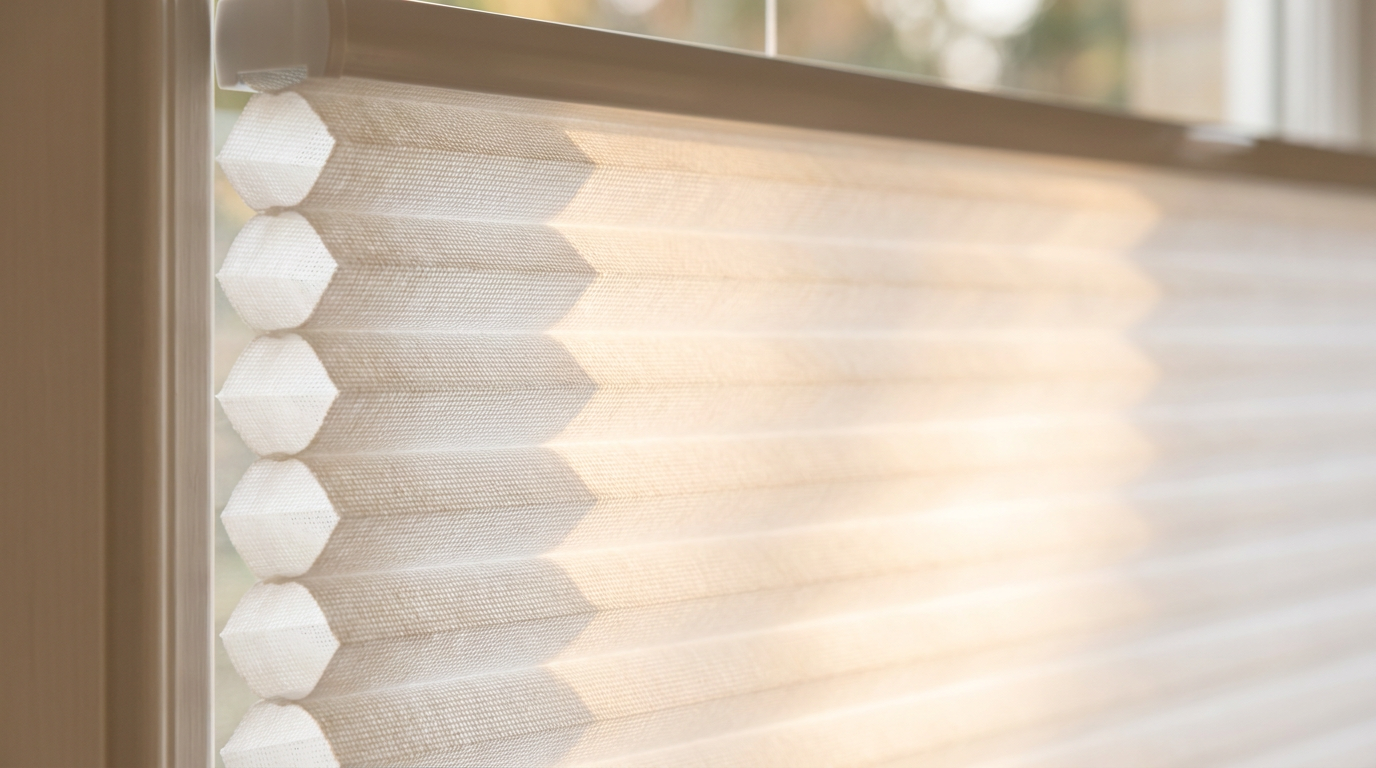
Cellular shades are a soft fabric window covering built from pleated material that forms one or more rows of honeycomb-shaped cells when you look at the shade edge on. Each cell is a small air chamber. Because still air is a poor conductor of heat, those chambers slow the movement of warmth between the room and the window. That single design idea is what separates cellular shades from a flat roller fabric or a slatted blind.
The shade raises and lowers like most fabric shades, stacking into a tidy band at the top when open and dropping into a smooth, textured panel when closed. The fabric is usually spun polyester, which holds its pleats well and resists fading. Cell sizes commonly range from roughly three eighths of an inch for smaller windows up to three quarters of an inch for larger openings, and the size affects both the look and how much air the shade can hold.
People use the words cellular and honeycomb interchangeably, and they should. There is no meaningful product difference between a shade marketed as a honeycomb blind and one sold as a cellular shade. The name changes by brand and region, not by construction.
How Cellular Shades Save Energy in Toronto’s Climate
Windows are one of the weakest points in a home’s thermal envelope. Heat escapes through the glass in winter and pours in during summer, and no fabric covering turns a window into a wall. What a good insulating shade does is add a buffer that reduces that transfer, and cellular shades are among the strongest performers in the soft-covering category because of the air trapped in their cells.
The effect is measurable. In controlled testing reported in a 2022 study published in the journal Energy, cellular shades produced daily heating energy savings in the range of 17 to 36 percent compared with leaving the same windows bare. The range is wide because results depend on the window, the fabric, the mount, and the weather, which is exactly why the way you order and install the shade matters as much as the product itself.
Winter Heat Retention
On a cold Toronto night, warm indoor air meets cold glass and gives up its heat. A cellular shade closed over that glass puts an insulating pocket in the way, so the room holds its warmth longer and the furnace cycles less often. The benefit is strongest when the shade sits close to the glass and the edges are snug, which points toward an inside mount and, on windows where comfort is a priority, optional side tracks that close the gaps along the frame.
If you want the broader picture of how window coverings influence heating and cooling, our article on the role of blinds in energy efficiency at home puts cellular shades in context with other options.
Summer Heat and Glare Control
In summer the job reverses. Direct sun through an unshaded window heats a room quickly and forces the air conditioner to work harder. A cellular shade with a light filtering or room darkening fabric blocks a good share of that solar energy before it reaches your floors and furniture, and a lighter fabric still lets you keep a soft glow rather than sealing the room in the dark. West and south facing rooms feel the difference most in the late afternoon.
Single, Double, and Triple Cell: What the Differences Mean
Cellular shades come with one, two, or three rows of cells. More rows mean more trapped air and better insulation, but also a slightly bulkier stack and a higher price. For most Toronto homes the choice comes down to how demanding the window is.
| Cell type | Insulation | Best for | Trade-off |
|---|---|---|---|
| Single cell | Good | Mild rooms, budget projects, smaller windows | Least insulating of the three |
| Double cell | Better | Most Toronto homes and condos, cold-facing rooms | Slightly bulkier stack |
| Triple cell | Best | Large glass, drafty older windows, extreme exposure | Highest cost, deepest profile |
Double cell is the sensible default for a climate like ours. It adds a clear insulation gain over single cell without the cost and depth of a triple cell shade, and it suits the floor-to-ceiling glass that is so common in local condos.
Light Control: Light Filtering, Room Darkening, and Blackout
Cellular fabrics are made in a spectrum of opacities, and this is often the choice that shapes how a room feels day to day. The same shade style can be sheer enough to glow with daylight or dense enough to darken a nursery.
| Fabric type | Daytime light | Privacy | Best rooms |
|---|---|---|---|
| Sheer or light filtering | Soft, diffused daylight | Daytime privacy, silhouettes visible at night | Living rooms, kitchens, offices |
| Room darkening | Much dimmer, some edge light | Strong day and night privacy | Bedrooms, media rooms |
| Blackout | Minimal light through the fabric | Full privacy | Nurseries, shift workers, home theatres |
Keep in mind that even a blackout cellular fabric can let thin lines of light slip in at the edges of an inside mount, because the shade is slightly narrower than the opening. For true room darkening in a bedroom, pair a blackout fabric with side channels or choose an outside mount. If sleep is the priority and you are weighing your options, our guide to blackout roller shades covers the same light-leakage issue from another angle.
Operating Styles: Cordless, Top-Down Bottom-Up, and Motorized
How a shade moves is not a minor detail. It affects safety, convenience, and how the shade looks when it is up. Cellular shades offer some of the widest choice here.
Cordless and Child Safety
Cordless lift has become the standard for good reason. There is no dangling cord to manage, the front of the shade stays clean, and the safety risk that loose cords pose to young children and pets is removed. In homes with kids, cordless or motorized operation is the responsible default, and it is worth reading our notes on how to childproof window blinds at home when you plan a whole-home order.
Top-Down Bottom-Up
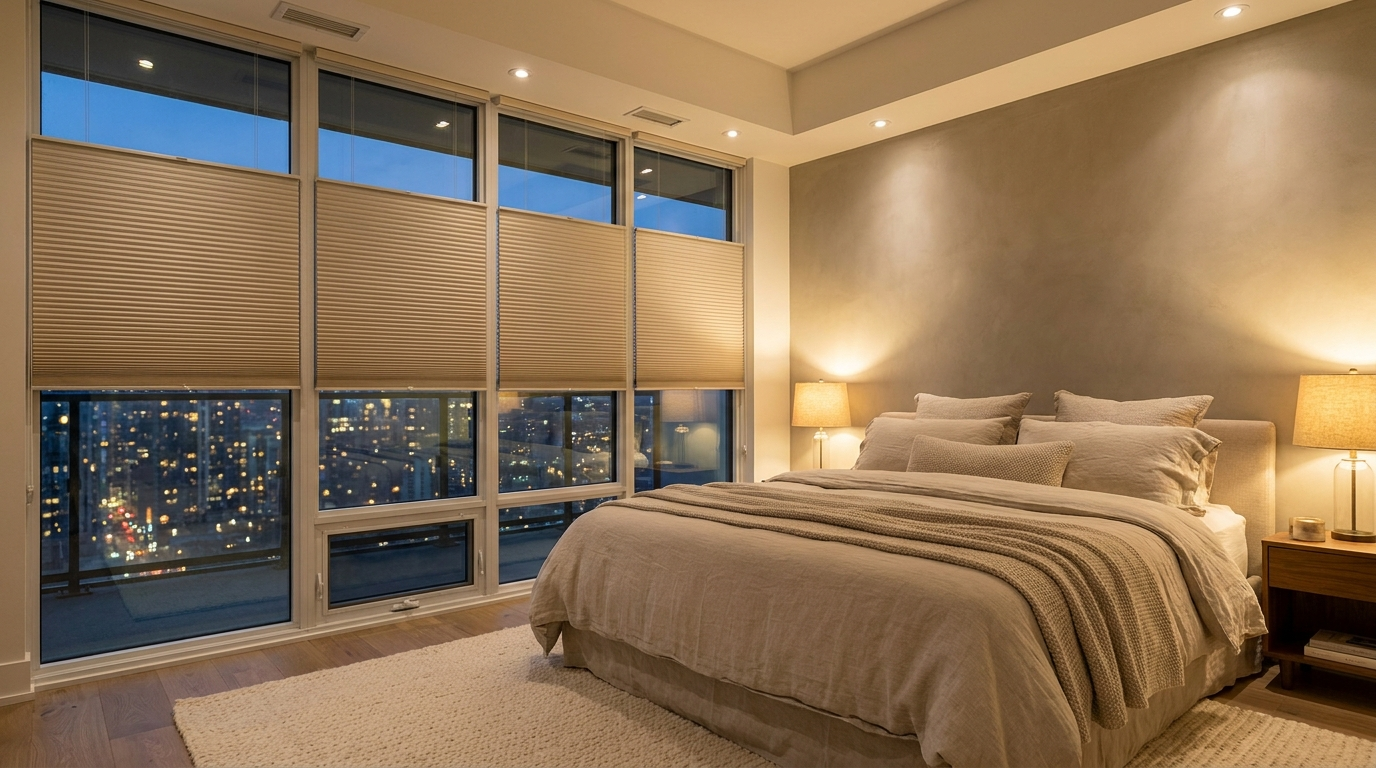
This option lets the shade lower from the top as well as rise from the bottom. You can pull the top down to bring in daylight and keep a view of the sky while the lower half stays closed for privacy. It is a favourite in condos and street-level rooms where you want light without putting the living space on display to passersby.
Motorized and Smart Control
Cellular shades take well to motors, and a motorized honeycomb shade is one of the tidiest ways to manage a tall or hard-to-reach window. You can schedule shades to close against the afternoon sun or open with the morning, and many systems tie into a phone app or a voice assistant. If that appeals, look at our overview of motorized blinds and the range of smart blinds that work with home automation.
Cellular Shades Compared to Other Window Coverings
Cellular shades are not the only good answer for a window, and part of choosing well is knowing where they lead and where another style pulls ahead. The table below sets them beside three popular alternatives.
| Feature | Cellular shades | Zebra blinds | Roller shades | Roman shades |
|---|---|---|---|---|
| Insulation | Excellent | Moderate | Fair to good | Good with lining |
| Light control | Very good, by fabric | Adjustable striped view | Very good, by fabric | Good |
| View when open | Full stack clears glass | See-through in aligned mode | Full when rolled up | Soft folds remain |
| Look | Clean, textured, modern | Contemporary, dimensional | Minimal and flat | Soft, decorative |
If you are torn between styles, it can help to read direct comparisons. We cover zebra blinds versus roller blinds and roller blinds versus Roman shades in detail, and you can browse finished installs in our window blinds gallery to see how each style reads in a real room.
Where Cellular Shades Work Best
Because they balance insulation, privacy, and a clean look, cellular shades suit a wide range of rooms. A few pairings stand out.
| Room or window | Suggested setup | Why it works |
|---|---|---|
| Bedroom | Double cell, room darkening or blackout, cordless | Warmth, dark for sleep, safe operation |
| Living room | Double cell, light filtering, top-down bottom-up | Daylight with privacy and comfort |
| Condo floor-to-ceiling glass | Double or triple cell, motorized | Tames heat and glare on big windows |
| Home office | Light filtering to cut screen glare | Even light without a dark cave |
| Nursery | Blackout, cordless, with side channels | Dark, quiet, and child safe |
For condo owners in particular, the insulating quality is a real advantage on expansive glass. Our guide to the best window coverings for Toronto condos with floor-to-ceiling glass goes deeper on that setting, and room-specific pages for bedroom blinds, living room blinds, and office blinds can help you match fabric to function.
Inside Mount or Outside Mount
Mounting is where a lot of the energy and light performance is won or lost. An inside mount sits the shade within the window frame for a clean, built-in look and keeps the fabric close to the glass, which helps insulation. An outside mount fixes the shade to the wall or trim above the opening, covers the frame, and reduces the light gaps along the edges, which is often better for bedrooms and for windows that are out of square.
The right call depends on frame depth, how square the opening is, and whether darkness or a tidy recess matters more to you. Our breakdown of inside mount versus outside mount walks through the measurements and the visual trade-offs.
Measuring and Installation
Cellular shades reward accurate measuring because their insulating and light-blocking benefits depend on a snug fit. A shade cut a little wide can bind in the frame, and one cut a little narrow leaves gaps that leak both light and heat. Getting the width at the top, middle, and bottom, and the height in more than one place, matters more on the slightly out-of-square windows found in many older Toronto houses and some high-rise units.
If you plan to measure yourself, follow our step-by-step notes on how to measure windows for shades correctly. For a whole home, or for tall and awkward openings, a professional measure removes the guesswork and protects the fit, which is part of why a made-to-measure order tends to outperform an off-the-shelf shade.
Cleaning and Maintenance
Cellular fabric is low maintenance, though the cells do collect a little dust over time. Regular light vacuuming with a brush attachment keeps them fresh, and a hair dryer on a cool setting can push dust out of the pockets. Spot clean with a lightly damp cloth and avoid soaking the fabric, since heavy moisture can mark it. For a full routine across different materials, our guide on how to maintain and clean different types of blinds is a handy reference.
What Cellular Shades Cost in Toronto
Custom cellular shades are priced per window, so a single number rarely tells the whole story. Instead, it helps to understand the factors that move the price up or down so you can plan a budget and decide where to invest.
| Cost driver | Effect on price |
|---|---|
| Window size | Larger openings use more fabric and hardware |
| Cell count | Double and triple cell cost more than single cell |
| Fabric opacity | Blackout and specialty fabrics sit above basic light filtering |
| Operating system | Cordless and especially motorized add to the total |
| Specialty shapes | Skylights, arches, and angled tops require custom work |
| Installation | Professional measure and install adds cost and protects the fit |
For an accurate figure, the answer is that it depends on your exact windows and choices, which is what an in-home consultation and quote are for. If you want a sense of why the tailored route holds up over time, our piece on why made-to-measure blinds are worth it applies to cellular shades too.
Are Cellular Shades Still in Style?
Yes, and the reason is that they never depended on being trendy. Cellular shades read as clean and architectural rather than fussy, which suits the pared-back look most people want now. The current direction in window coverings leans toward simple lines, cordless and motorized operation, and materials that do a job rather than just decorate, and honeycomb shades check every one of those boxes. In a Toronto condo or a family home alike, they tend to look current a decade after they go up.
Questions to Ask Before You Order
A short checklist keeps an order on track and prevents the small mistakes that show up only after the shades are hung.
- How cold or sunny is this room, and does it need single, double, or triple cell?
- Do I want soft daylight, room darkening, or true blackout in this space?
- Are there children or pets, which makes cordless or motorized the safe choice?
- Would top-down bottom-up help with privacy without losing light?
- Is an inside or outside mount better for this window’s depth and squareness?
- Does the window need side channels for the darkest possible result?
- Are any windows tall, angled, or specialty shapes that call for custom work?
Frequently Asked Questions
Are cellular shades the same as honeycomb shades?
Yes. Cellular and honeycomb are two names for the same product. The pleated fabric forms honeycomb-shaped cells that trap air, and brands simply choose one term or the other.
Do cellular shades really save energy?
They do. The trapped air in the cells slows heat transfer at the window. Controlled testing in a 2022 study found daily heating energy savings between 17 and 36 percent compared with bare windows, with the exact result depending on the window and fabric.
What are the drawbacks of cellular shades?
Dust can settle inside the cells and needs occasional vacuuming, the fabric is softer than a hard blind or shutter, and edge light can slip past an inside mount unless you add side channels. Very wide single shades can also sag, which is where a split or a sturdier system helps.
Single cell or double cell, which is better?
Double cell insulates better and is the sensible default for Toronto’s climate. Single cell costs less and stacks smaller, which suits milder rooms and tighter budgets. Triple cell is reserved for large glass and extreme exposure.
Are cellular shades good for Toronto winters?
They are among the better soft coverings for cold weather because the air pockets add an insulating layer over the glass. Close them on cold nights, mount them close to the window, and consider side channels for the strongest effect.
Do cellular shades help in summer?
Yes. A light filtering or room darkening fabric blocks a share of solar heat before it enters the room, which eases the load on air conditioning, especially on west and south facing windows in the afternoon.
Cellular shades or zebra blinds?
Cellular shades win on insulation and a soft, uniform look. Zebra blinds offer an adjustable striped view that can shift from sheer to private. If energy performance is the priority, cellular leads; if you want a see-through daytime option, zebra is worth a look.
Cellular shades or roller shades?
Roller shades are flat, minimal, and available in many fabrics, while cellular shades add insulation through their cells. In a room where warmth and comfort matter, cellular usually has the edge; where a clean flat panel is the goal, a roller may suit better.
Are cellular shades good for bedrooms?
Very. A room darkening or blackout fabric paired with cordless lift gives you dark, quiet, safe windows. Add side channels or use an outside mount if you want to block edge light for the deepest darkness.
Can cellular shades be cordless and child safe?
Yes. Cordless and motorized lift remove the loose cords that pose a hazard to children and pets, and they are the recommended choice for family homes.
What is top-down bottom-up?
It is an operating style that lets the shade lower from the top as well as rise from the bottom. You can open the top for daylight and a view of the sky while the bottom stays closed for privacy.
Can cellular shades be motorized?
They can, and they suit motors well. Motorized honeycomb shades are ideal for tall or hard-to-reach windows and can be scheduled or controlled by app or voice assistant.
Do cellular shades work on large or floor-to-ceiling windows?
Yes, and they are a strong choice there because they tame the heat and glare that big glass invites. Larger openings often pair well with a double or triple cell fabric and motorized lift.
Can you get cellular shades for skylights and specialty windows?
Specialty cellular shades are made for skylights, angled tops, and other unusual shapes. These are custom orders where accurate measuring and professional installation matter most.
How do you clean cellular shades?
Vacuum gently with a brush attachment, use a cool hair dryer to blow dust from the cells, and spot clean with a lightly damp cloth. Avoid soaking the fabric.
How long do cellular shades last?
Well-made cellular shades last many years with light care. Cordless and motorized mechanisms hold up well, and the polyester fabric resists fading, though lifespan depends on sun exposure and how often the shade is used.
Are cellular shades a good option for renters?
They can be, especially with an inside mount that uses minimal hardware or a no-drill tension option on suitable windows. For a permanent home, a measured, professionally installed shade delivers the best fit and performance.
Talk to a Toronto Cellular Shade Specialist
The right cellular shade is the one matched to your room, your light, and the way you actually live, and that is easier to get right with a set of experienced eyes on the window. Canadian Blinds Pros helps homeowners, condo residents, designers, and businesses across Toronto and the GTA choose the cell count, fabric, mount, and operating style that fit each space. To talk through options or arrange a free in-home consultation, contact our team, and if you are downtown you can start with our Downtown Toronto blinds service page.